Overview
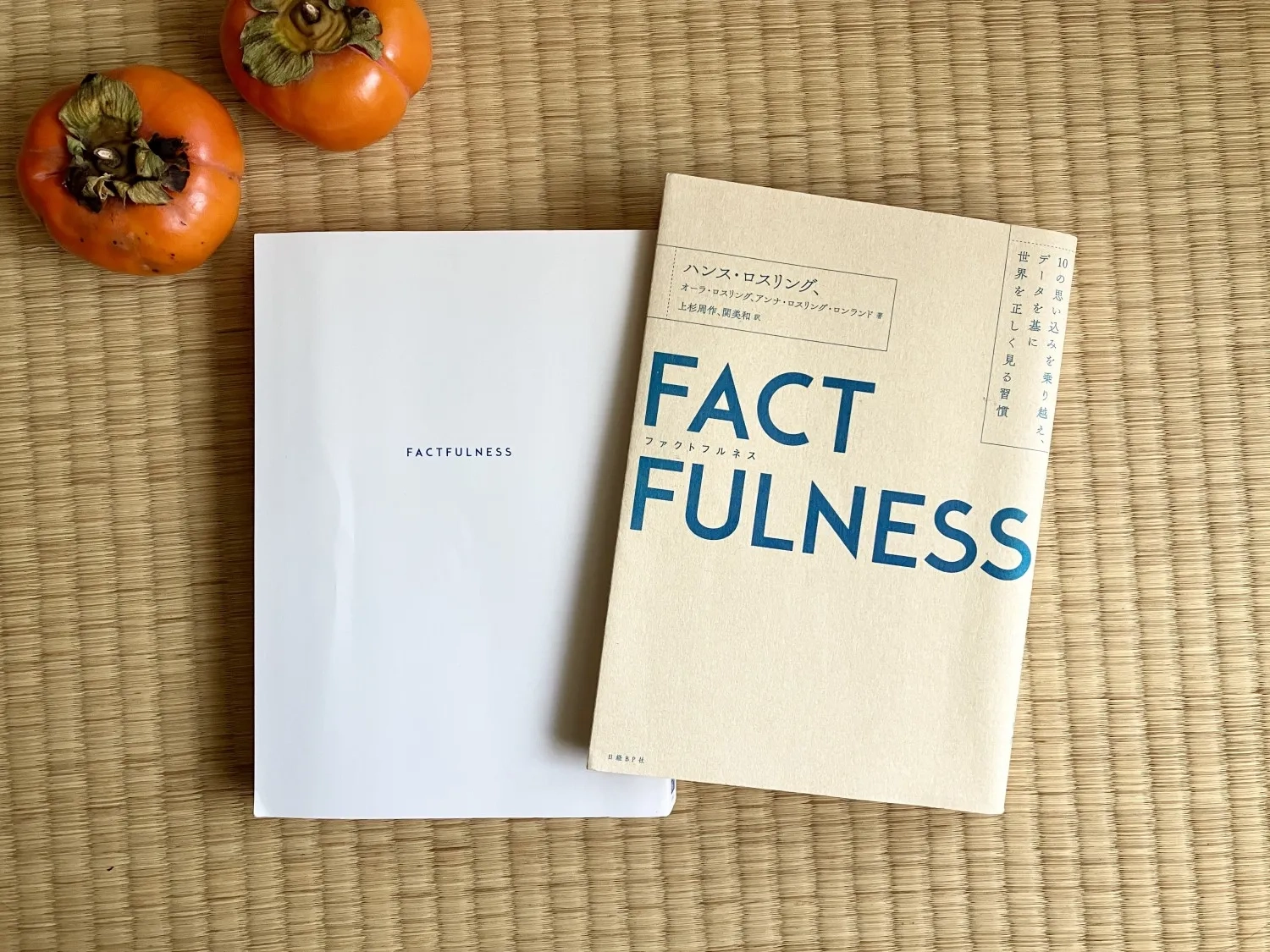
I saw a friend reading this and thought, "Oh, that's that famous book I've seen somewhere before." I read it so we'd have something to talk about.
Factfulness means something like "the attitude of looking at things based on facts."
Here is my summary and what I thought of it.
Summary
Humans Have an Instinct to See the World in an Overly Dramatic Way
- There is an "attention filter" between our minds and the outside world. But it has ten holes in it. Those are the ten instincts described below.
- Because of these instincts, we overlook good changes such as fewer airplane accidents and fewer deaths from natural disasters, while believing that rare bad events happen all the time.
What's Wrong With That?
- You can't solve the world's problems with incorrect knowledge.
- If investors fail to realize that countries they think of as "developing countries" are actually growing rapidly, their money will flow to the wrong places (meaning Europe and the US), and companies will miss enormous business opportunities.
The Ten Instincts
- The instinct to believe the world is divided: Here, "divided" means believing that there are only people with extremely high incomes and extremely low incomes, with nobody in the middle. By 2017, most people in the world were in the middle. So this division does not exist. It is an illusion.
- The instinct to believe the world is getting worse and worse: People tend to romanticize the past, while the media focuses on dramatic events and does not report slow progress. But when you look at the data, the world continues to become safer. Overall, the world is getting better and better. Believing otherwise is an illusion.
- The instinct to believe the world's population will keep growing forever: The world's population will stabilize at around 11 billion by about 2100. Instead of remaining pyramid-shaped, the population chart will gradually become more rectangular. The idea that the population will keep growing forever is an illusion.
- The instinct to fear things that are not actually very dangerous: The media focuses on dramatic dangers and does not report safety. Critical thinking is important, but when there is solid evidence that something is safe, we should not ignore it. If we actually look at the data, many of the dangers we fear are based on misconceptions.
- The instinct to think the number in front of us is the most important thing: The media takes advantage of our tendency to overestimate numbers. Today, 4.2 million babies die, but in 1950, 14.4 million babies died. As a percentage of births, the number has fallen from 15% to 3%. That's enormous progress, but people see "4.2 million deaths" and become pessimistic. That's the instinct at work.
- The instinct to believe one example applies to everything: People tend to think lifestyles are divided by country. That's a false pattern. If you look at "Dollar Street," you can see that people's lifestyles depend on income level rather than country. Religion and culture do not have much influence either. Thinking otherwise is an illusion.
- The instinct to believe everything is predetermined: The average life expectancy in five countries along the northern coast of Africa is above the global average, while countries in sub-Saharan Africa are rapidly reducing infant mortality. The media does not report these huge cultural changes happening around the world. People tend to assume Africa will remain poor forever, but that's an illusion.
- The instinct to believe the world can be understood from a single perspective: As the saying goes, "Give a child a hammer and everything looks like a nail." People tend to solve problems using their own field of expertise. If you ignore information that does not fit your way of seeing things, you cannot understand reality.
- The instinct to believe that blaming someone will solve the problem: People want simple answers and simple villains. But in reality, problems usually have complex causes, and often the whole system is responsible.
- The instinct to believe something terrible will happen unless we act immediately: Politicians and activists exaggerate things because they want to motivate people. Then they themselves forget that they were exaggerating, fear grows, and that leads to stupid decisions. Basically, be careful when politicians and activists do this.
My Thoughts
My impression was: lots of pages, not much substance.
- It feels like the book keeps saying the same thing in different ways. The last five of the "ten instincts" felt like they could have been there or not and it wouldn't have made much difference. The good stuff could have fit into the first five.
- "Dollar Street," "income levels," "the data shows the world is getting better"—the first half was really good. Why did the second half get so scattered?
- I felt the same way when I read Yoshinori Nagumo's Being Hungry Makes You Healthy and Seiji Nishino's The Stanford Method for Ultimate Sound Sleep. These books have interesting core ideas, but they tend to stretch those ideas too thin in the second half, which leaves me with a worse impression afterward.
I think this book says some good things, but personally, instead of organizing everything around the individual "instincts," I think it could have simply presented these points↓.
- As "Dollar Street" and the income levels show, people's lifestyles depend more on income than on country, religion, or culture.
- As bubble charts and other accurate data show, many global problems that existed in the 1900s have continued to improve.
- The media and human instincts strengthen these misconceptions. The media does not report slow progress, while focusing on extreme events. On top of that, humans have various instincts that distort our view (a brief mention of the ten instincts would have been enough here).
- Why is it a problem to keep these misconceptions? Because then we cannot solve the world's problems, and we may invest in the wrong places and miss business opportunities right in front of us.
That's enough.
Organizing the book into ten whole chapters around the "instincts" makes it feel like the author wasn't very good at organizing the material. It also makes me wonder whether they just wanted a catchy headline like "The Ten Instincts in FACTFULNESS" as a marketing strategy. Isn't it a little strange that a book telling us not to prioritize things just because they grab people's attention might itself be prioritizing catchiness?
Some Smaller Thoughts
I like the idea of dropping "developing countries" and "developed countries" and using income levels instead. The point that "people at Level 4 tend to see the lives of people at Levels 1–3 as basically the same, even though there are clear differences between those levels" made sense to me. Yeah, that's true.
- Up to $2 per day: 1 billion people
- Up to $8 per day: 3 billion people
- Up to $32 per day: 2 billion people
- More than that per day: 1 billion people
Some other random thoughts↓
- "That view matched the data in 1965, but would you want to use a GPS with a map from 1965?" was a really clear way of putting it. We make decisions based on our knowledge, so the GPS analogy works well.
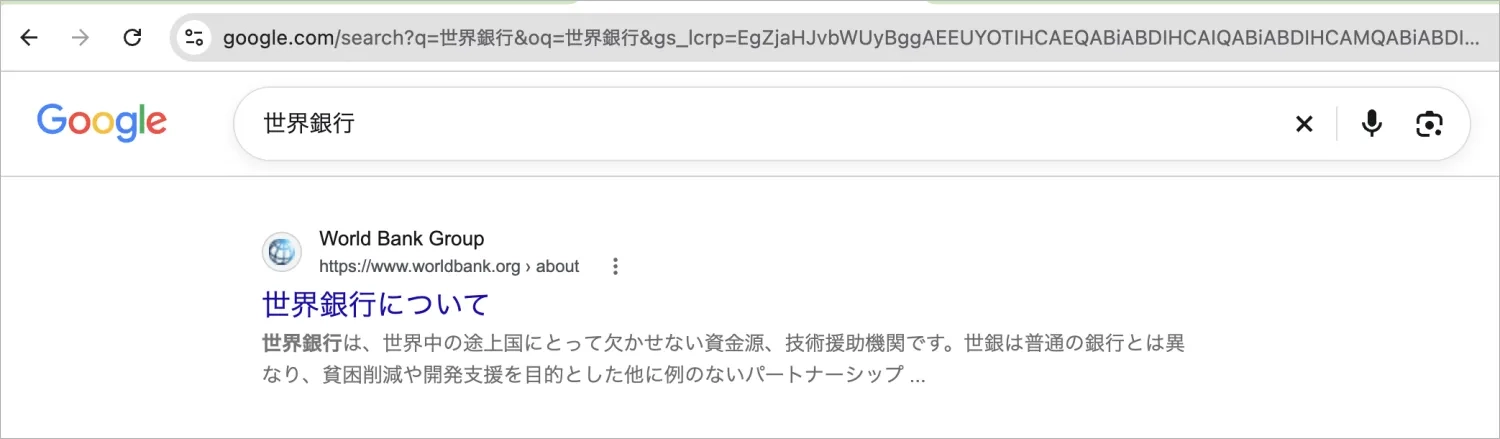
- The book said something like, "It took the World Bank a long time to stop using the terms 'developing countries' and 'developed countries'..." I thought, "Seriously?" and googled it. The very first site description said, "The World Bank is an essential source of financial assistance for developing countries around the world..." I quietly closed the tab.
- When I read, "There is an 'attention filter' between your mind and the outside world," thanks to something I had read before, I thought, "Ah, you mean the thalamus." That's the part involved in controlling attention.
- "Why is giving women more access to education a good thing? Because greater diversity in the workplace improves the quality of decision-making. Also, when people receive an education, they want their children to receive a better education too. So they have fewer children and invest more in each child's education. Once people escape extreme poverty, they no longer need many children as a source of labor."
- "Educated people want their children to receive a good education too. So they want to invest more in each child" was a new perspective for me. That made sense.
- This is probably related to "socioeconomic status" too: the idea that whether a child succeeds depends less on the child's own IQ and more on the parents' level of education and economic situation.
- Socioeconomic status - Wikipedia