Overview
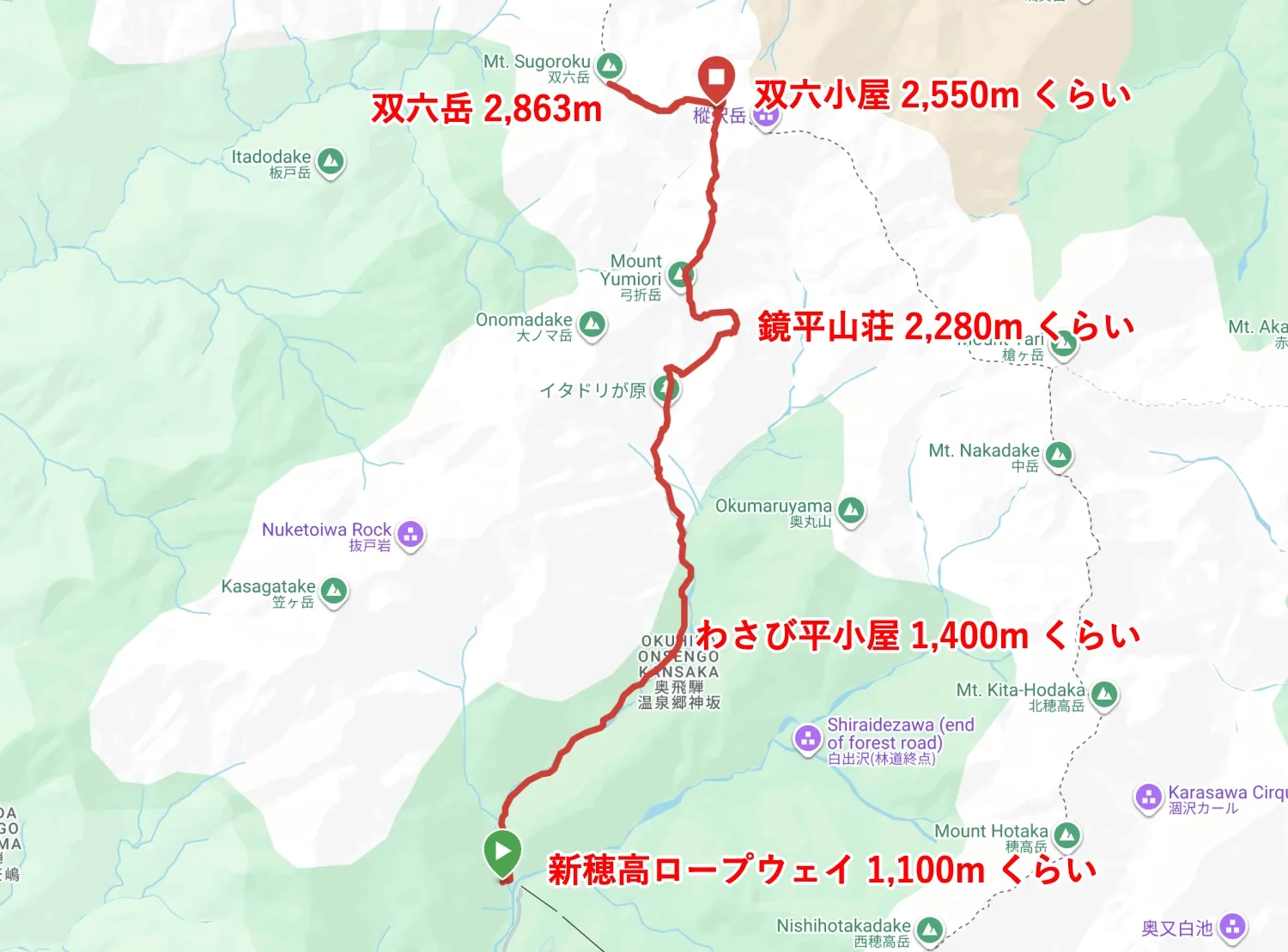
I went hiking. The destination was Mount Sugoroku, around the border area of Nagano, Gifu, and Toyama Prefectures. The plan this time was to sleep in the car at the foot of the mountain, climb up and stay one night, then hike back down and go home. I went with two friends. One of them booked the mountain hut for us. Much appreciated.
As you know, Midori-san likes mountains.
- (2018-04-27) Mountain Touring Again After a Long Time
- (2018-09-08) Wild Camping Trip: Mountains
- (2024-01-21) Winter Wild Camping Trip: Mountains and Rivers
But all I had ever done was motorcycle touring or wild camping at the foot of mountains. I had never actually climbed one. So I'll write a summary and my thoughts, while also leaving some notes for next time.
What I Brought
Here's a rough list of the main things I brought. I'll also include the things that were "seriously unnecessary even though I brought them" and the things that were "seriously useful but I didn't bring them."
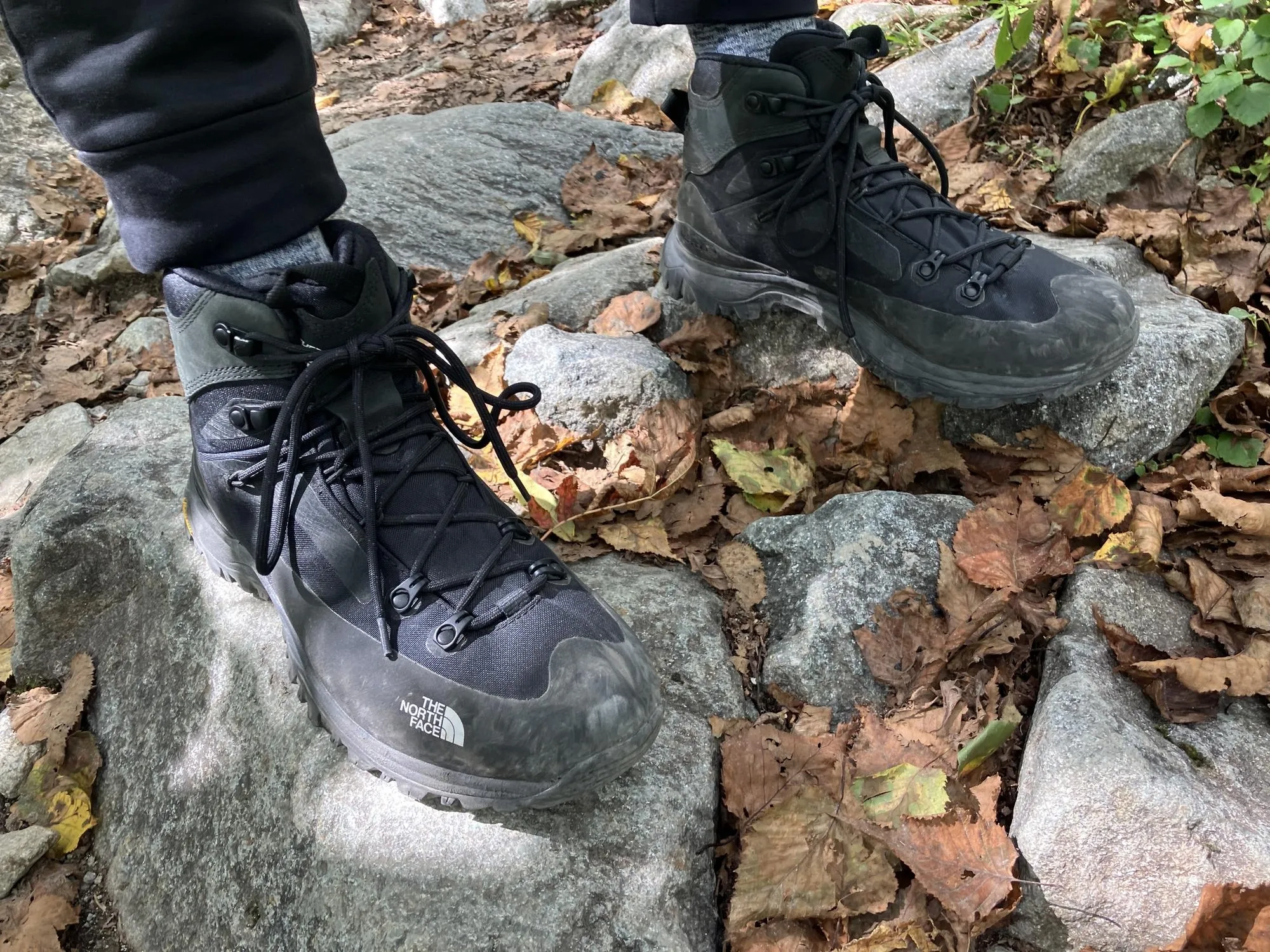
- Trekking shoes: THE NORTH FACE Creston Hike Mid Waterproof (v1)
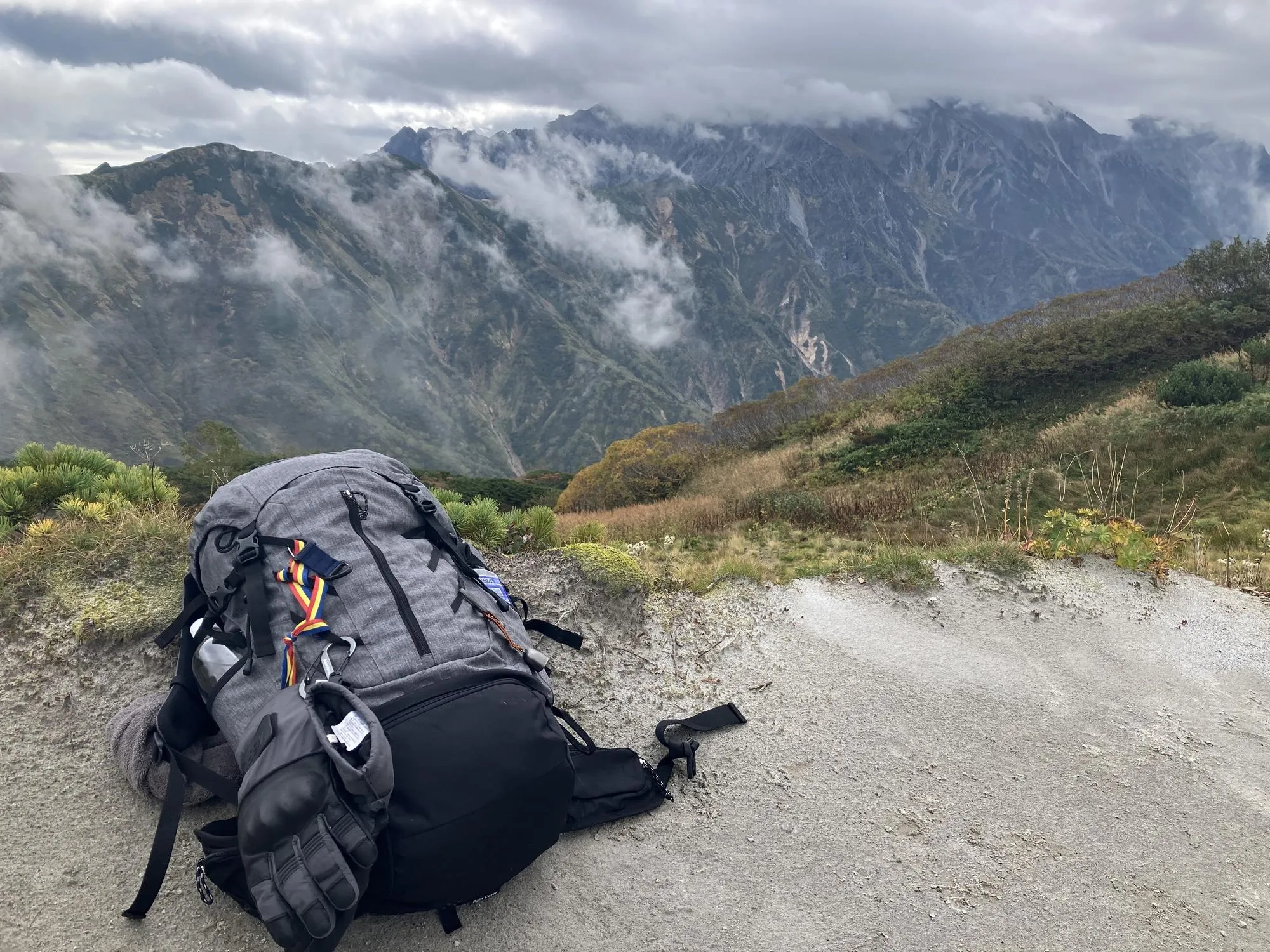
- A hiking backpack borrowed from a friend
- Knee supports (a pair that cost around 3,000 yen)
- Montbell ZEO-LINE base layer (dries incredibly fast)
- Headlamp
- Lots of plastic bags
- Sunscreen
- 1L of water and 1L of sports drink
- Wet wipes
- Portable battery
- Bear bell
- Emergency blanket (I didn't use it, but bringing it was probably the right choice)
- Cash (the mountain hut only accepted cash)
- 【BROUGHT IT BUT SERIOUSLY DIDN'T NEED IT】Cold-weather and waterproof gear from my wild camping trips (I mean, of course I needed warm clothes, but mine was motorcycle gear. Way too bulky and way too heavy.)
- 【DIDN'T BRING IT BUT SERIOUSLY WANTED IT】Trekking poles (Seriously, almost every hiker had them. I think they make a huge difference in how much stress you put on your legs.)
- 【DIDN'T BRING IT BUT SERIOUSLY WANTED IT】A sun hat (Seriously, almost every hiker had one. I managed by putting a towel over my head, though.)
- 【DIDN'T BRING IT BUT SERIOUSLY WANTED IT】My wild camping gear (Sleeping in a car just doesn't work for me. I would have been better off sleeping outside in a shelter.)
Hiking Summary
First Checkpoint: Wasabidaira Hut
We slept in the car at a parking lot near the Shinhotaka Ropeway. The elevation was around 1,100m. But I discovered that I am really bad at sleeping in a car. Next time, if I do this again, I should bring my wild camping gear and sleep outside.
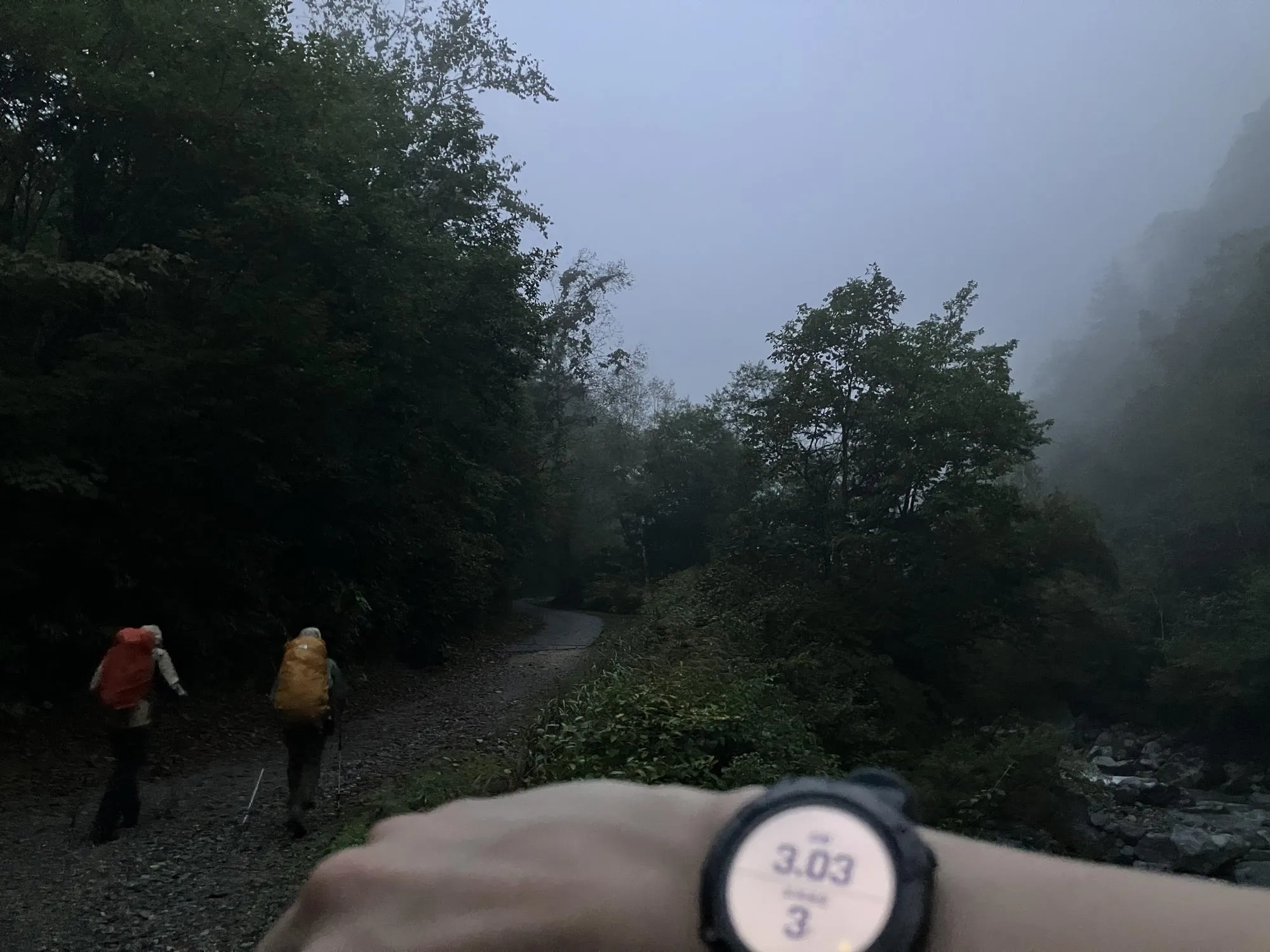
The trail goes uphill, but it is a peaceful climb. Around here, I realize something.
"It's insanely hot."
Before this hike, people had repeatedly warned me, "Watch out for hypothermia!" and "You could die!" So I had dressed pretty warmly. Looking at what the other hikers were wearing, I realized, "Wow, you can seriously dress pretty lightly while you're actually hiking."
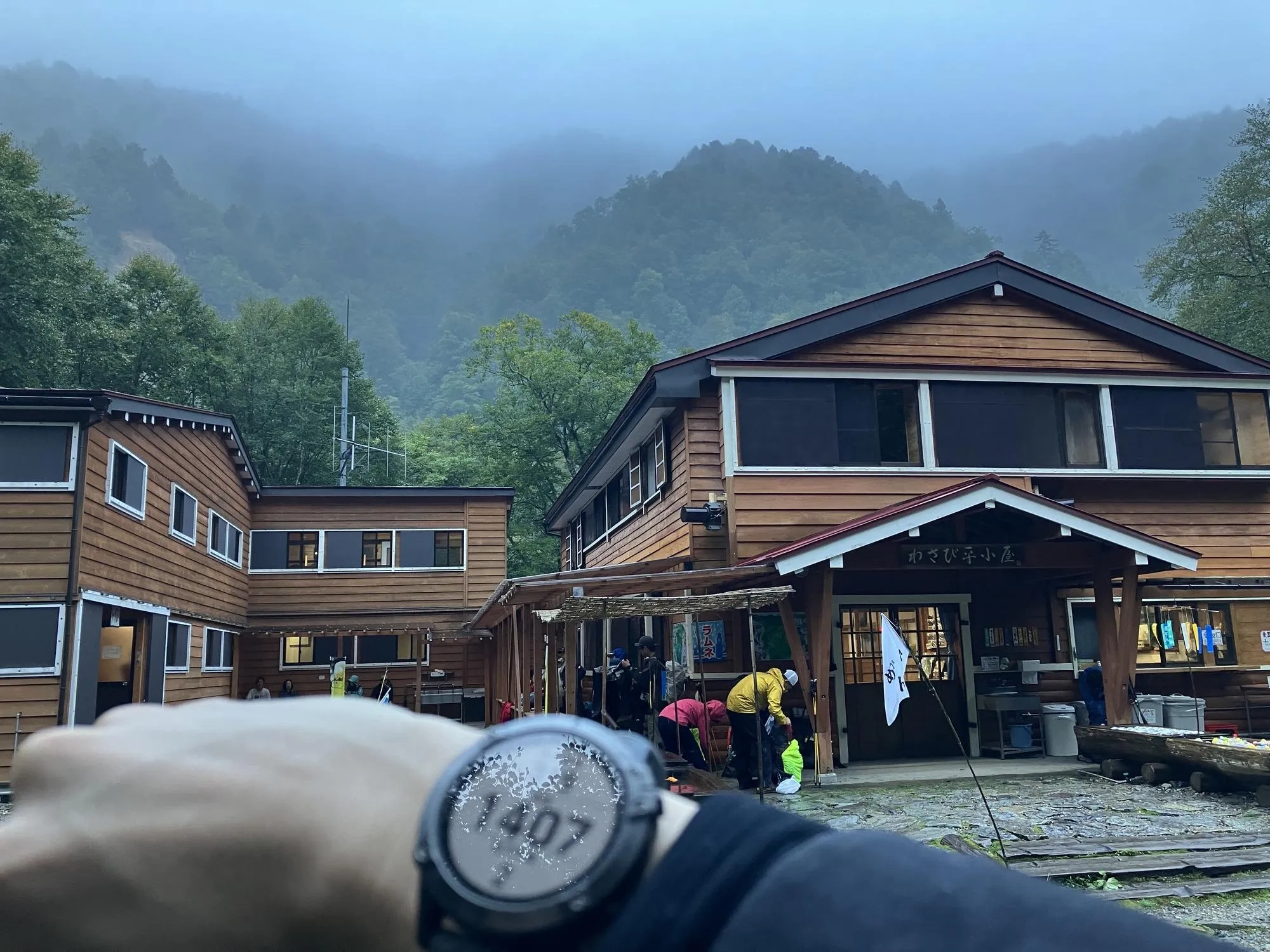
We arrive at Wasabidaira Hut. The elevation is around 1,400m. Time for a break. The rain keeps falling, so even though I'm hot, I can't take off my waterproof gear. I give up and keep going. Using the restroom here cost 200 yen.
Next Checkpoint: Kagamidaira Hut
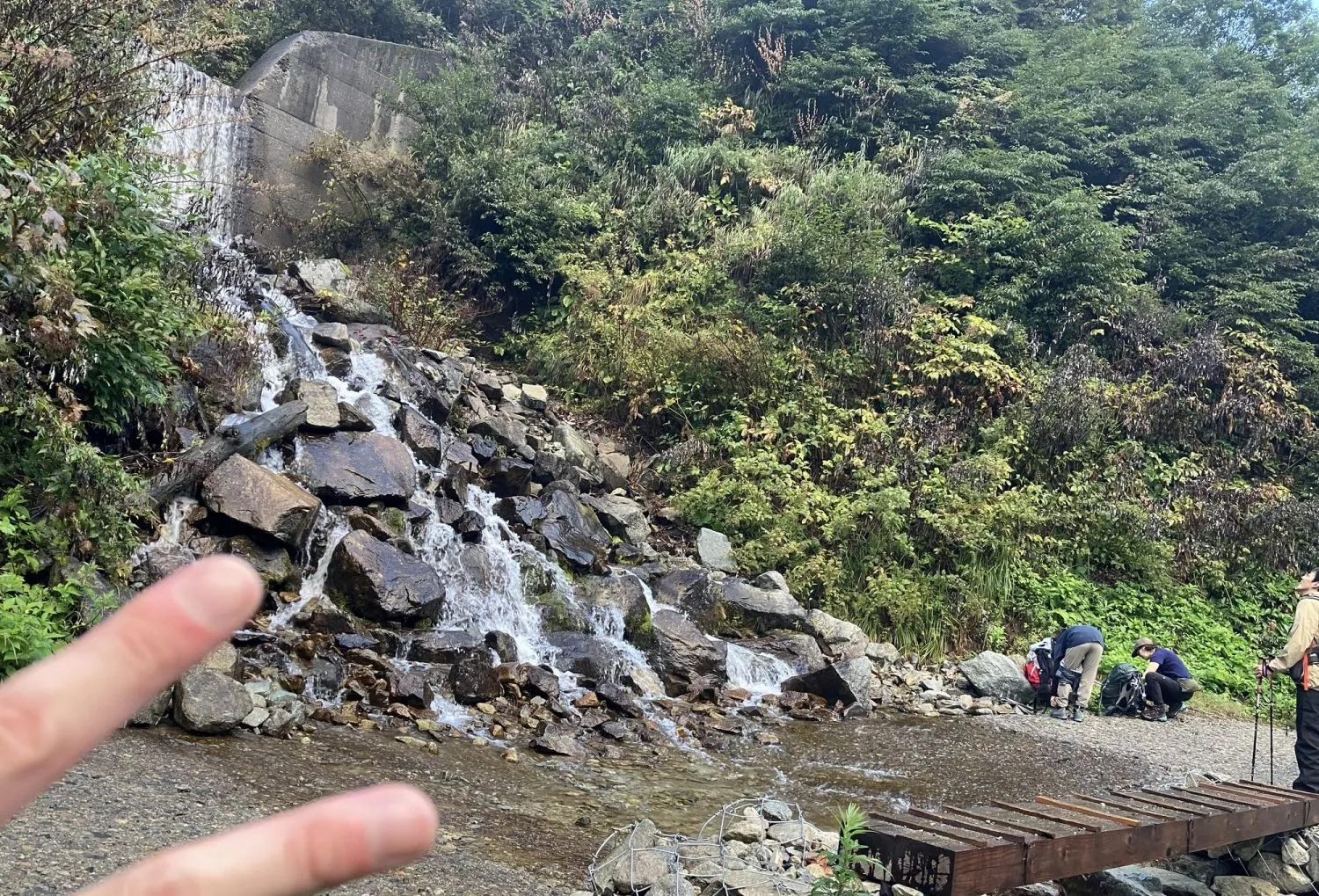
After climbing a little farther, the rain starts to stop. The other hikers are taking off their rain gear, so our party does the same.
The trail gets rockier and rockier. My stamina is fine. But... I start thinking, "Oh, if this keeps going, I'm going to destroy my knees."
I try to avoid putting too much force on my knees, using my hamstrings and upper body... basically my whole body to climb over the rocks.
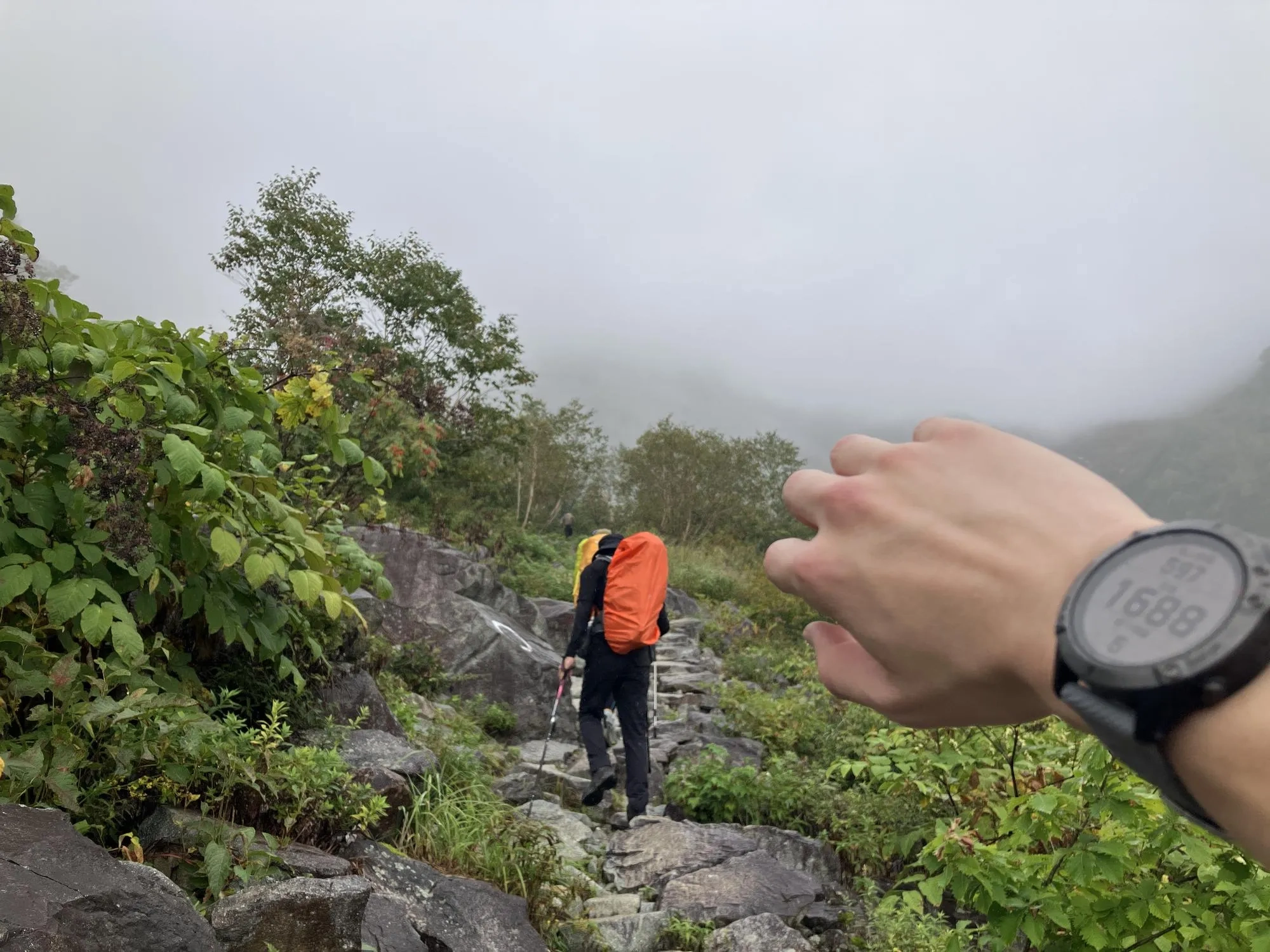
Around 1,700m. Places like this are fun, right? Normally, anyway.
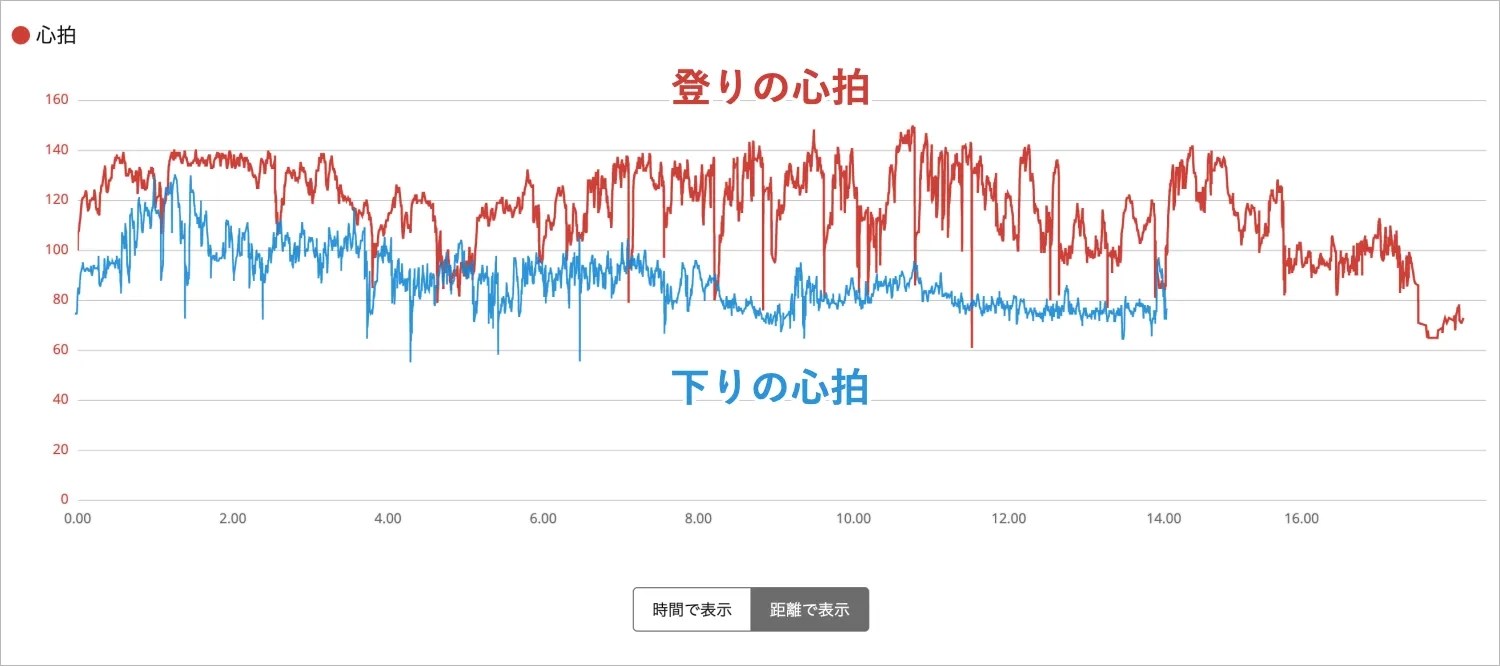
After climbing only about 600m from the starting point, my knees and feet already felt strange. They weren't injured yet. But I've been running for a long time, so I know what happens next. If I ignore this feeling and keep using my legs, they'll break down. So I keep putting my hands on the rocks and climbing with my whole body.
That works while I'm climbing, but what about on the way down? Descending puts even more impact on the knees and feet.
Trekking poles would probably reduce that stress on my legs quite a bit. I was already learning lessons. The plan involved 1,800m of climbing and 1,800m of descending, and I was reflecting on my mistakes after only the first 600m.
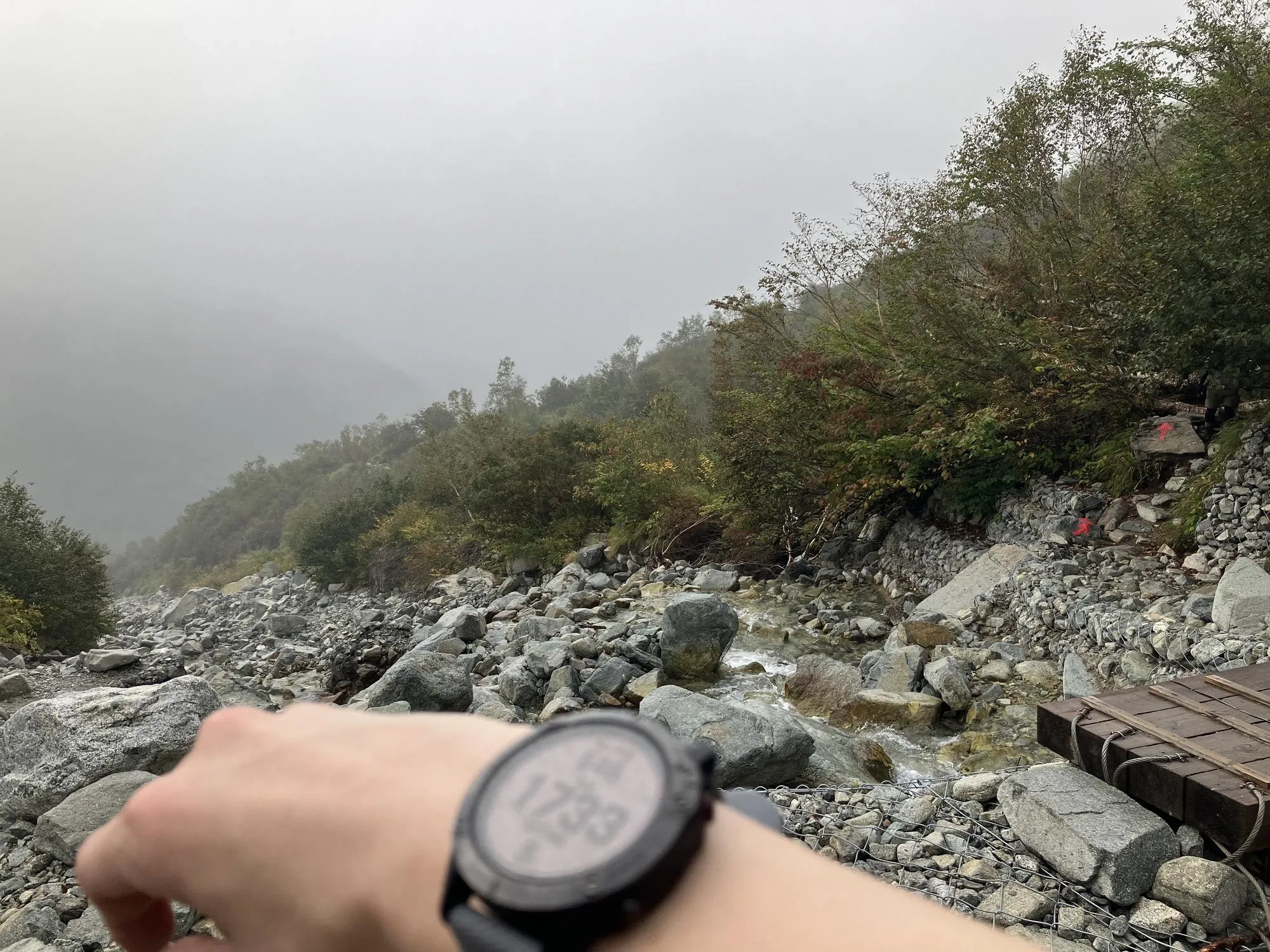
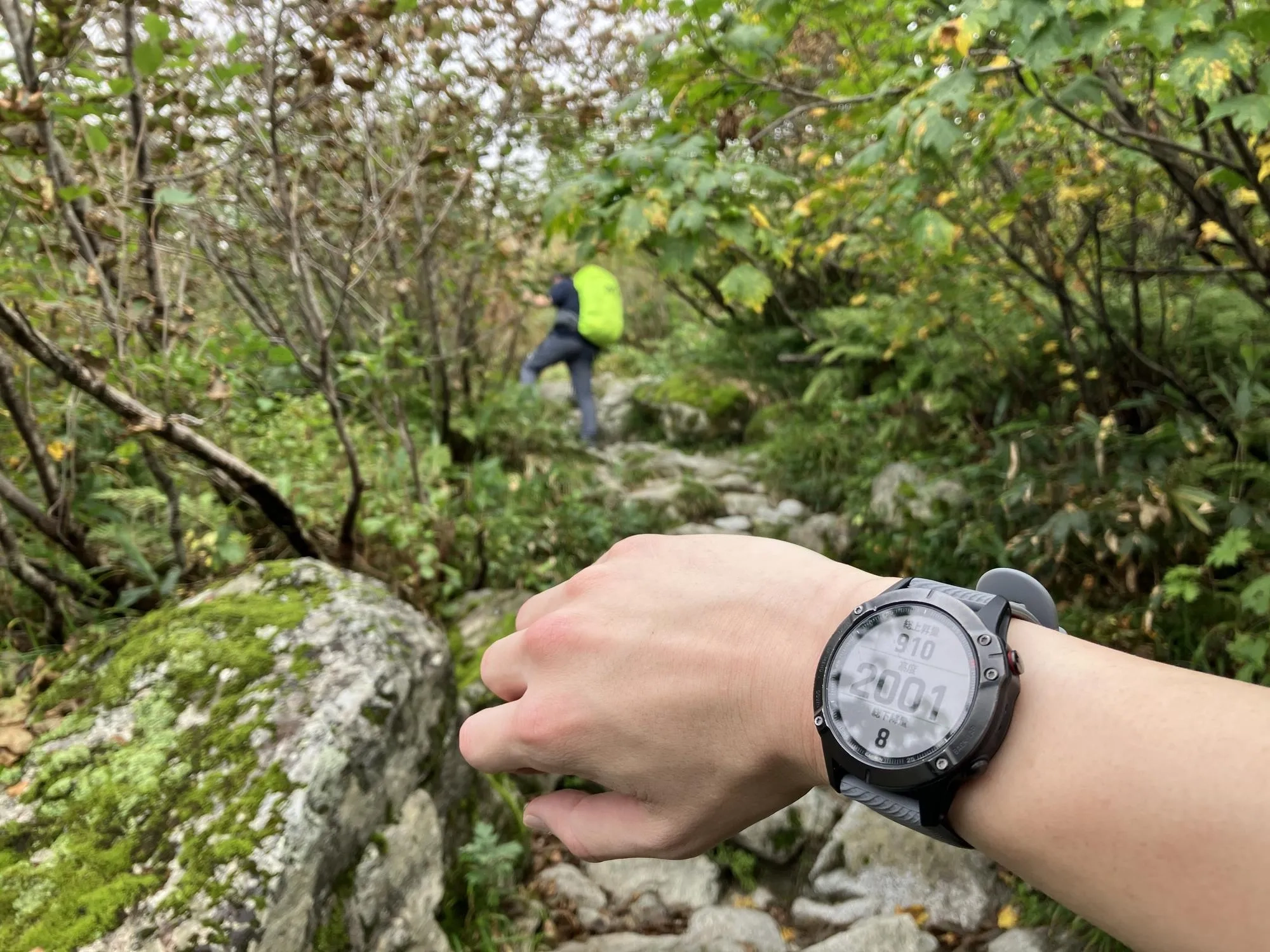
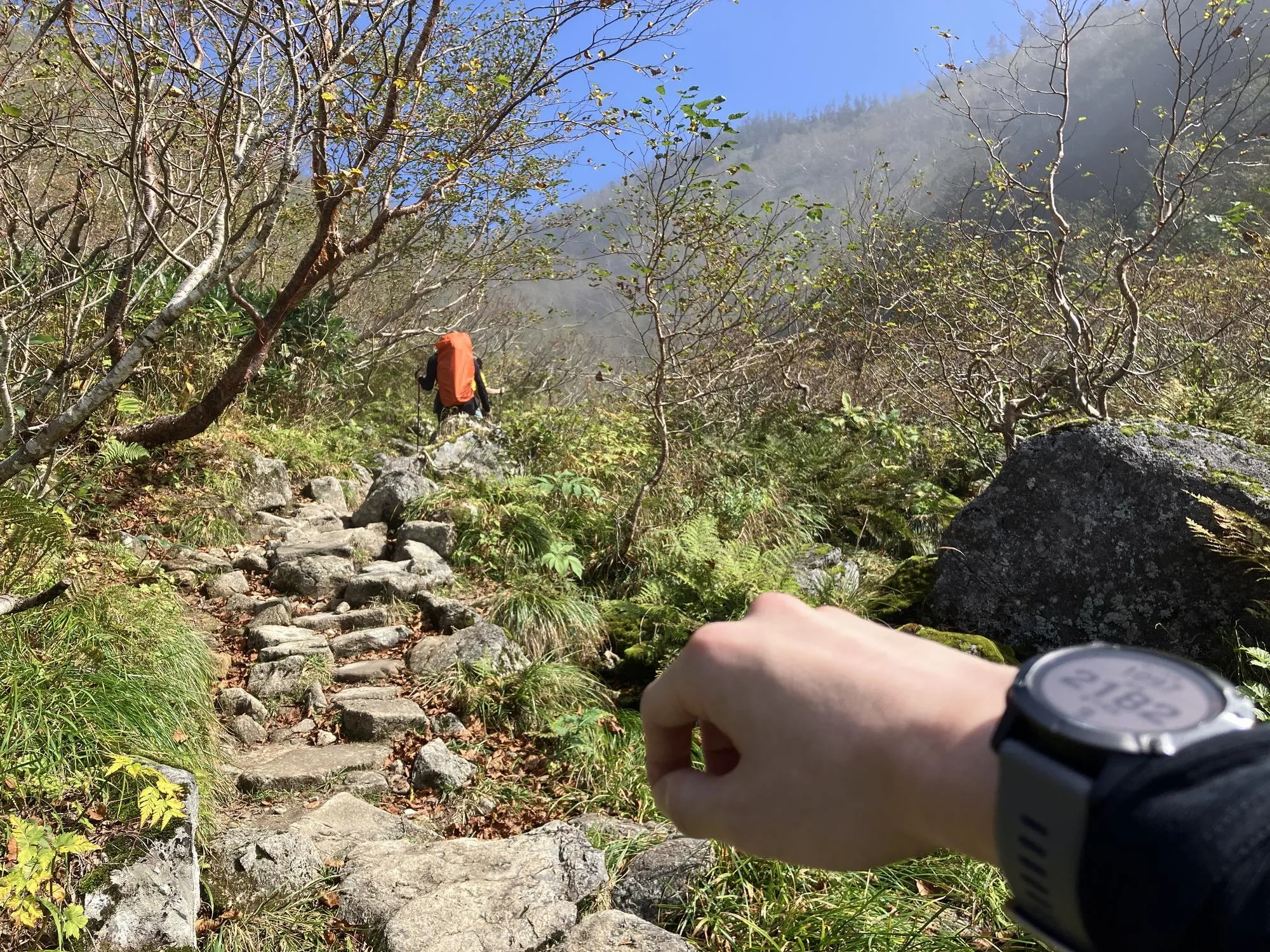
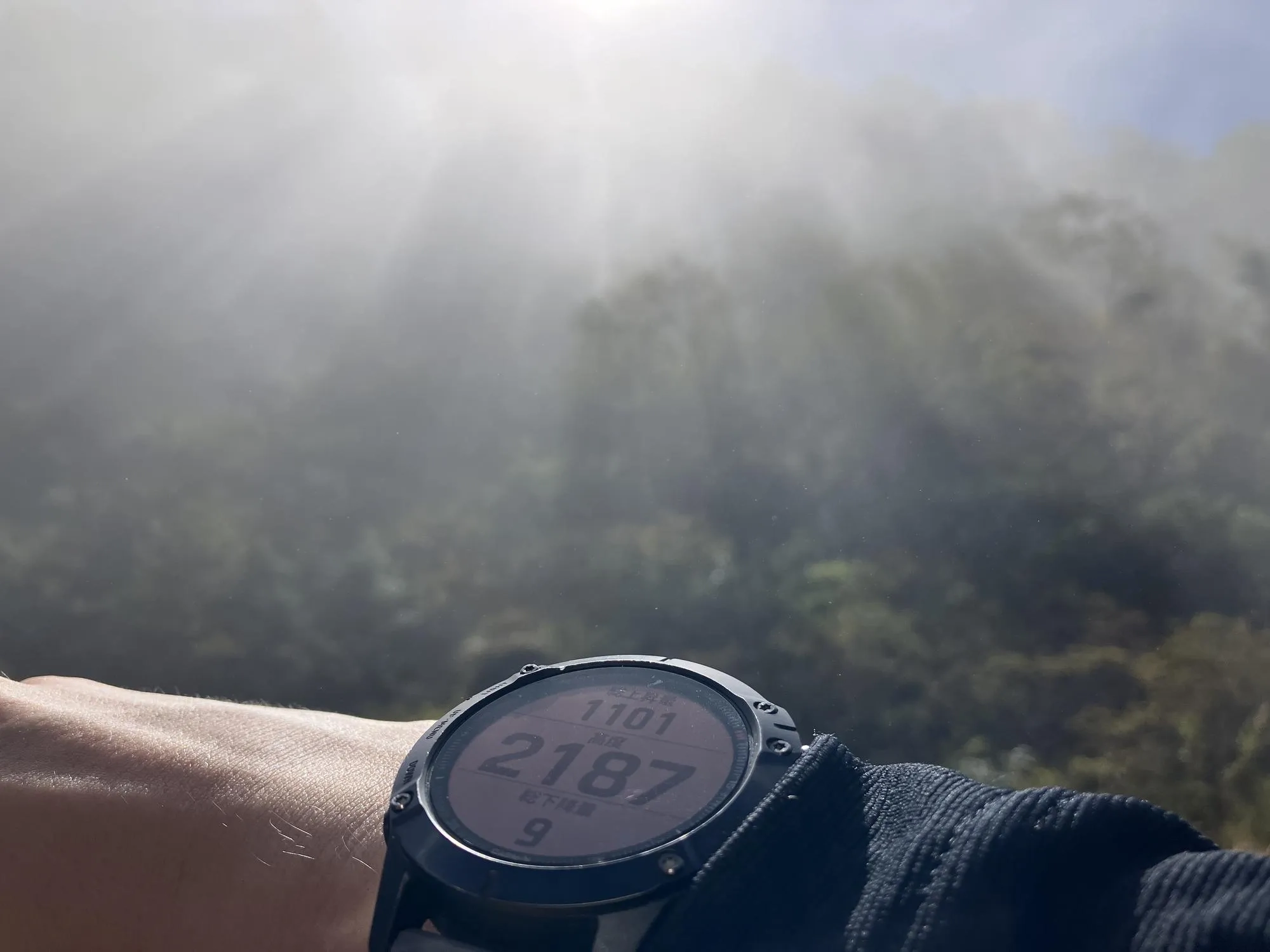
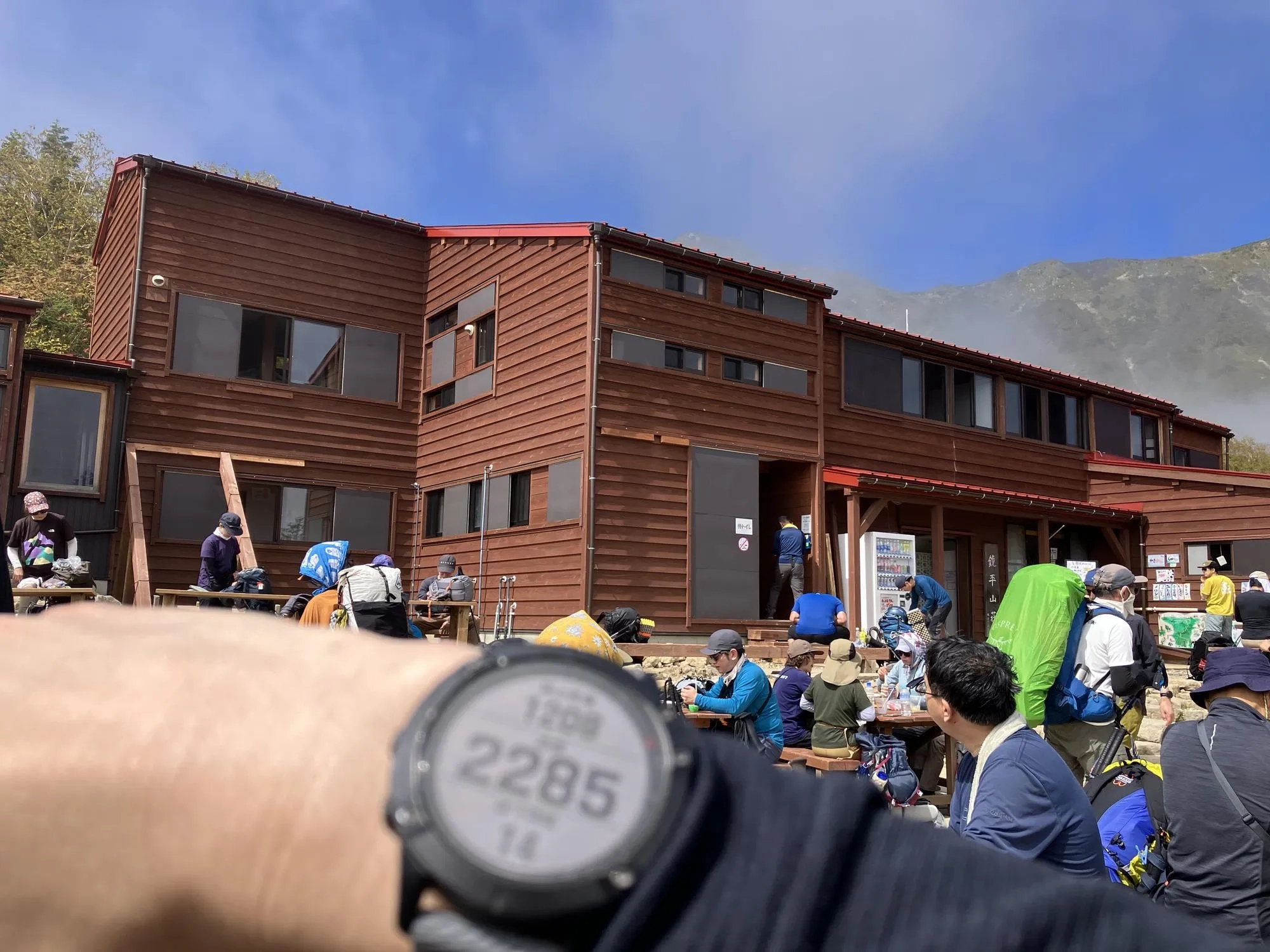
These↓ are around 2,000m and then 2,100m. We just keep climbing along rocky trails. My stamina is fine. What worries me is whether my knees will survive.
But around here, I start to realize the power of the knee supports. I think, "Normally, if my knees felt this strange, it wouldn't be surprising if they had already started hurting..."
The supports are keeping my knees from wobbling in weird directions.
While we are resting around 2,200m, an angel's ladder and a stoat appear.
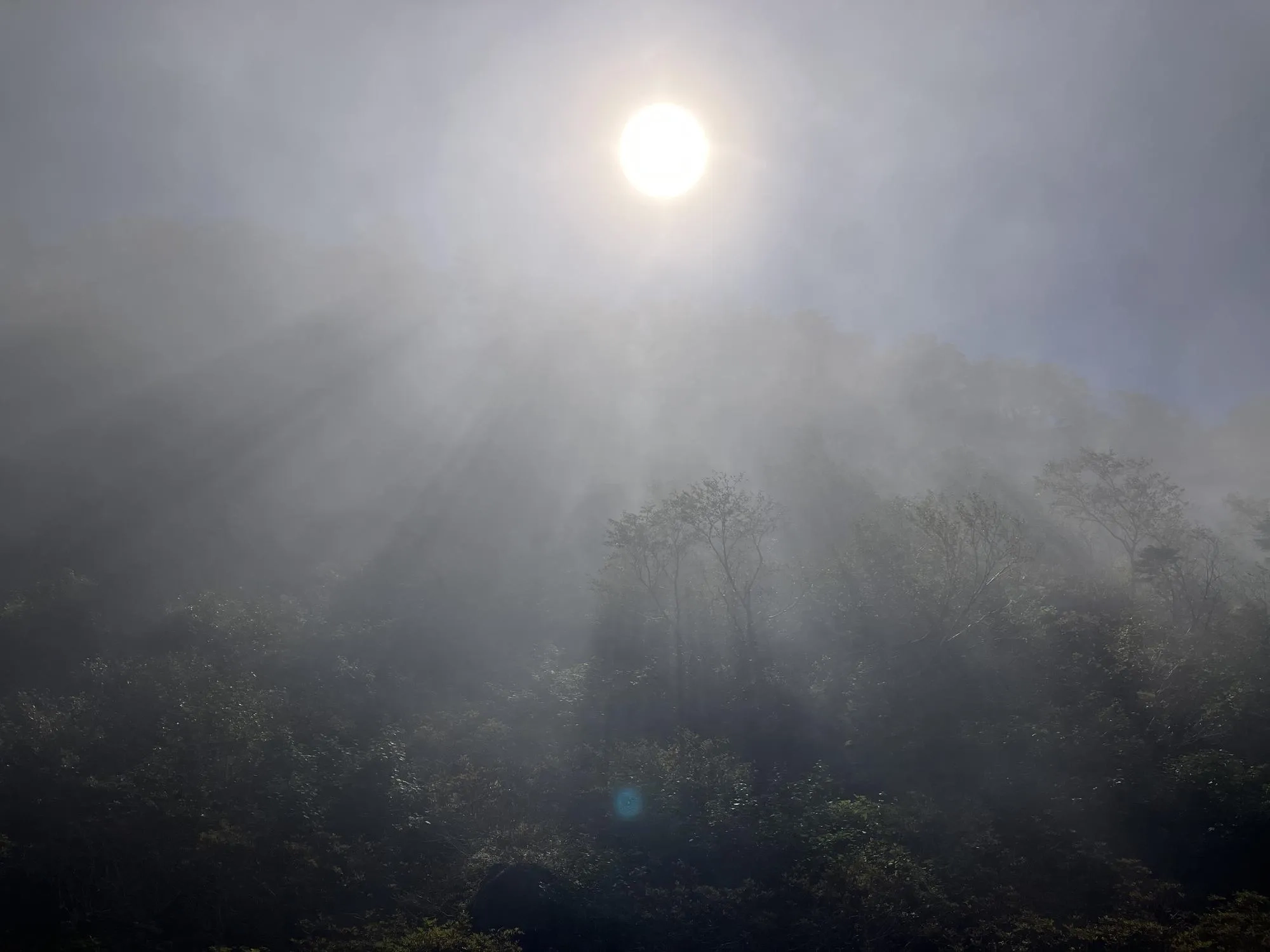
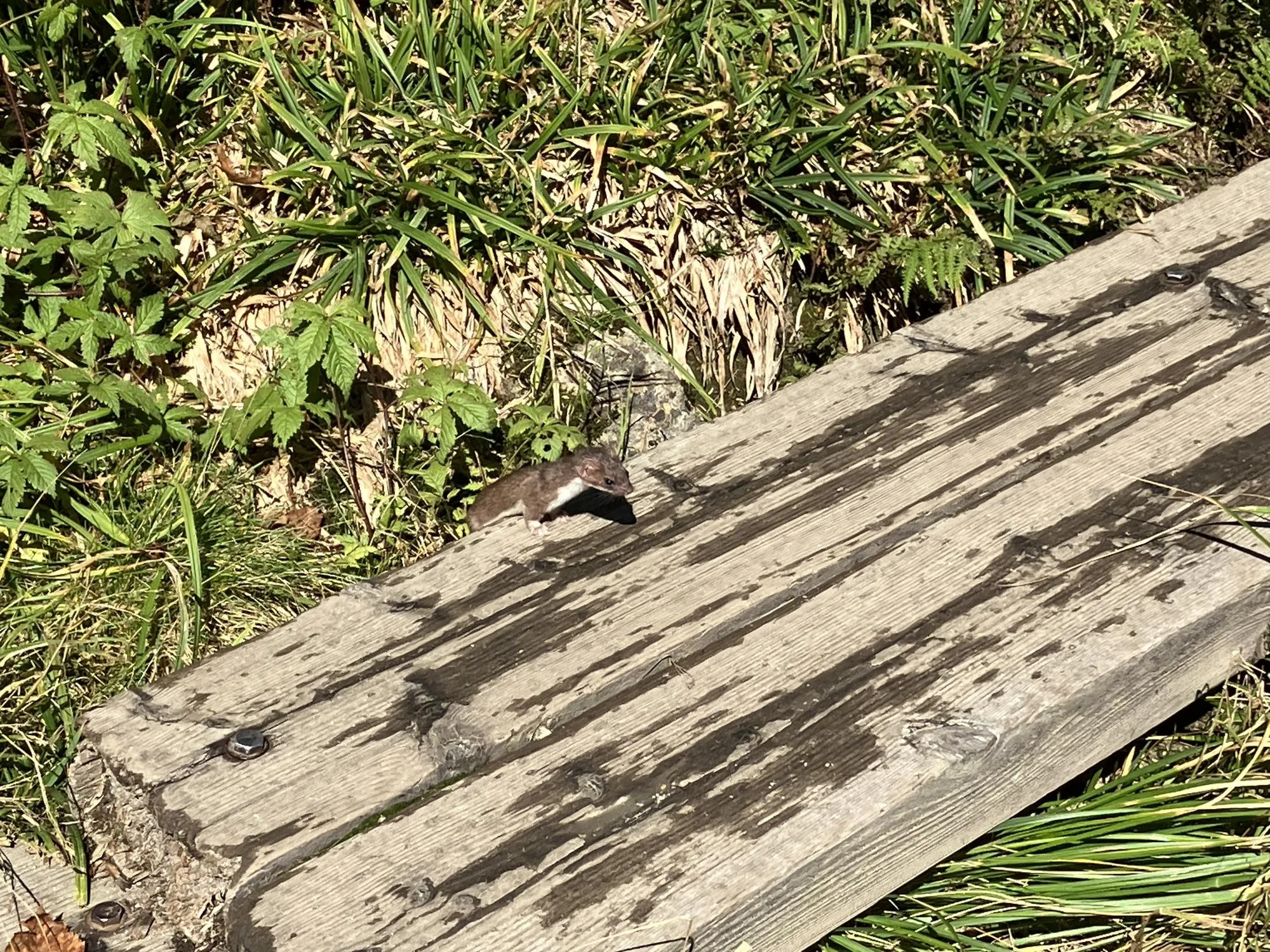
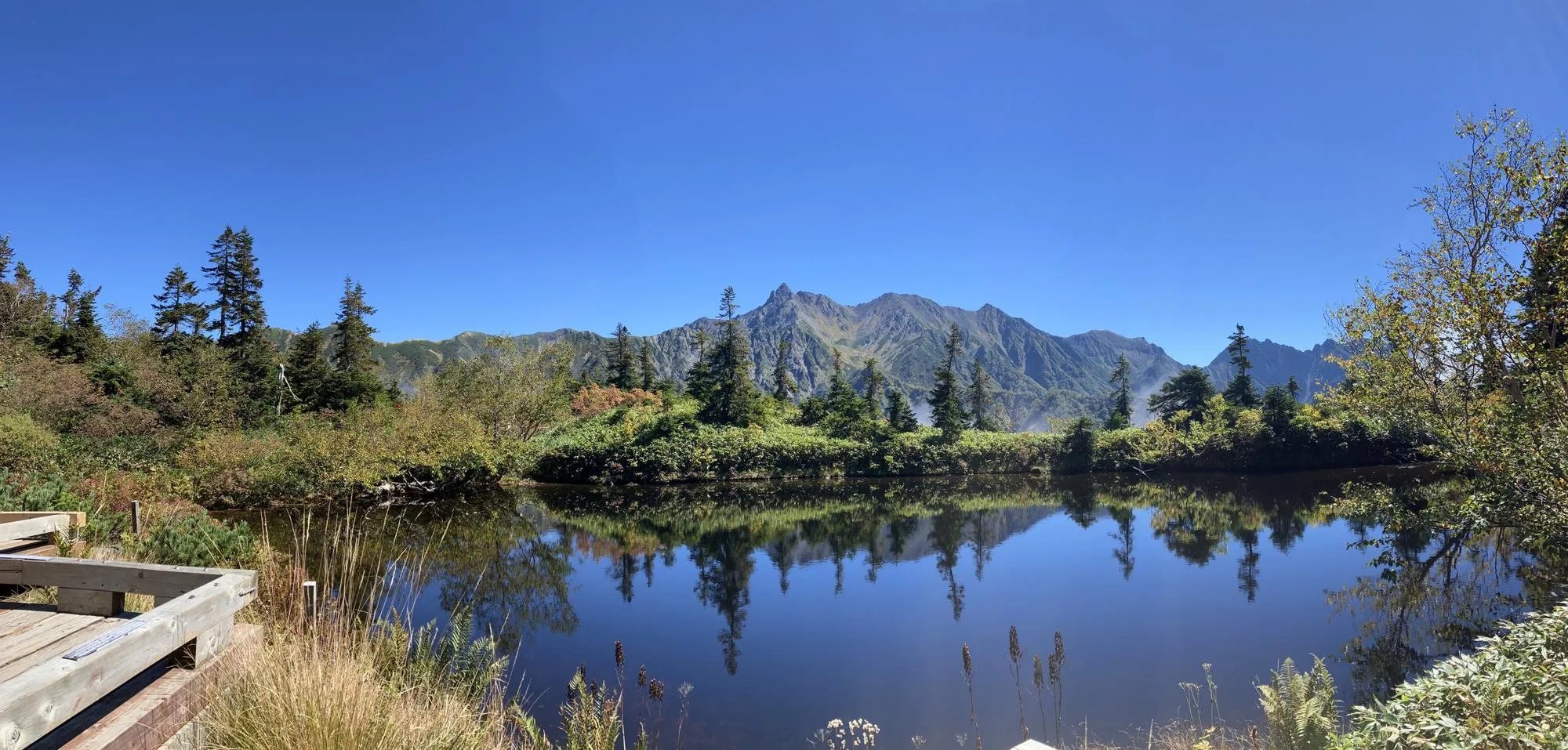
At 2,282m, we reach Kagami Pond. From here, you can see Mount Yari reflected in the pond. The sharp, pointy mountain in the photo is Mount Yari. At 3,180m, it is the fifth-highest mountain in Japan.
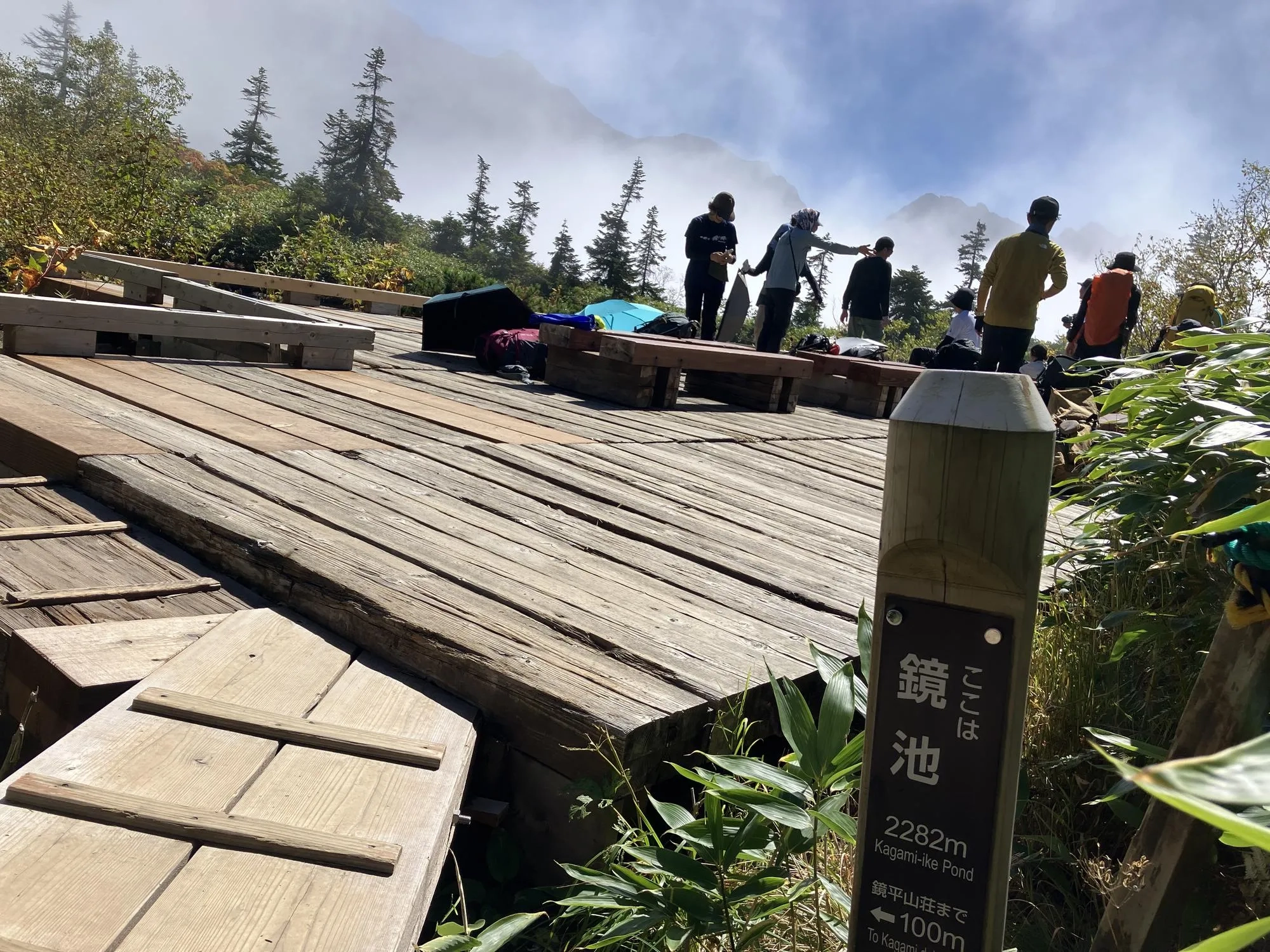
Go just a little past Kagami Pond and you reach Kagamidaira Hut. By this point, I'm really sleepy. I couldn't sleep in the car, so I've basically been awake all night. That's killing me!
To Sugoroku Hut, Where We Stay the Night
Wait, we only have another 300m to climb before reaching Sugoroku Hut. We're almost there!
Standing in front of us after we think that is what I call the straight-through-the-contour-lines route, a climb that cuts almost straight across the contour lines.
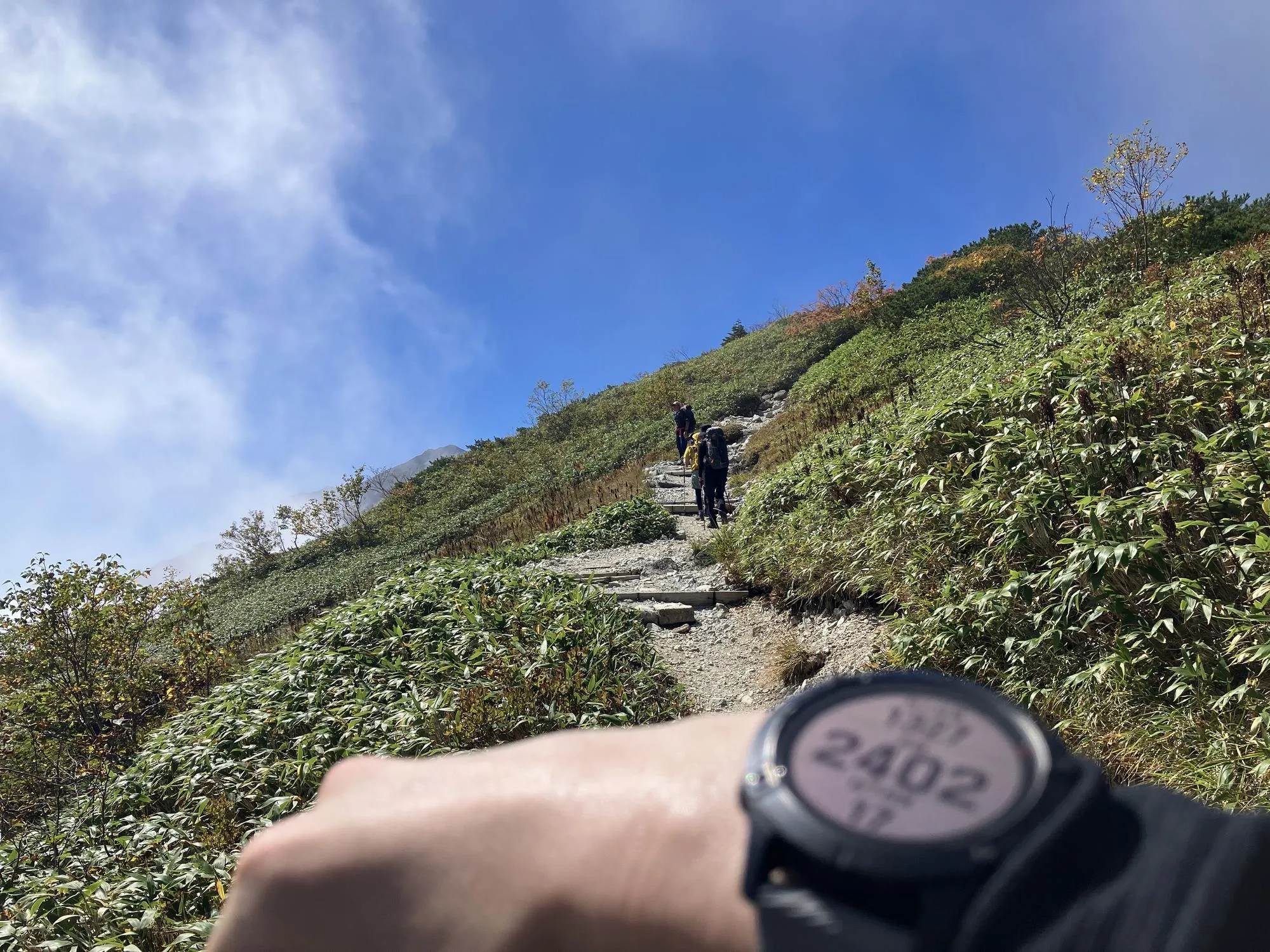
And it just keeps going like this↓. Oh man. I don't even want to look at it.
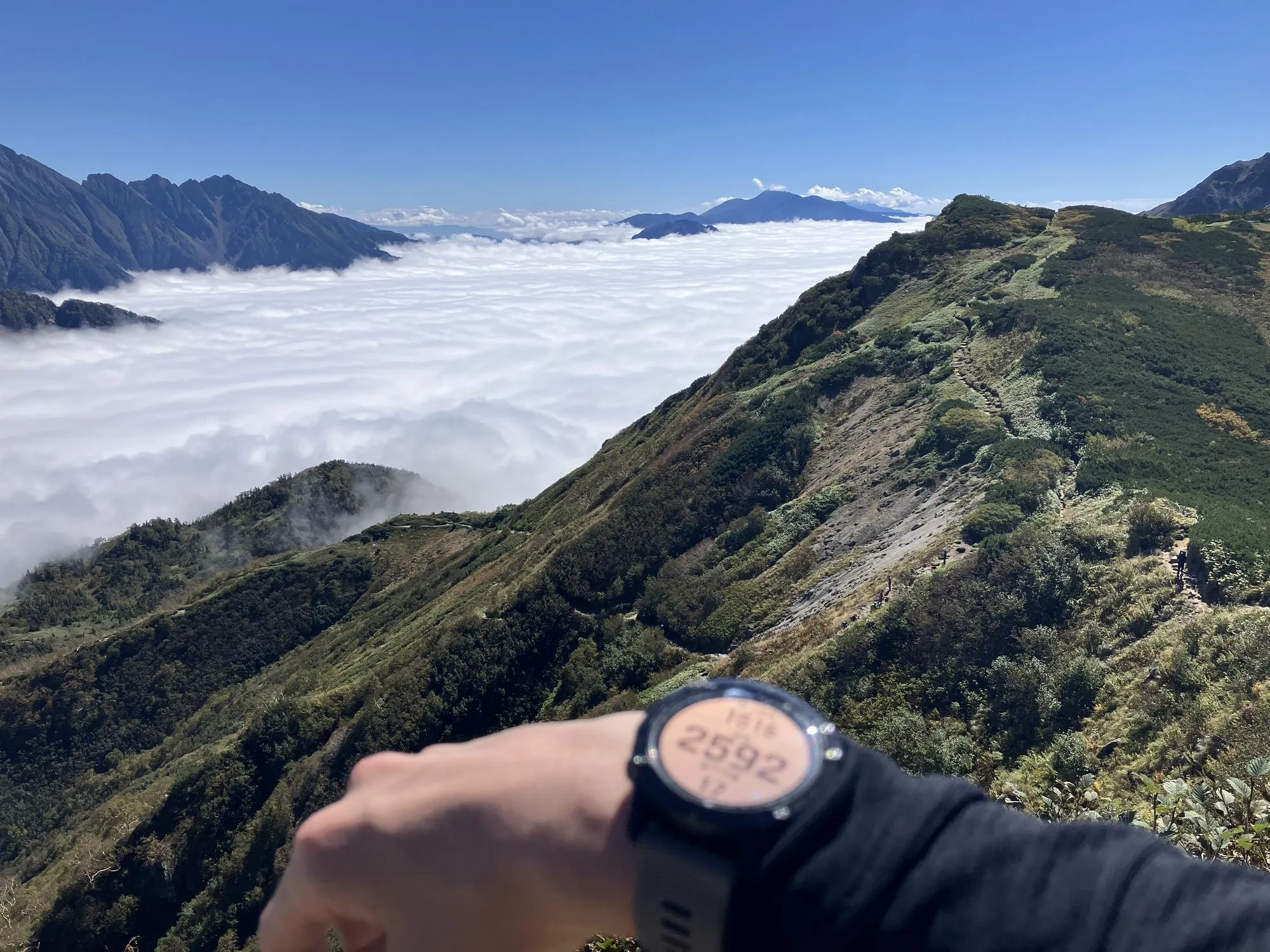
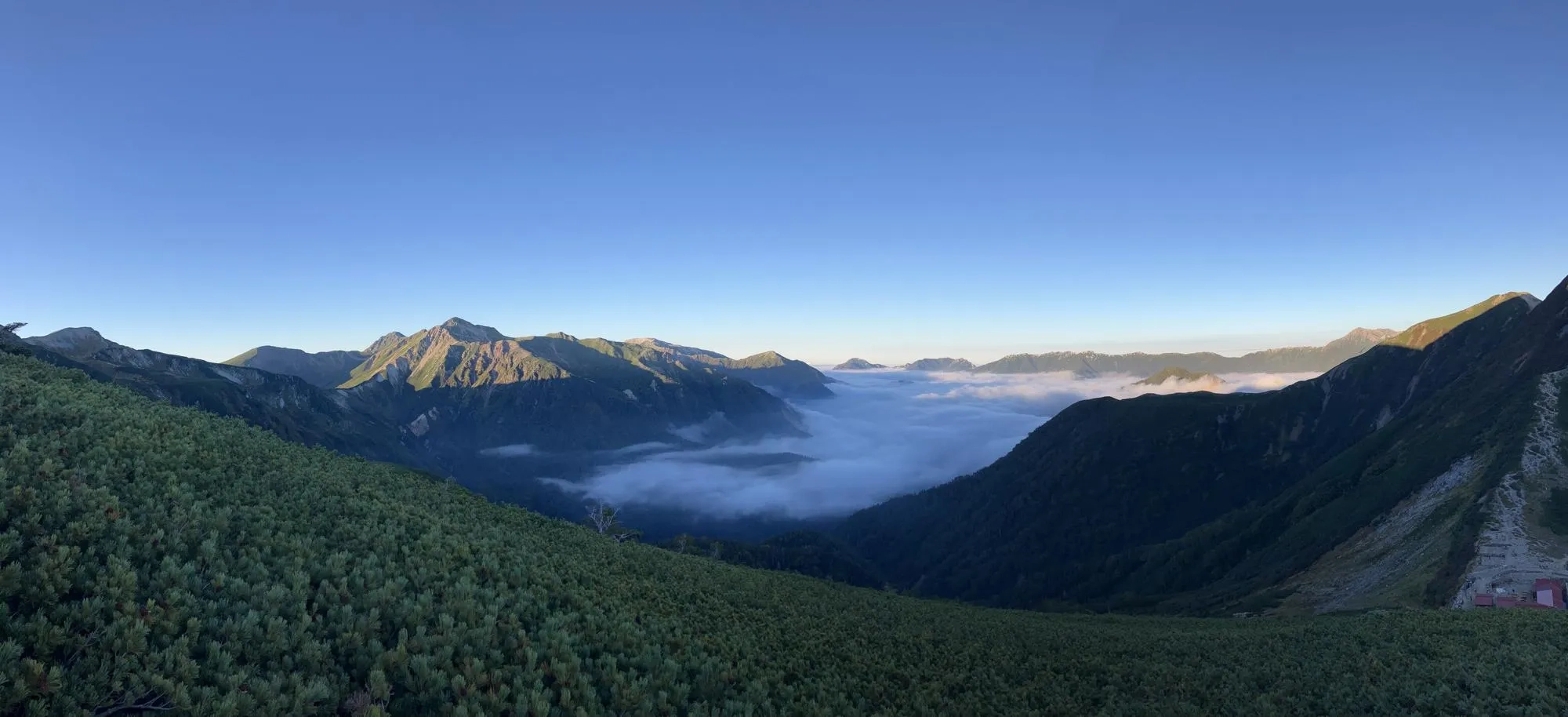
But when you look behind you, it's amazing. A sea of clouds.
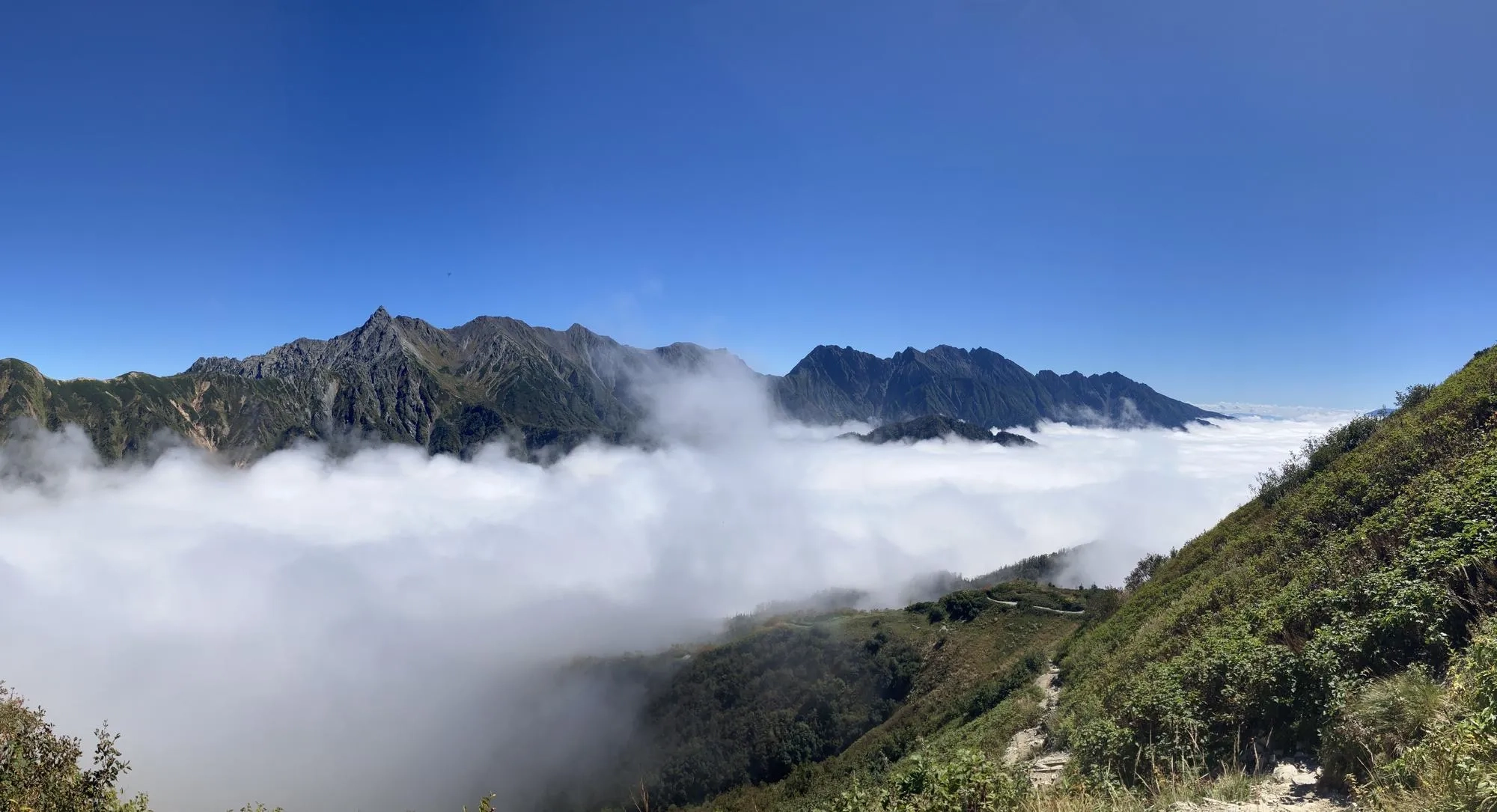
We have completely climbed above the clouds now, so the sunlight is strong. I didn't bring a sun hat, so I put a towel over my head to block the sun. It worked well enough, but next time I should probably bring a proper hat.
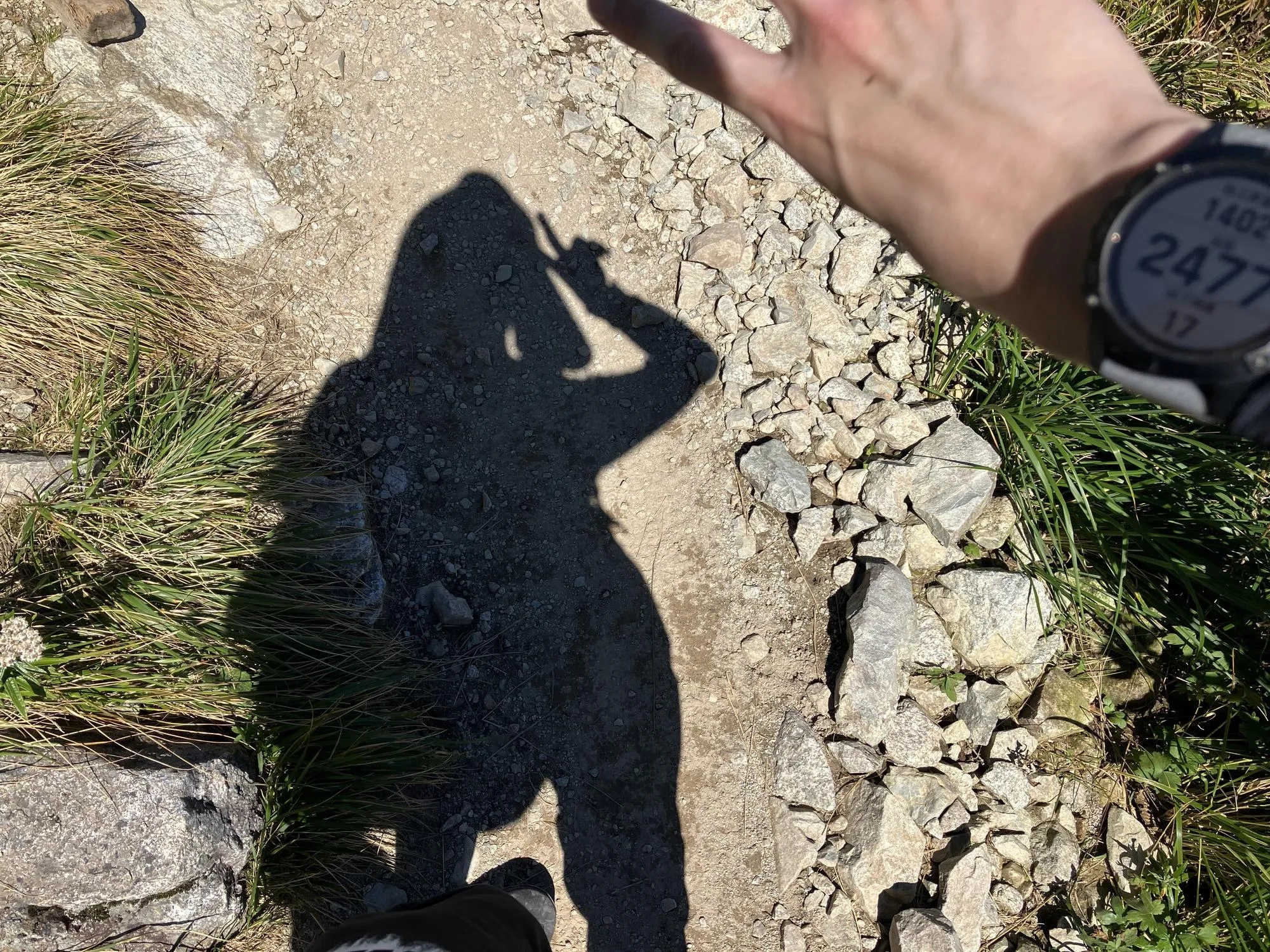
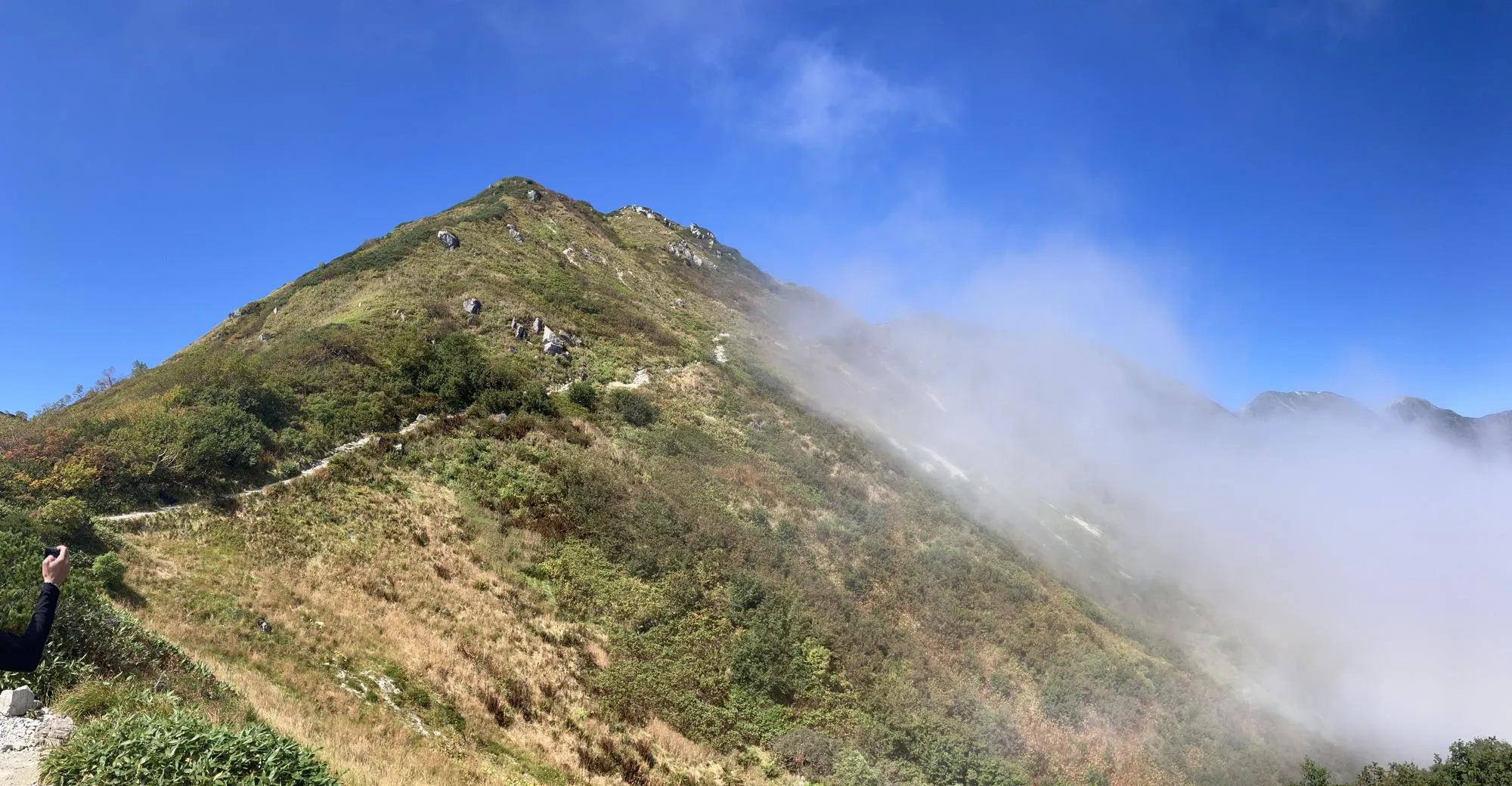
Eventually, we finally reach around 2,600m, but... huh? There's no mountain hut anywhere.
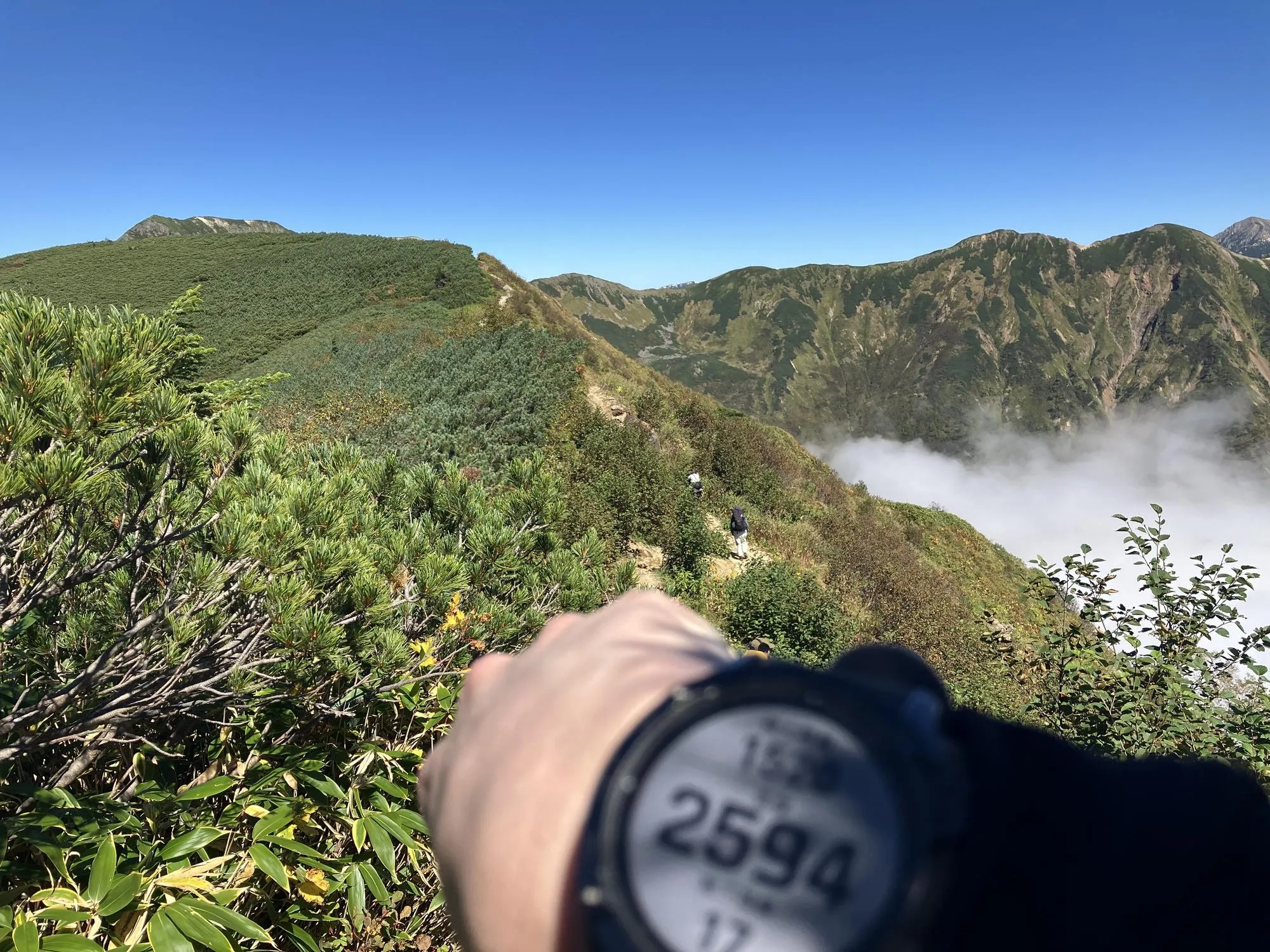
Right. After reaching 2,600m, we still have to walk about 3km along something like a ridge.
And then, finally, a building with a red roof comes into view. That's Sugoroku Hut. The huge mountain behind the hut is Mount Washiba, at 2,924m. By the way, if you climb the slope to the left of the hut, you eventually reach my real goal: the summit of Mount Sugoroku.
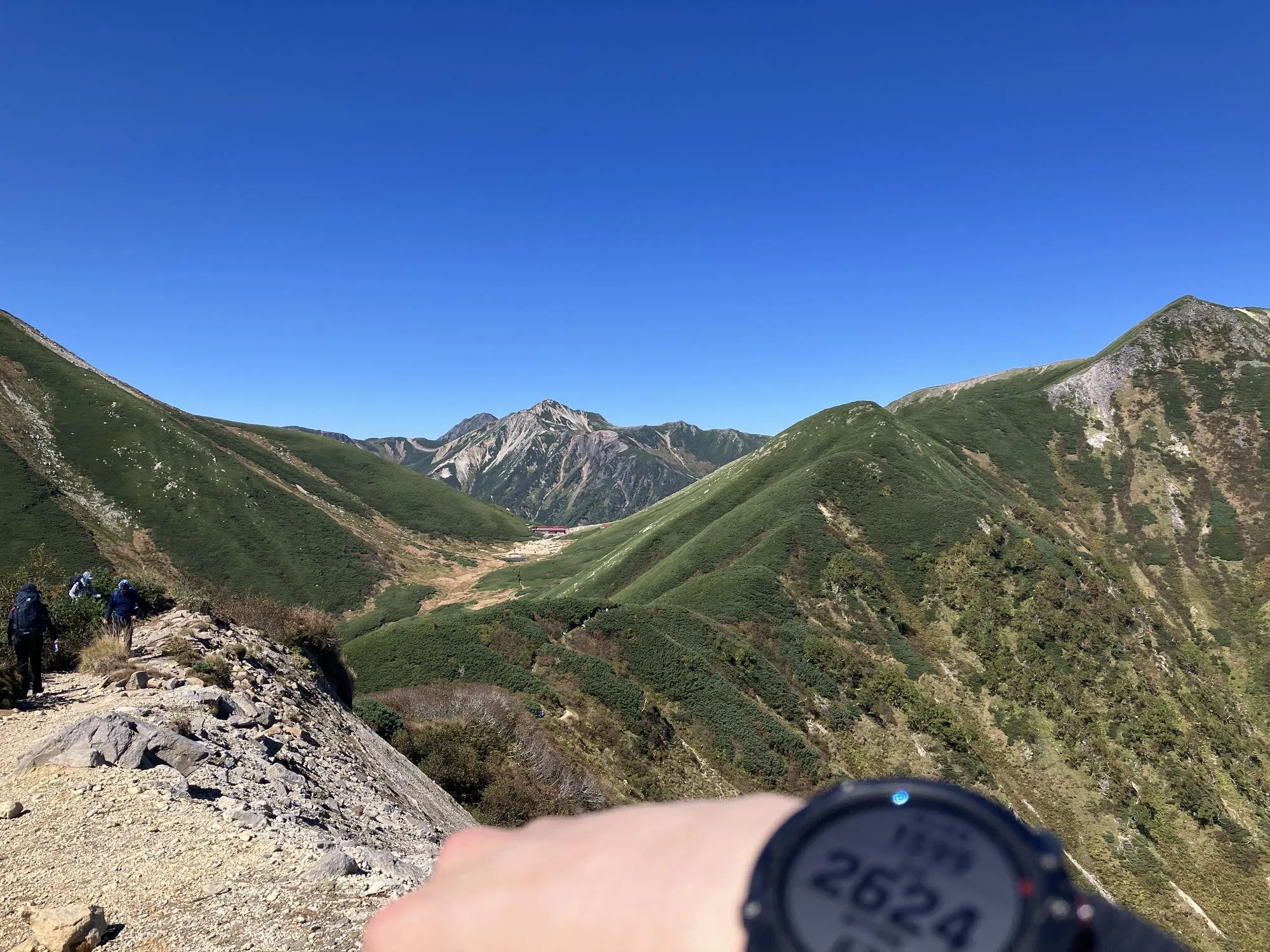
We made it.
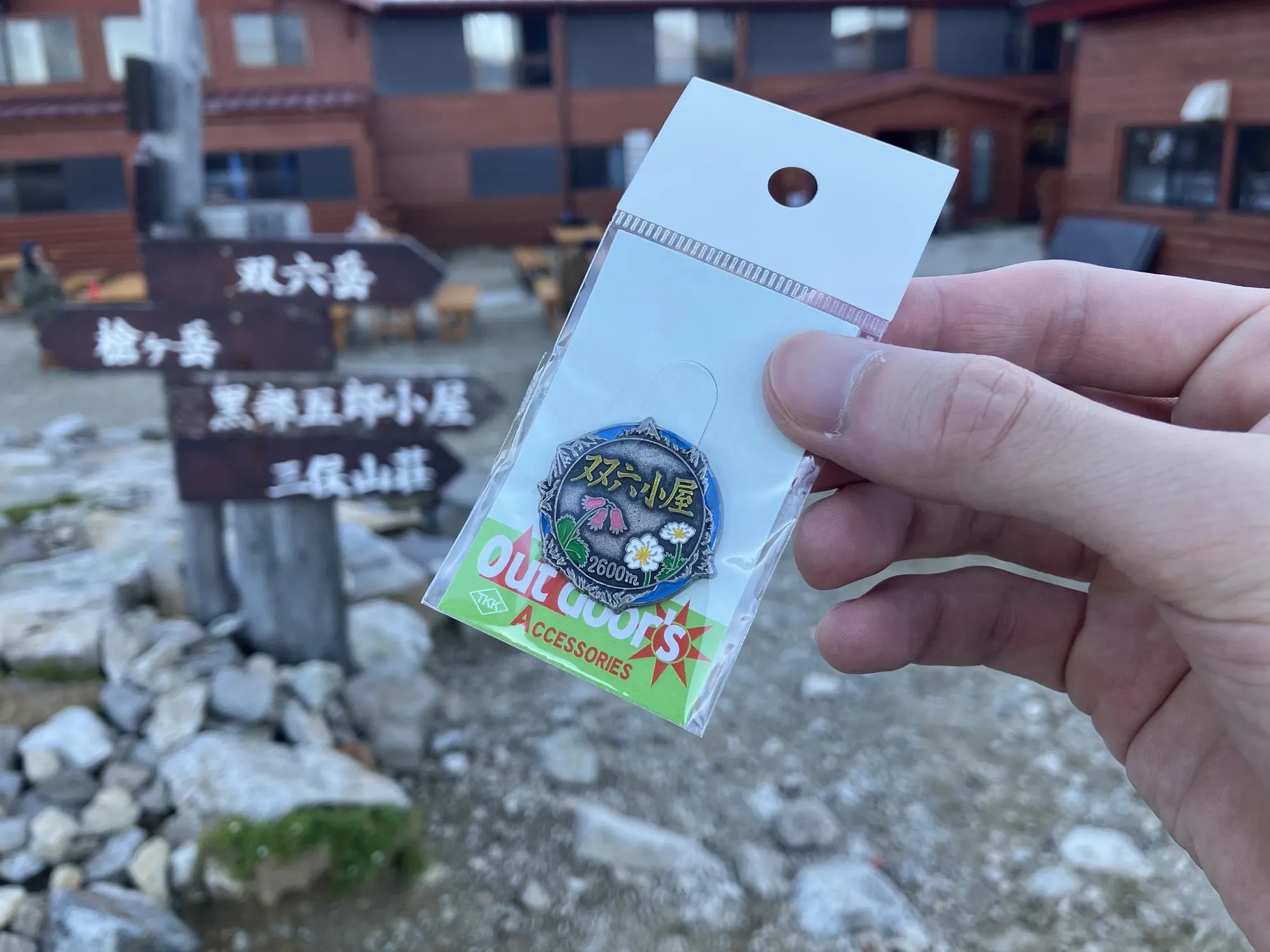
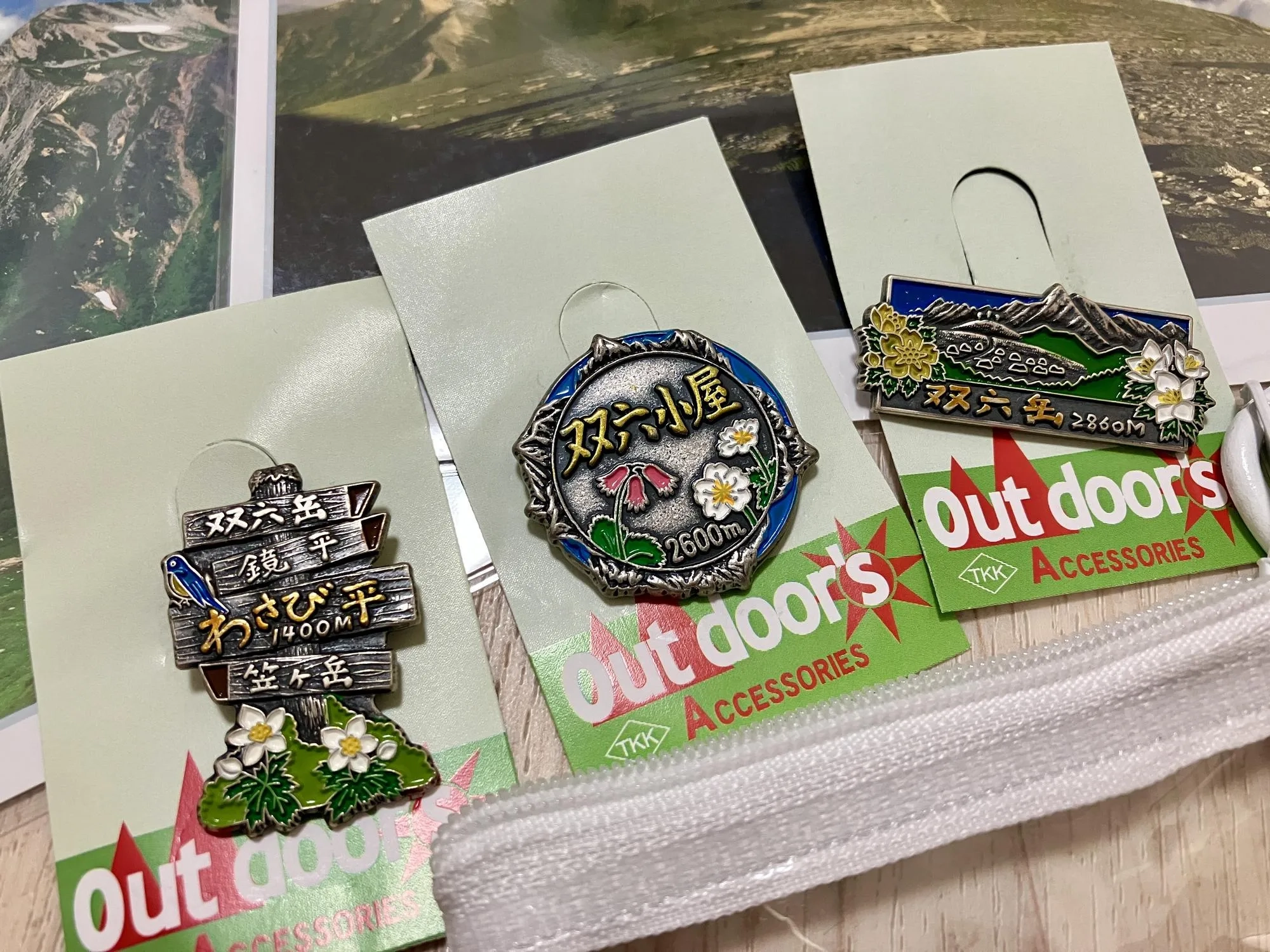
Sugoroku Hut has one of my favorite things: a local souvenir pin badge. Immediate purchase (800 yen). The badge says 2,600m, but I've been measuring the elevation myself the whole time, so I know the truth. Sugoroku Hut is around 2,550m.
To the Summit of Mount Sugoroku
We had reserved a room at Sugoroku Hut, so I take a nap there for about an hour. Finally, the pain of staying awake all night starts to fade. Then, before sunset, we head for the summit of Mount Sugoroku.
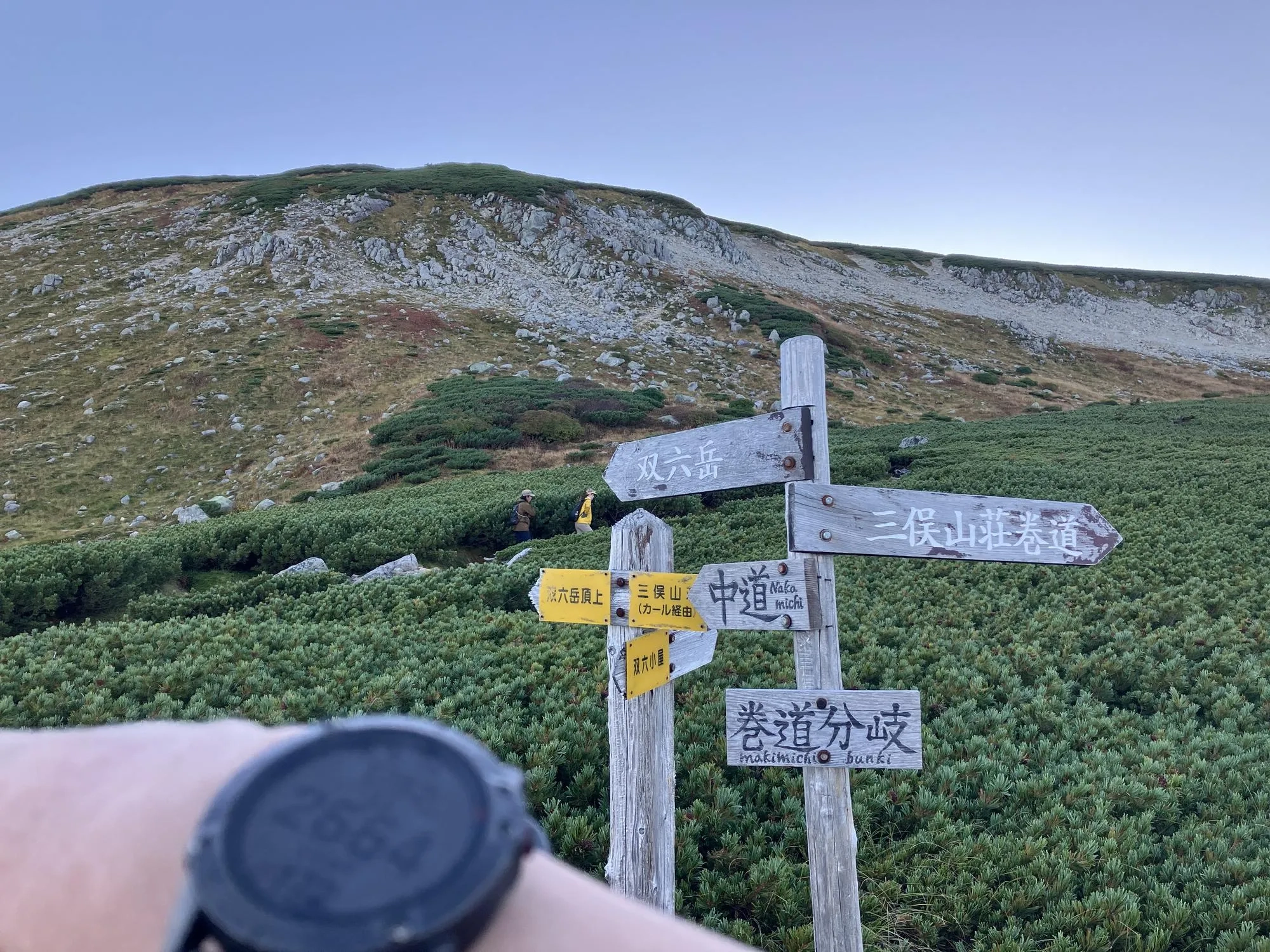
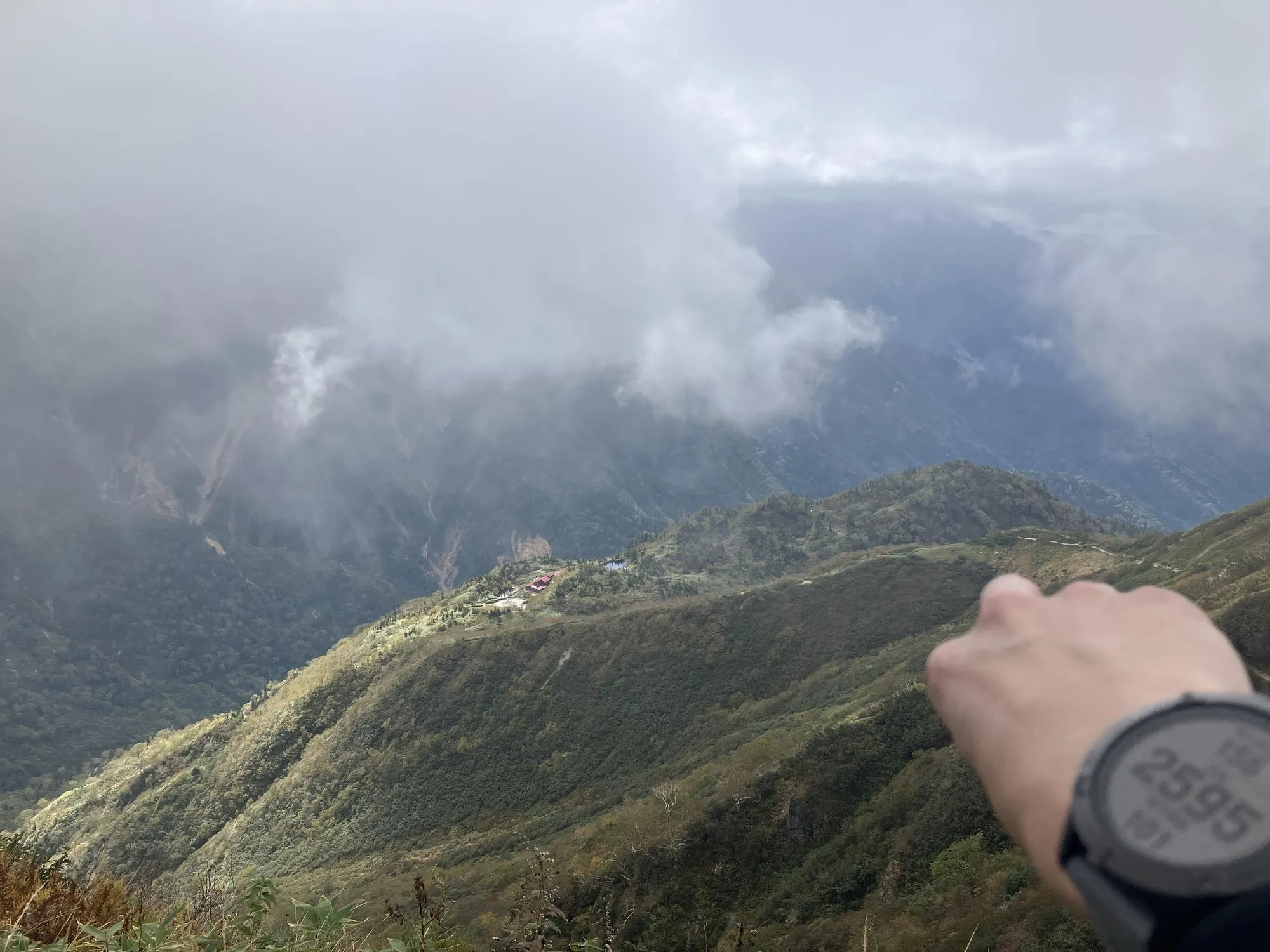
After climbing a little and looking back down, I can see beyond Sugoroku Hut... all around Mount Washiba. There is a sea of clouds on this side too.
We pass 2,700m. More rocks. But after sleeping for a little while, I have plenty of energy again. Sleep is important.
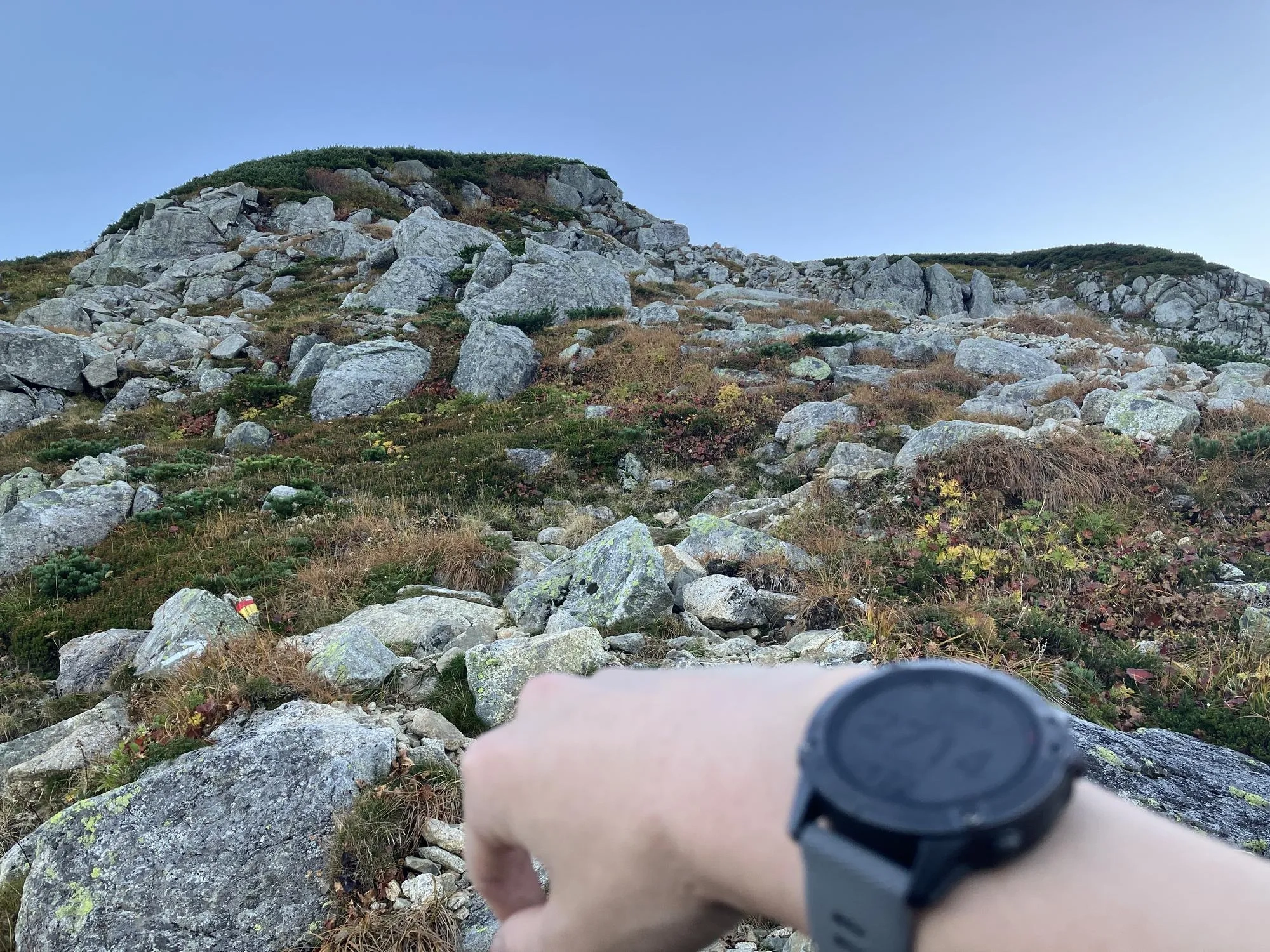
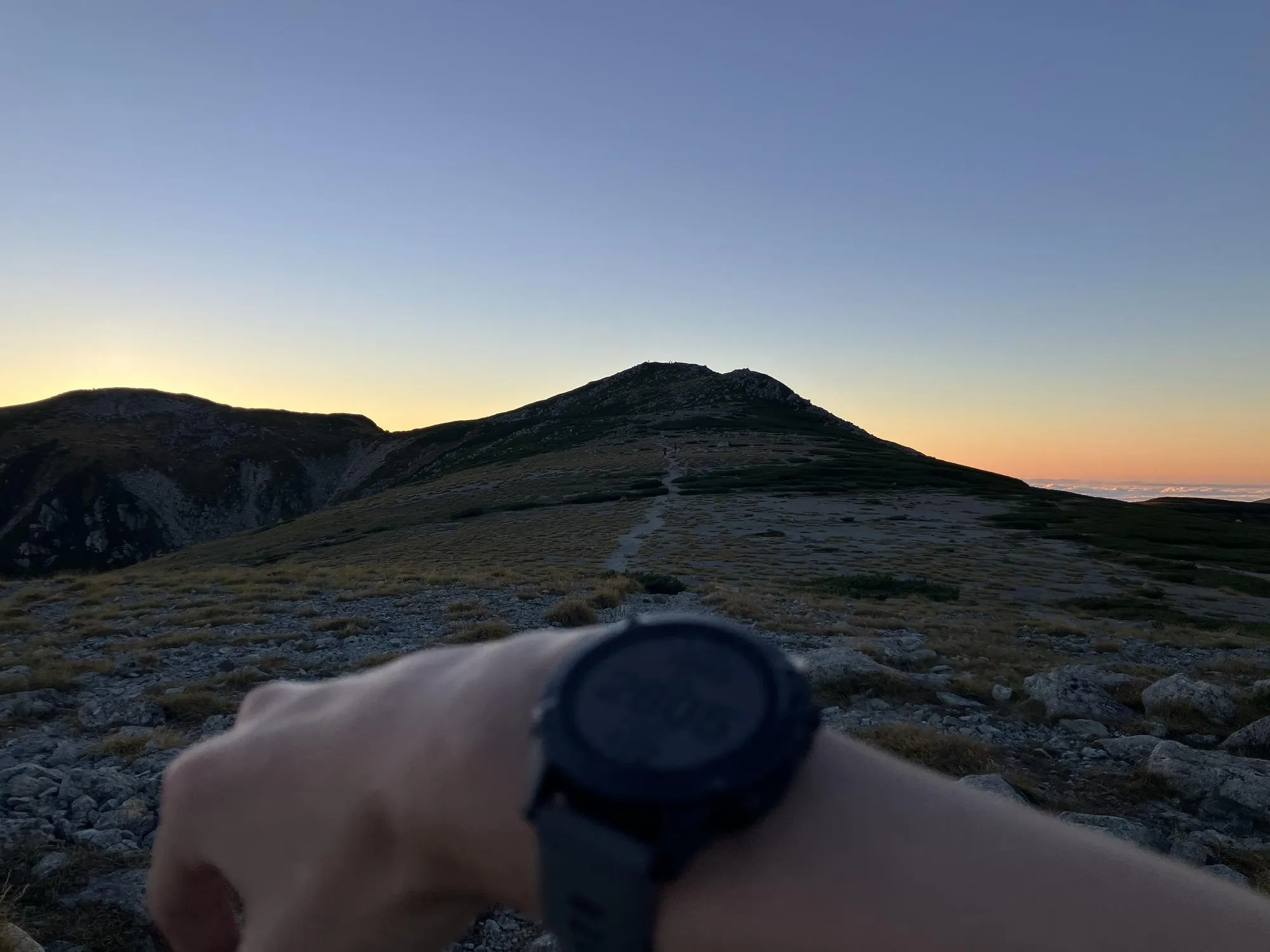
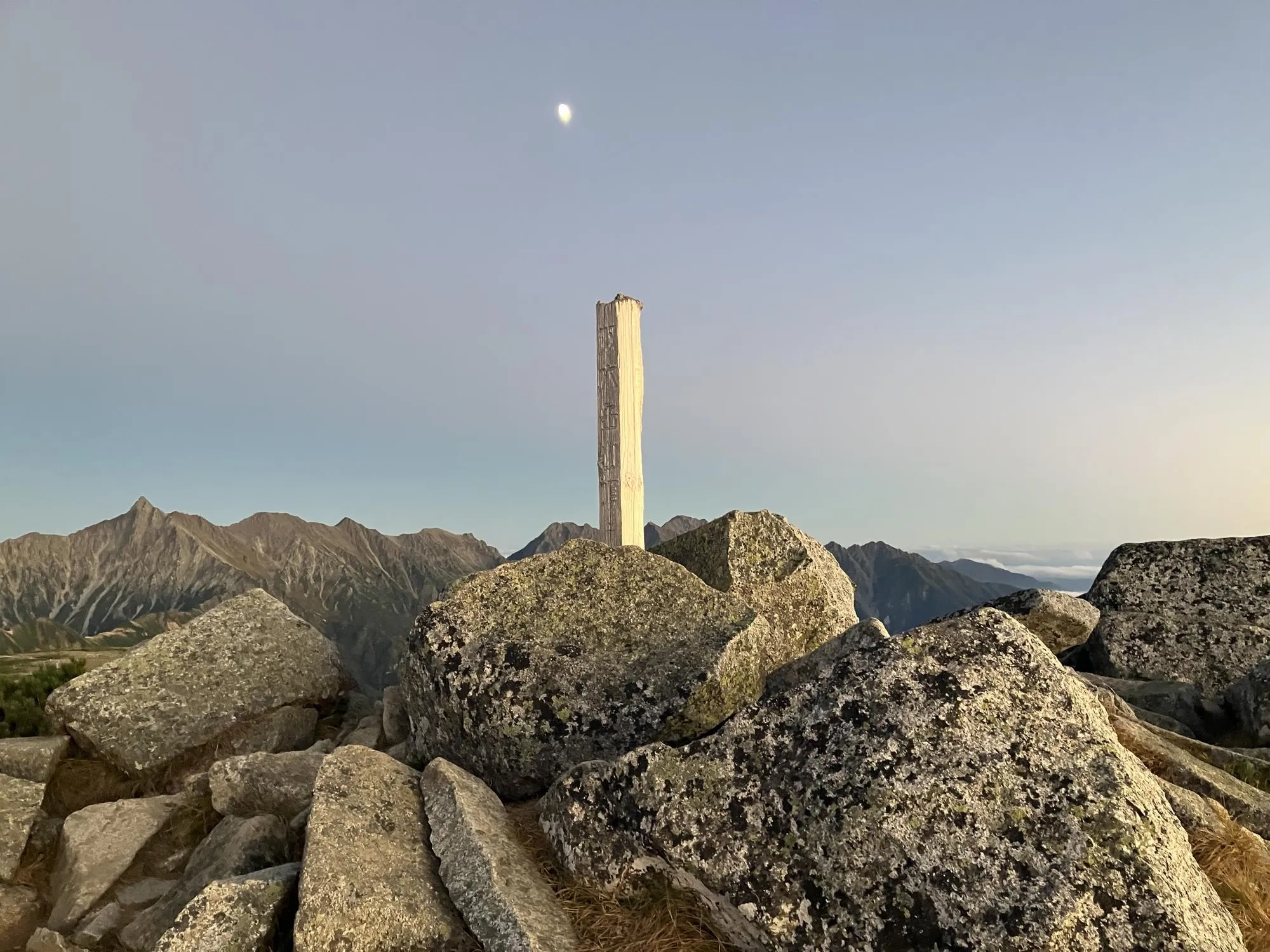
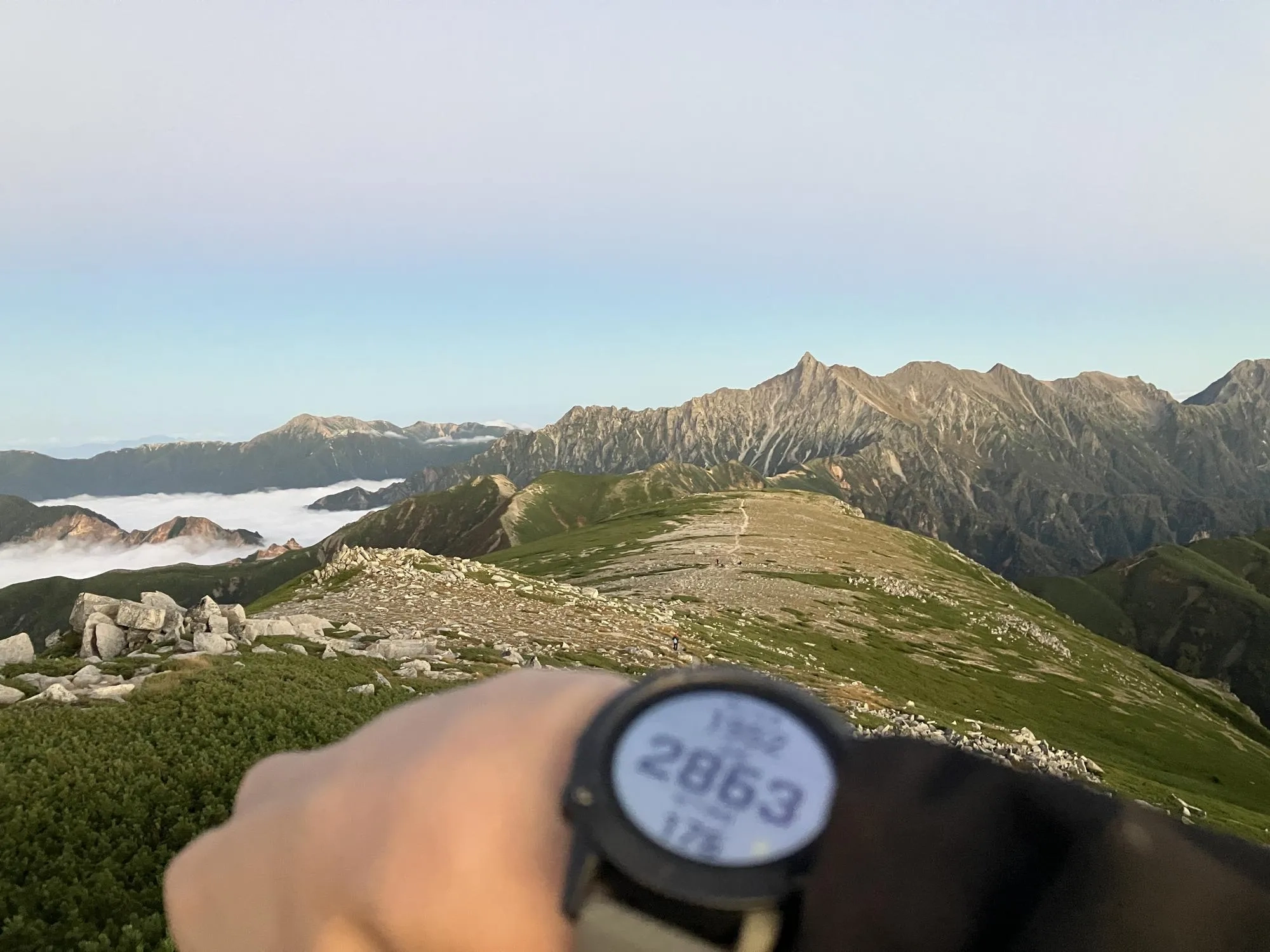
We pass 2,800m. The summit is around 2,860m, so we're really close now. That slightly raised area you can see over there is the summit of Mount Sugoroku.
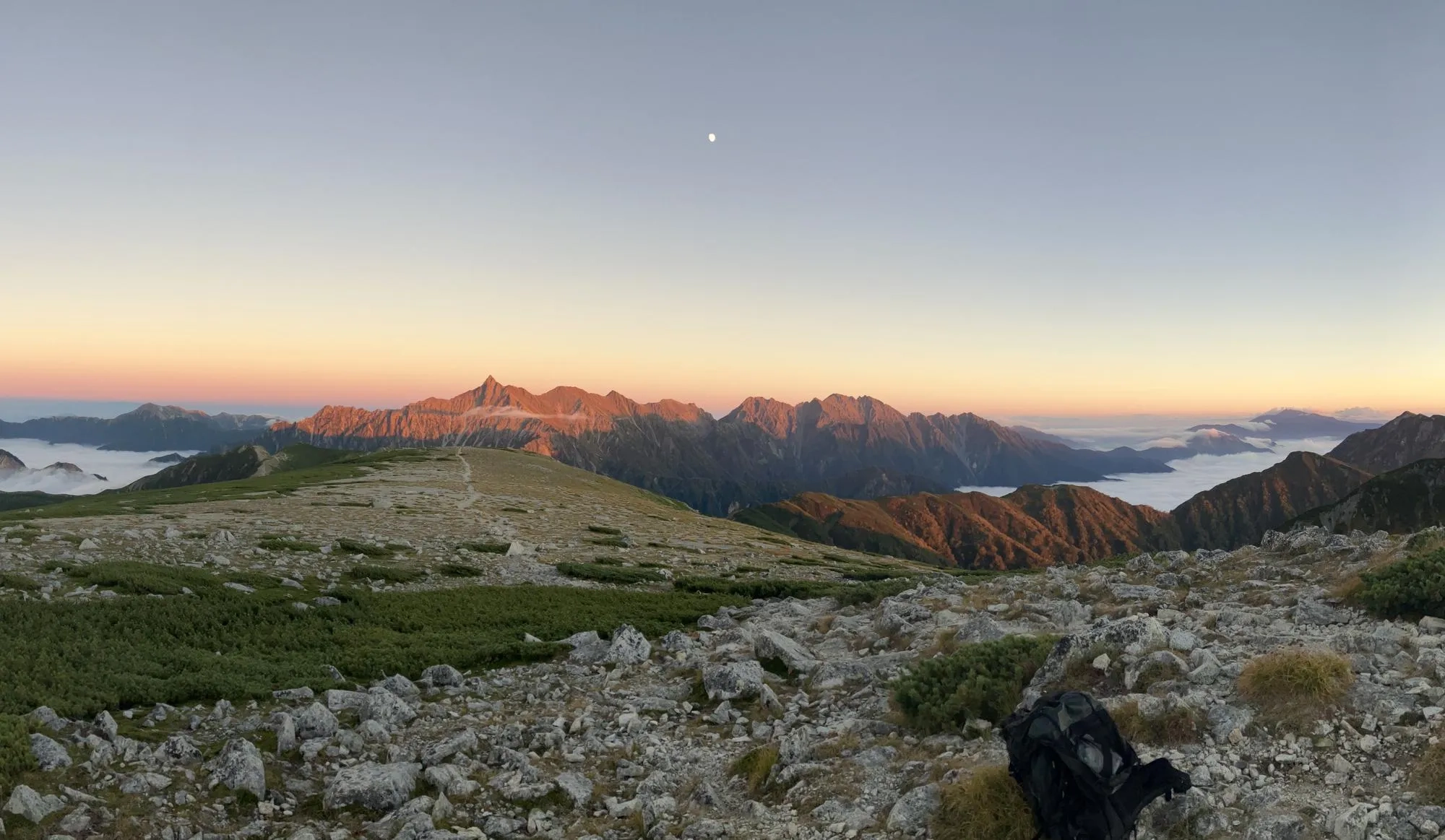
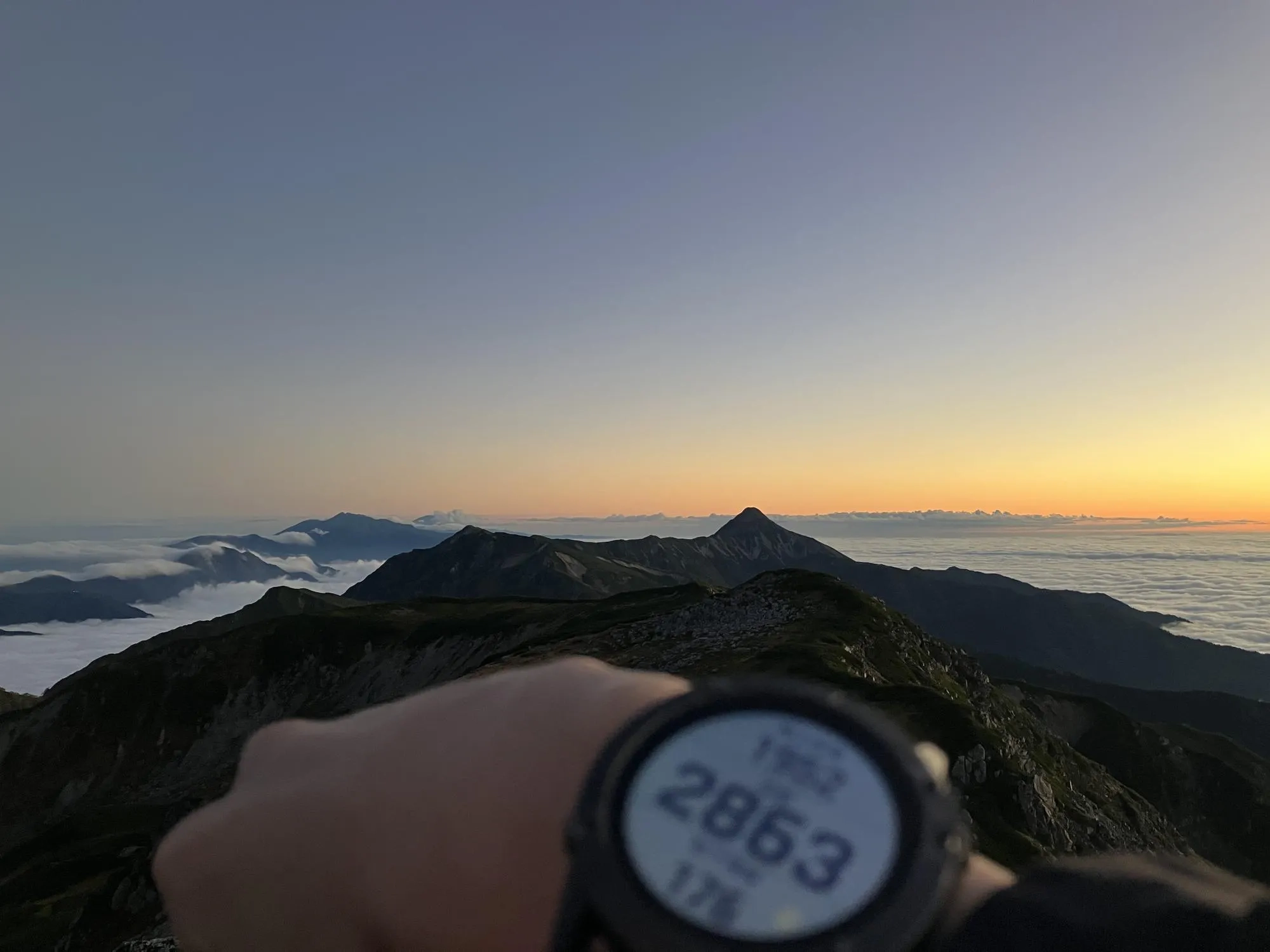
On the way, I turn around and see Abendrot on Mount Yari (a phenomenon where the setting sun turns the mountain slopes red). According to the photographers who were there, there wasn't much haze, so apparently we got lucky that day.
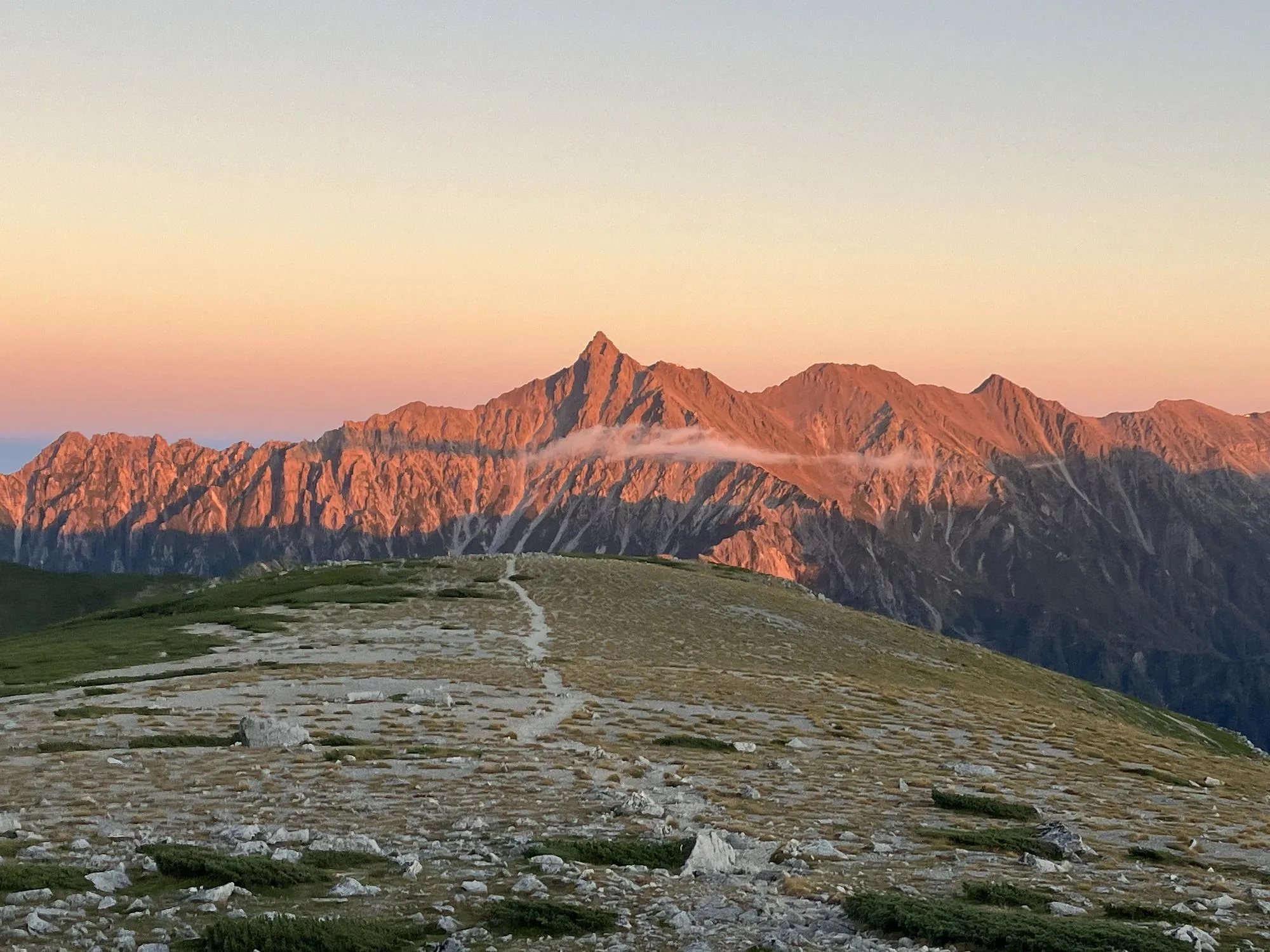
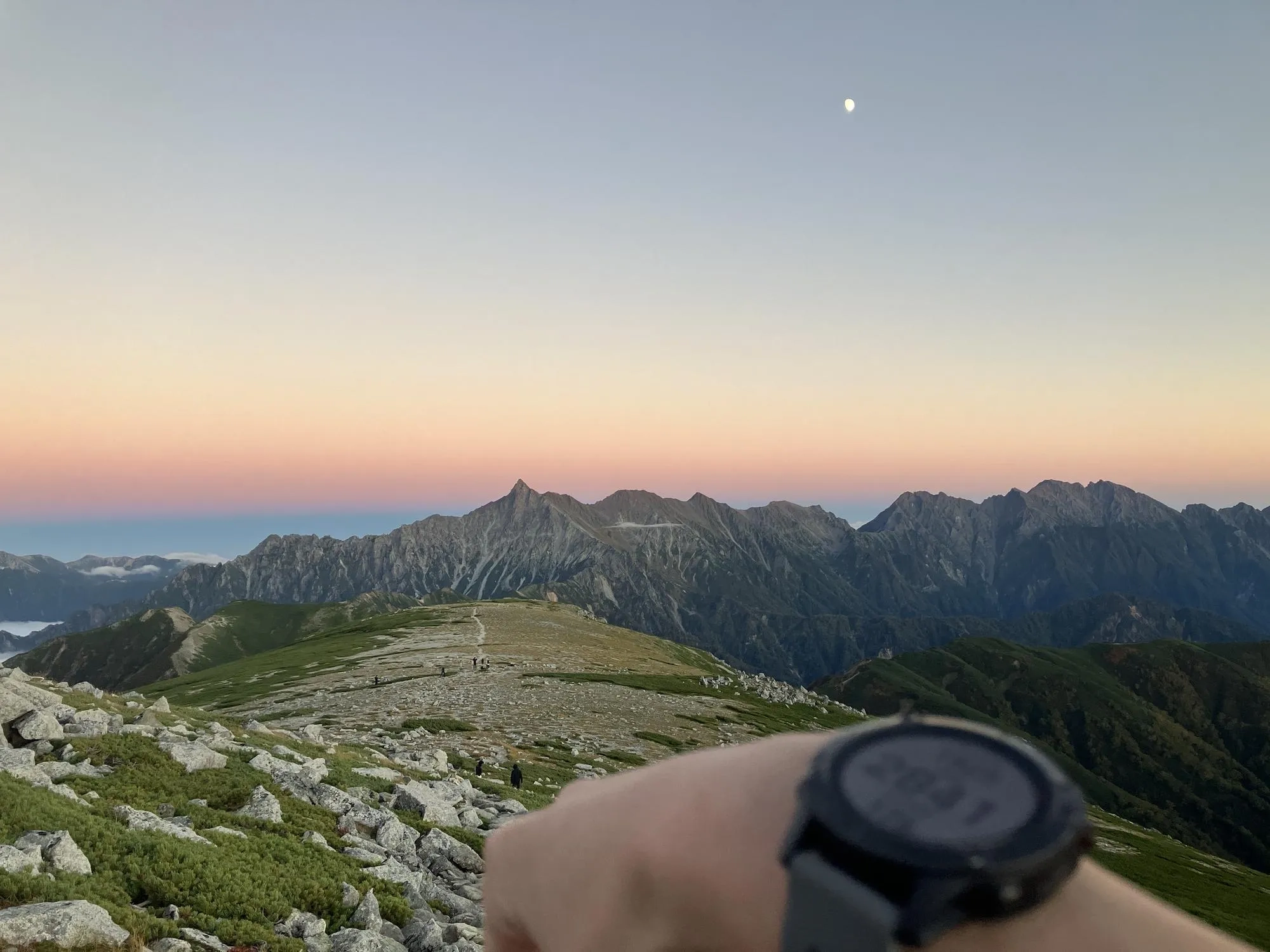
Looking at Mount Yari again after the Abendrot is over, I'm surprised by how completely different the mountain looks.
And finally, the summit! My face is hidden by Lord Golden Mask for privacy!
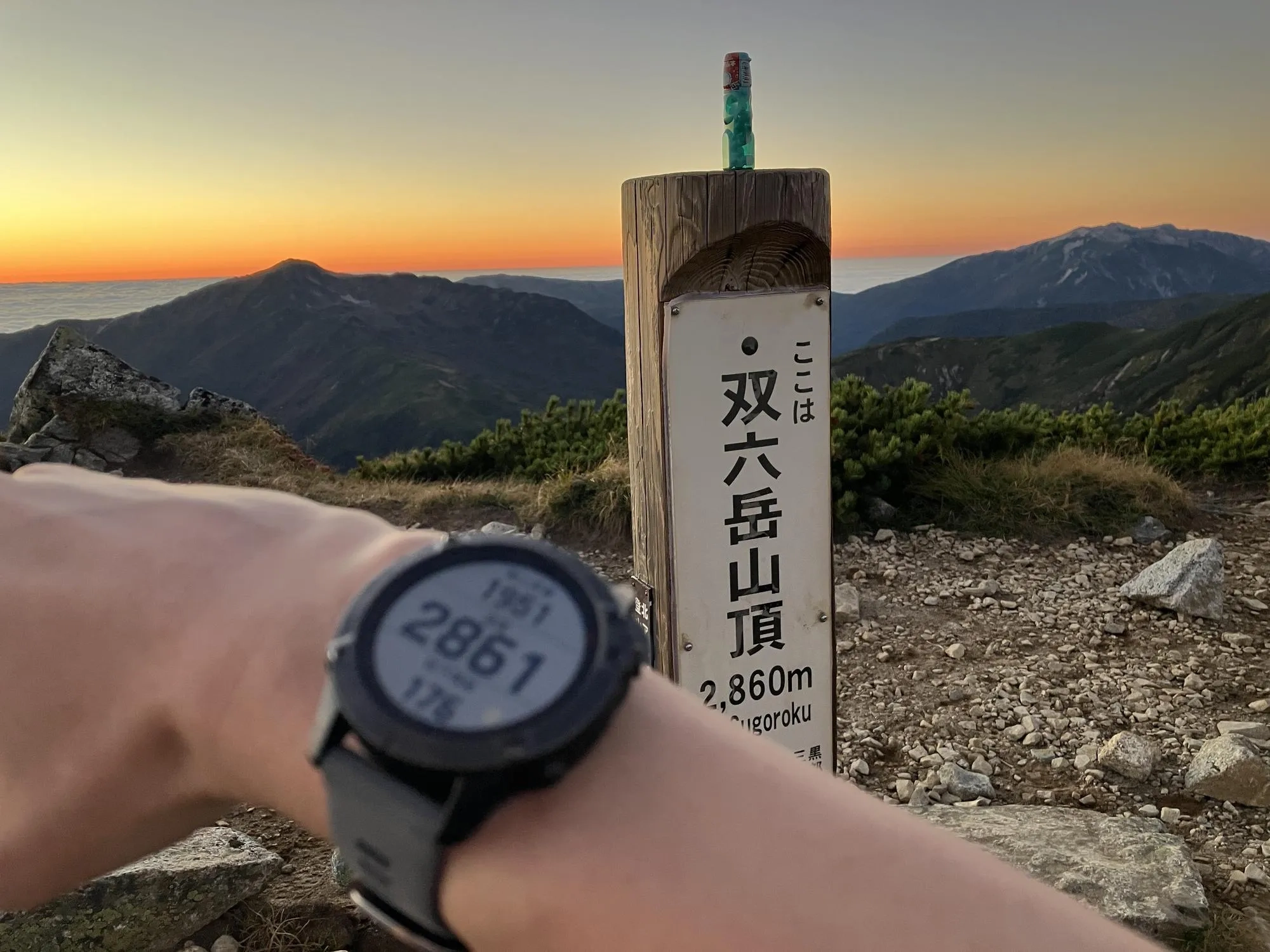
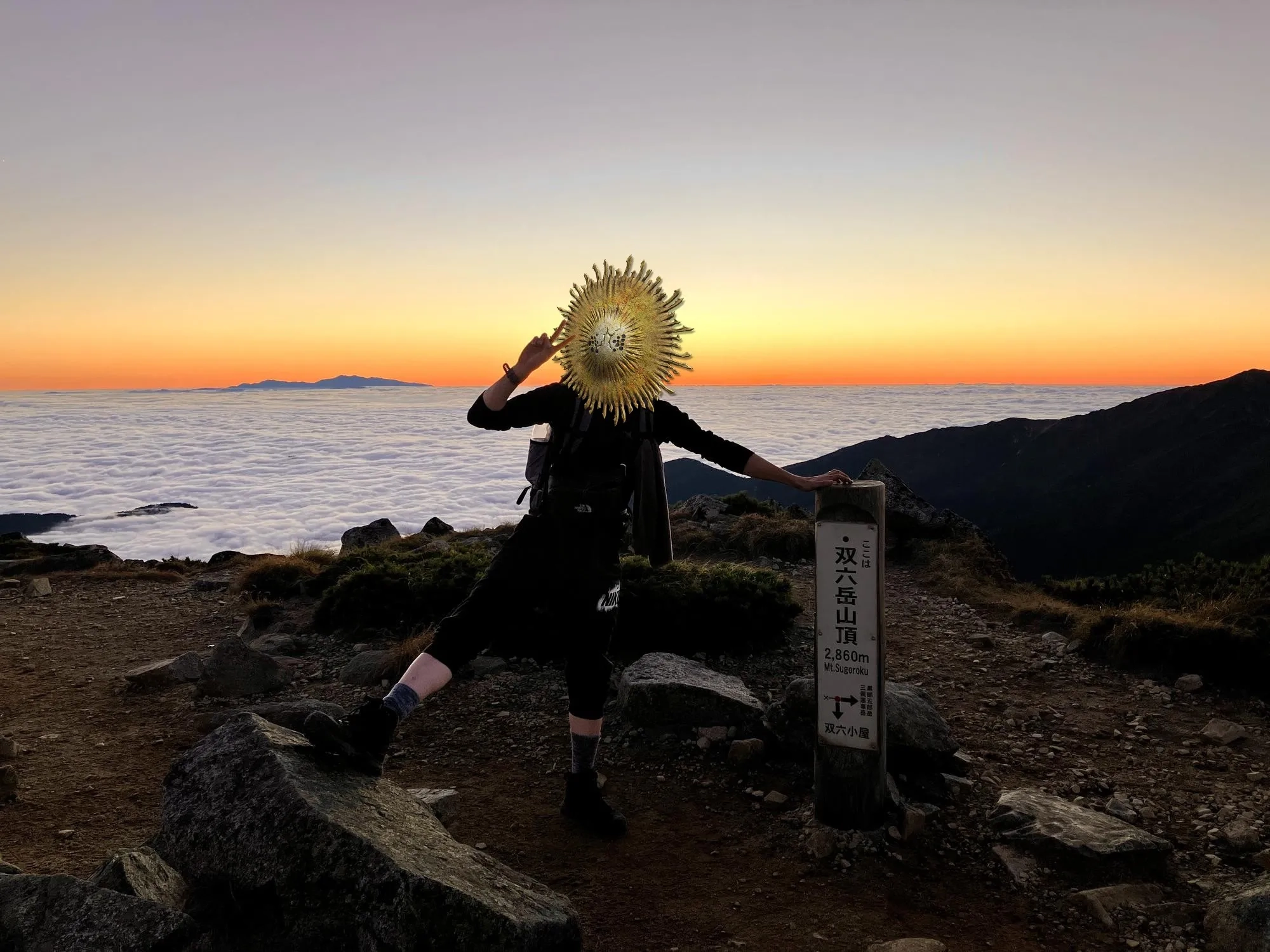
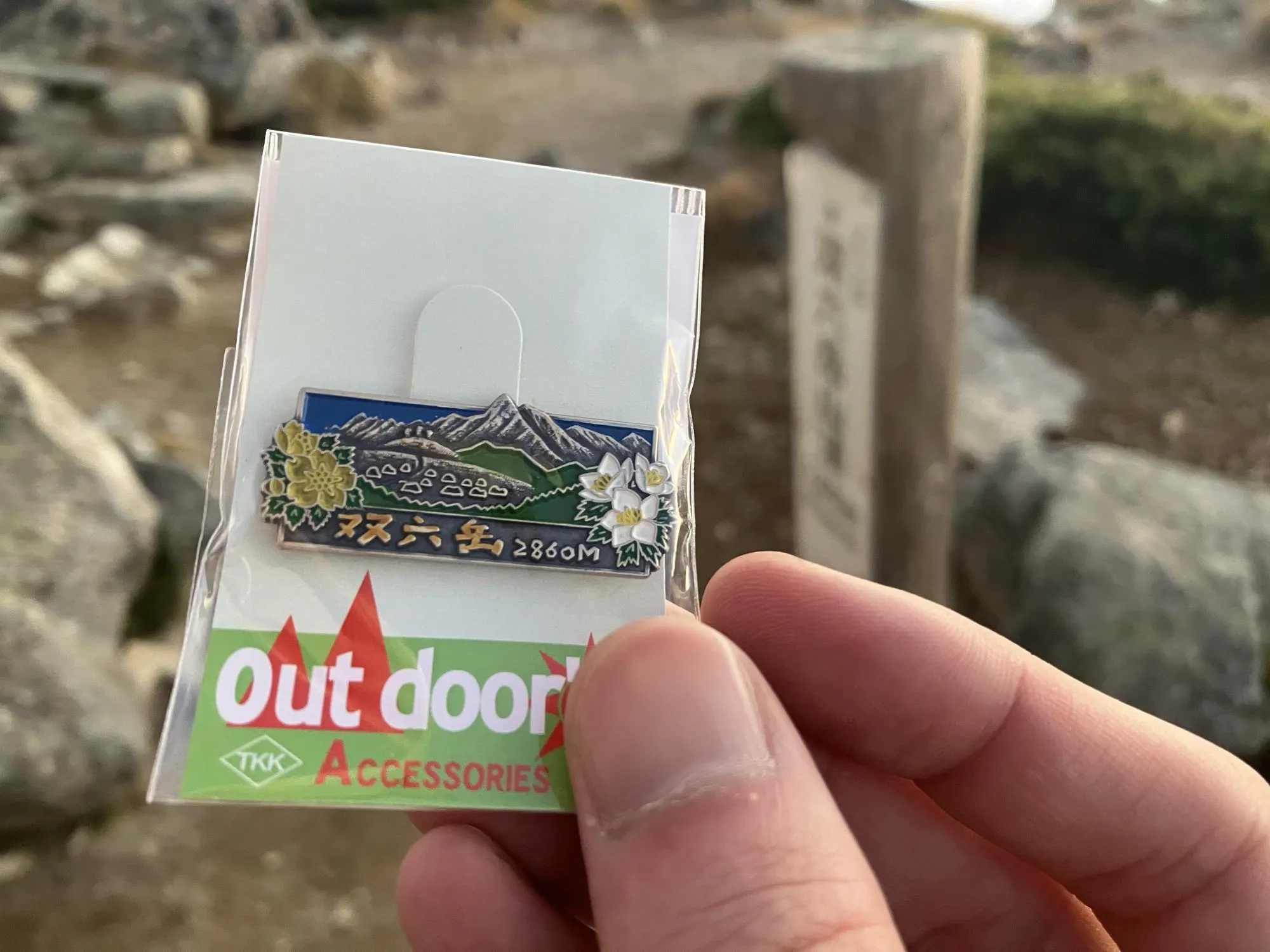
This↓ is another pin badge sold at Sugoroku Hut (the Mount Sugoroku version). It says 2,860m, but there's a slightly raised rocky area on the summit, and if you climb onto it, the elevation becomes 2,863m. A fun little fact.
Descent Summary
The descent is really important too, but let's just go through it quickly in this article. This is already getting pretty long.
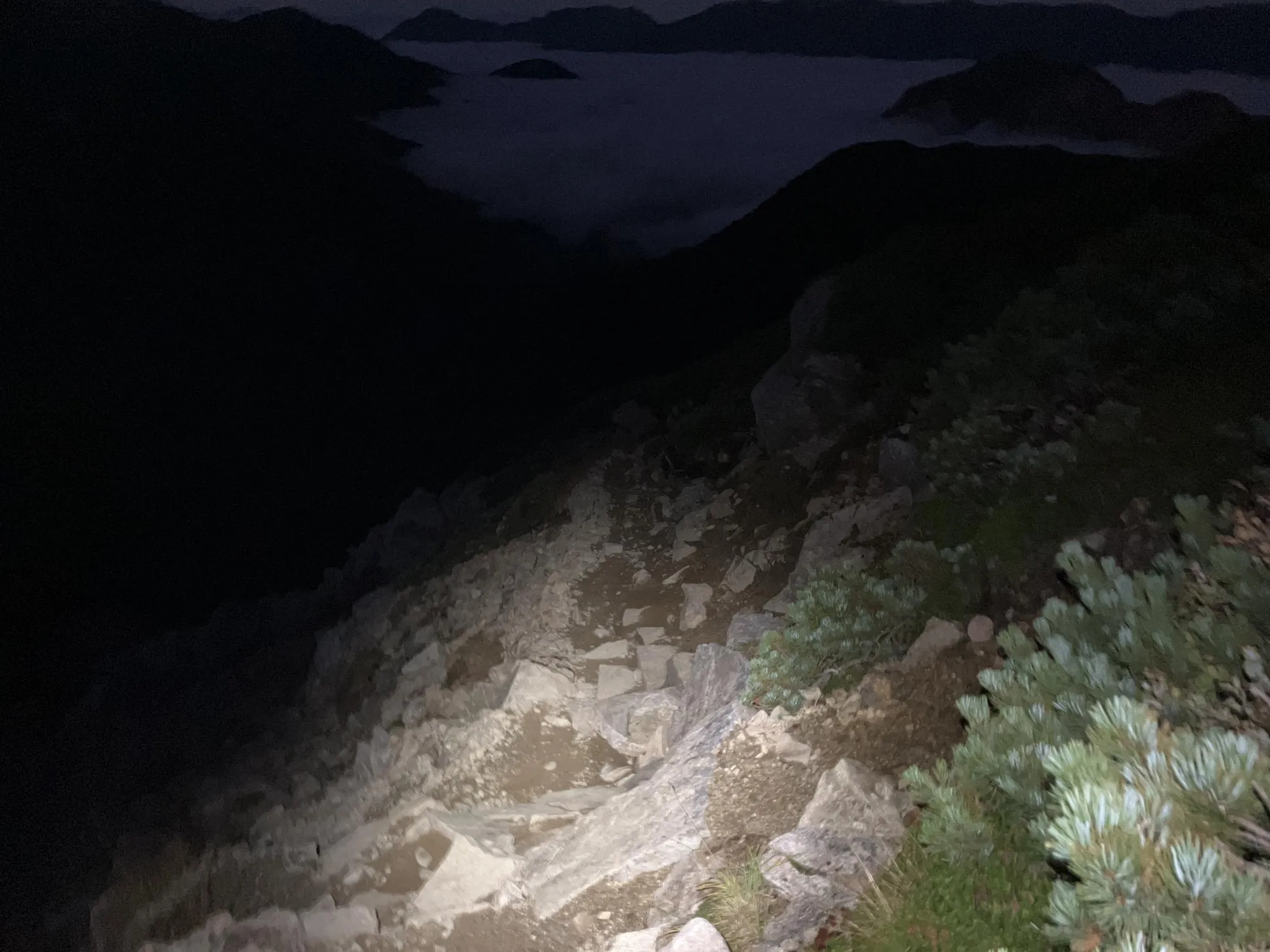
Anyway... by the time we reached the summit, the sun had gone down, and everything around us was covered in darkness. Without a headlamp, there would have been no way to get back to the mountain hut. A headlamp is absolutely essential for hiking.
Also, the temperature dropped very quickly. Seriously, it dropped unbelievably fast. Finally, my bulky cold-weather clothes from my wild camping trips became useful.
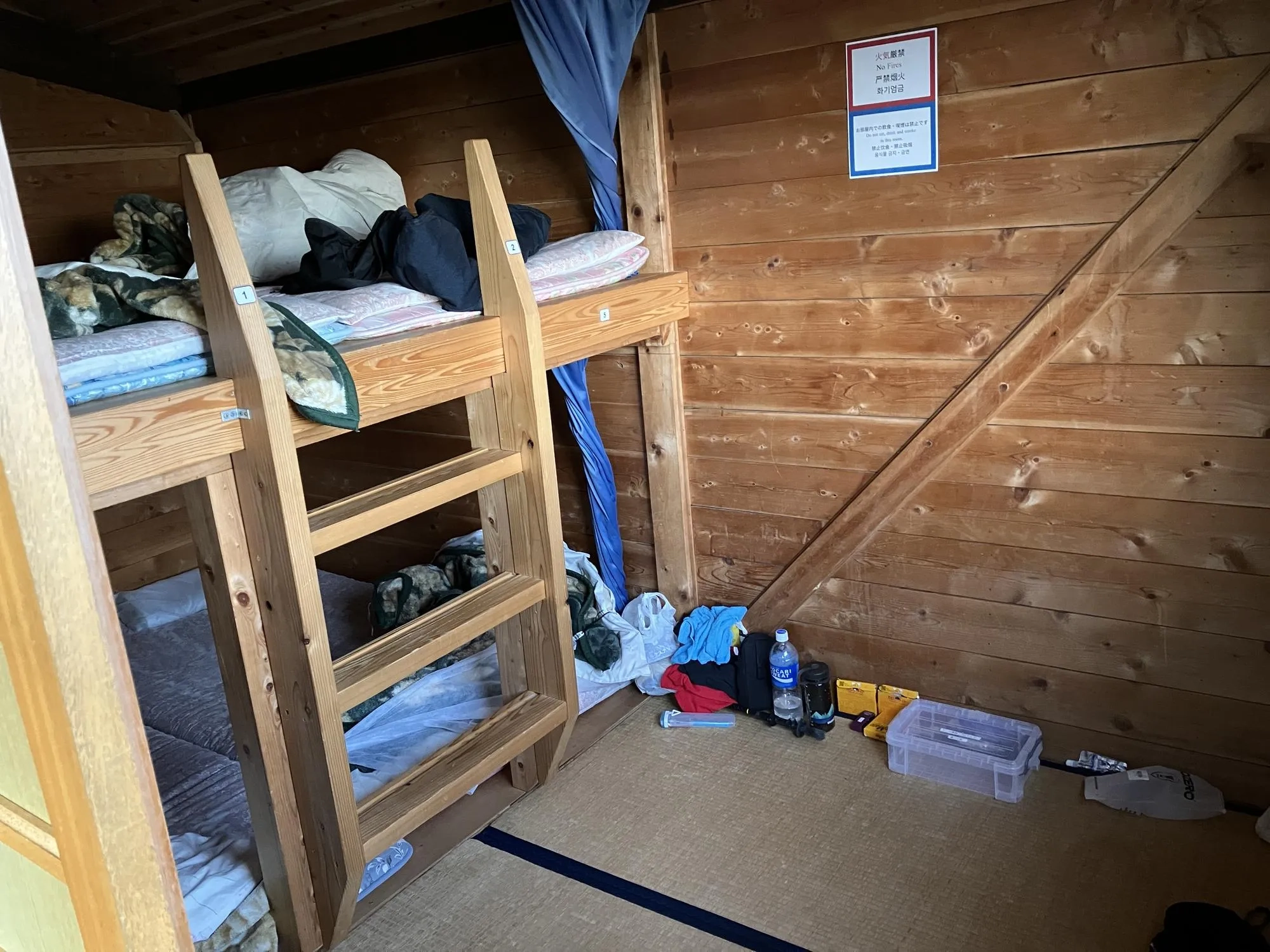
This↓ is what the sleeping room in the mountain hut looked like.
And this↓ is breakfast at the hut. Sugoroku Hut was clean, the staff were kind, and overall it was a really nice place.
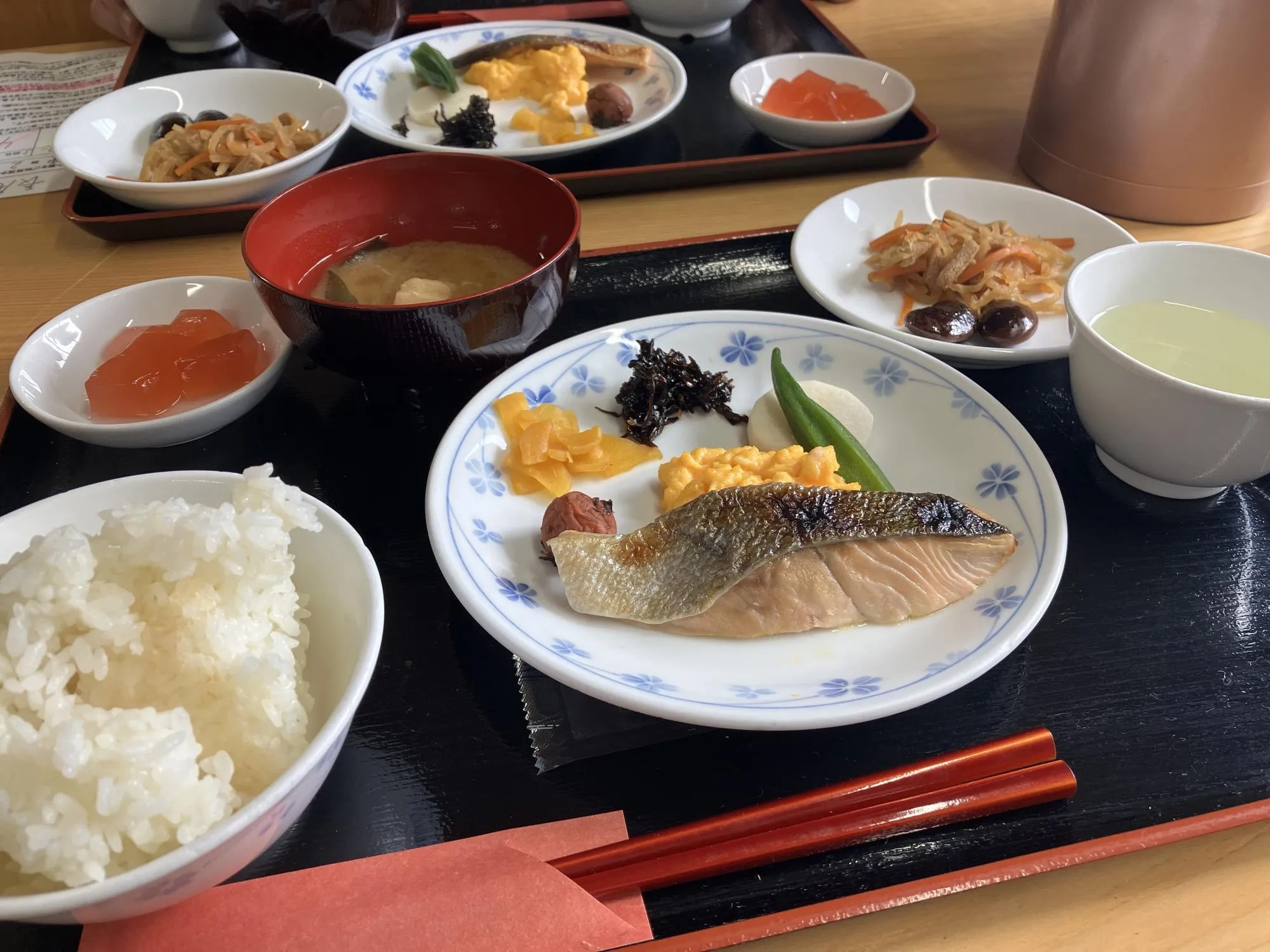
Here is the straight-through-the-contour-lines route that gave us so much trouble on the way up. This time, we have to go down it. I descend carefully so I don't destroy my knees, and my thigh muscles start screaming.
Still, it's not as hard as climbing. Raising your gravitational potential energy really is a lot of work.
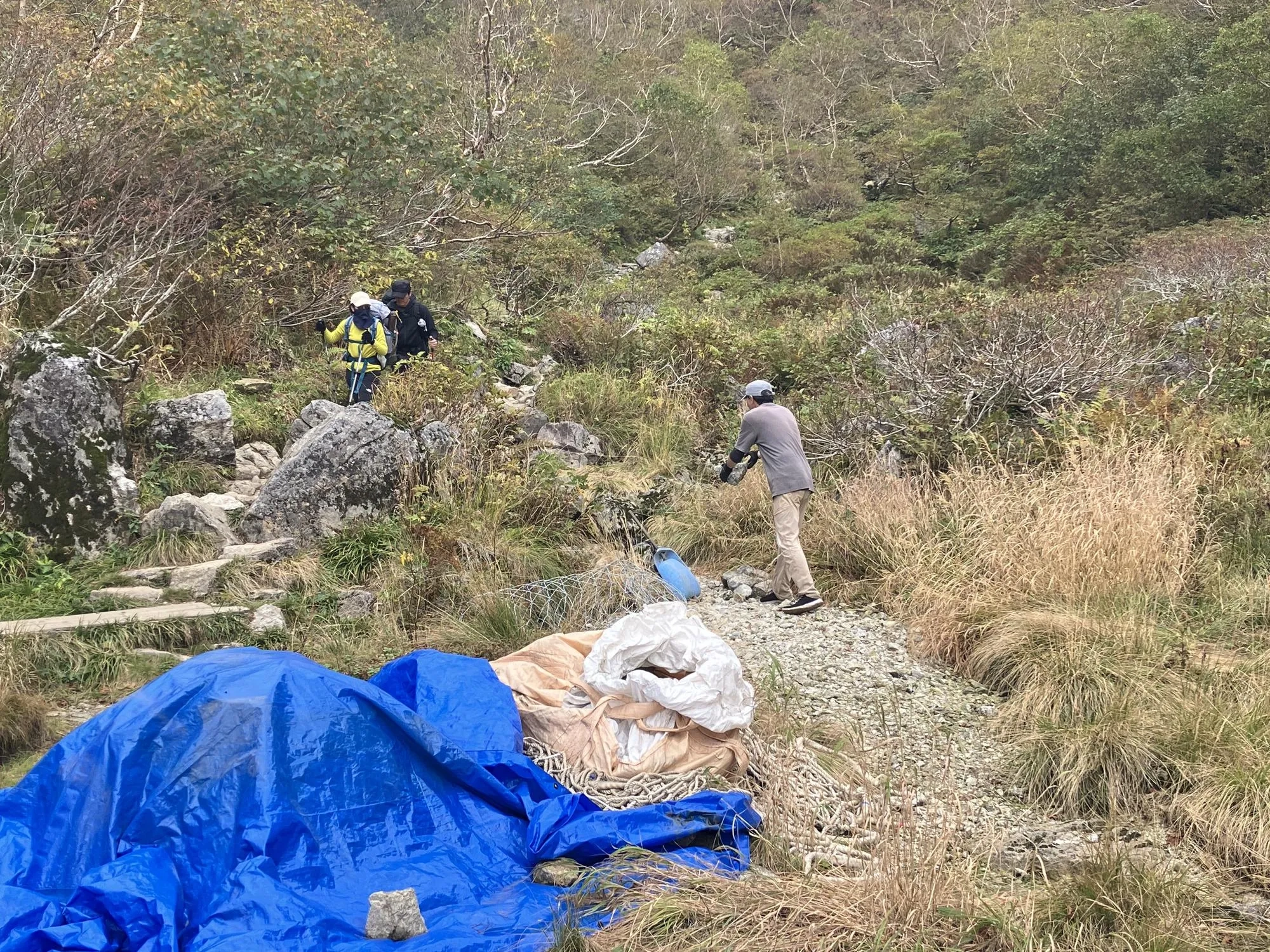
On the way, we meet someone maintaining the mountain trail, and I ask if I can take a photo from behind. He tells us, "We maintain all the trails around here ourselves."
That's an incredible job. Nothing but respect.
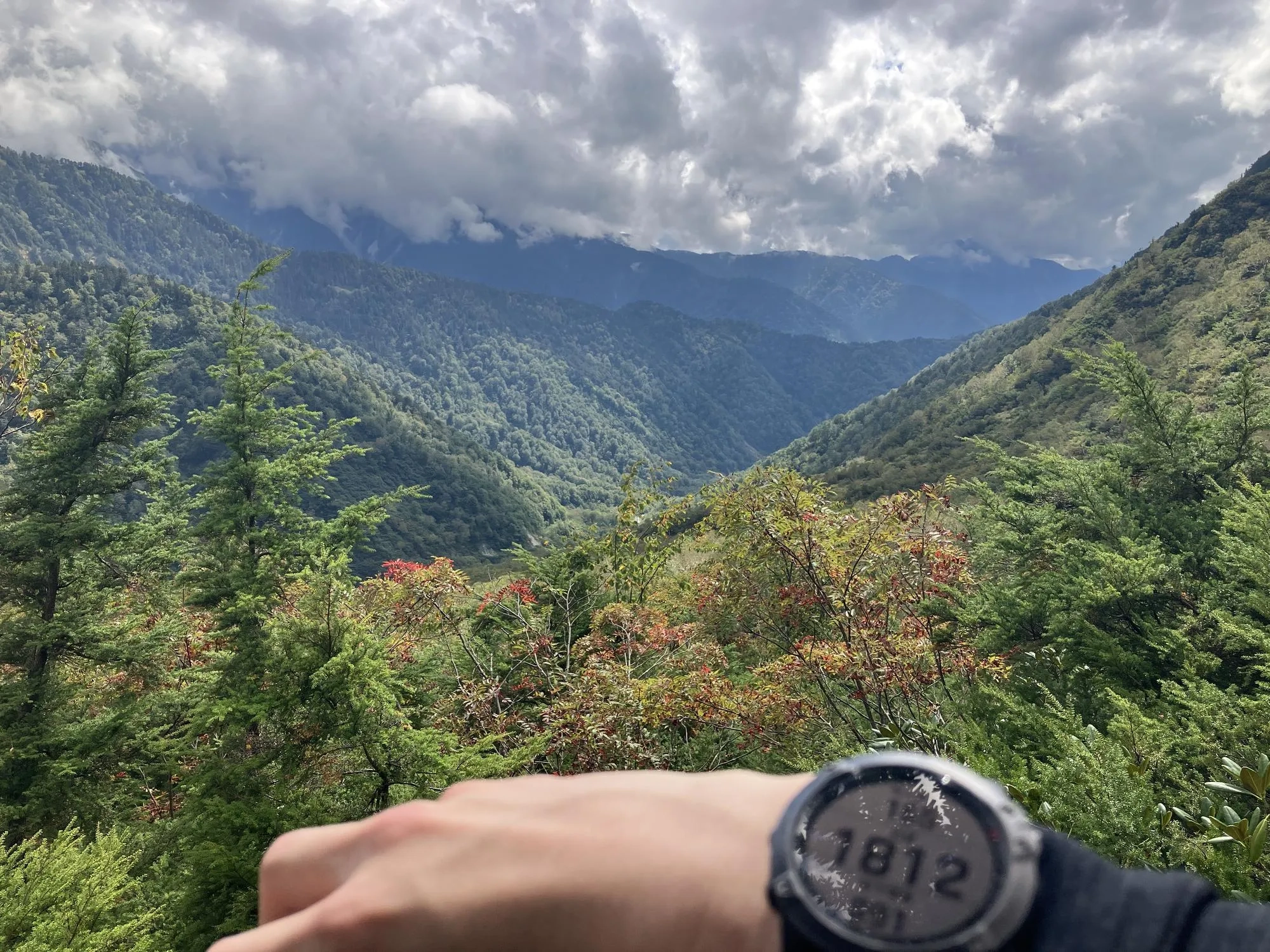
We're down to 1,800m. We keep descending. My legs are tired, but I'm fine. Getting proper sleep at the mountain hut really made a huge difference. Hiking after staying awake all night the day before was definitely a bad idea.
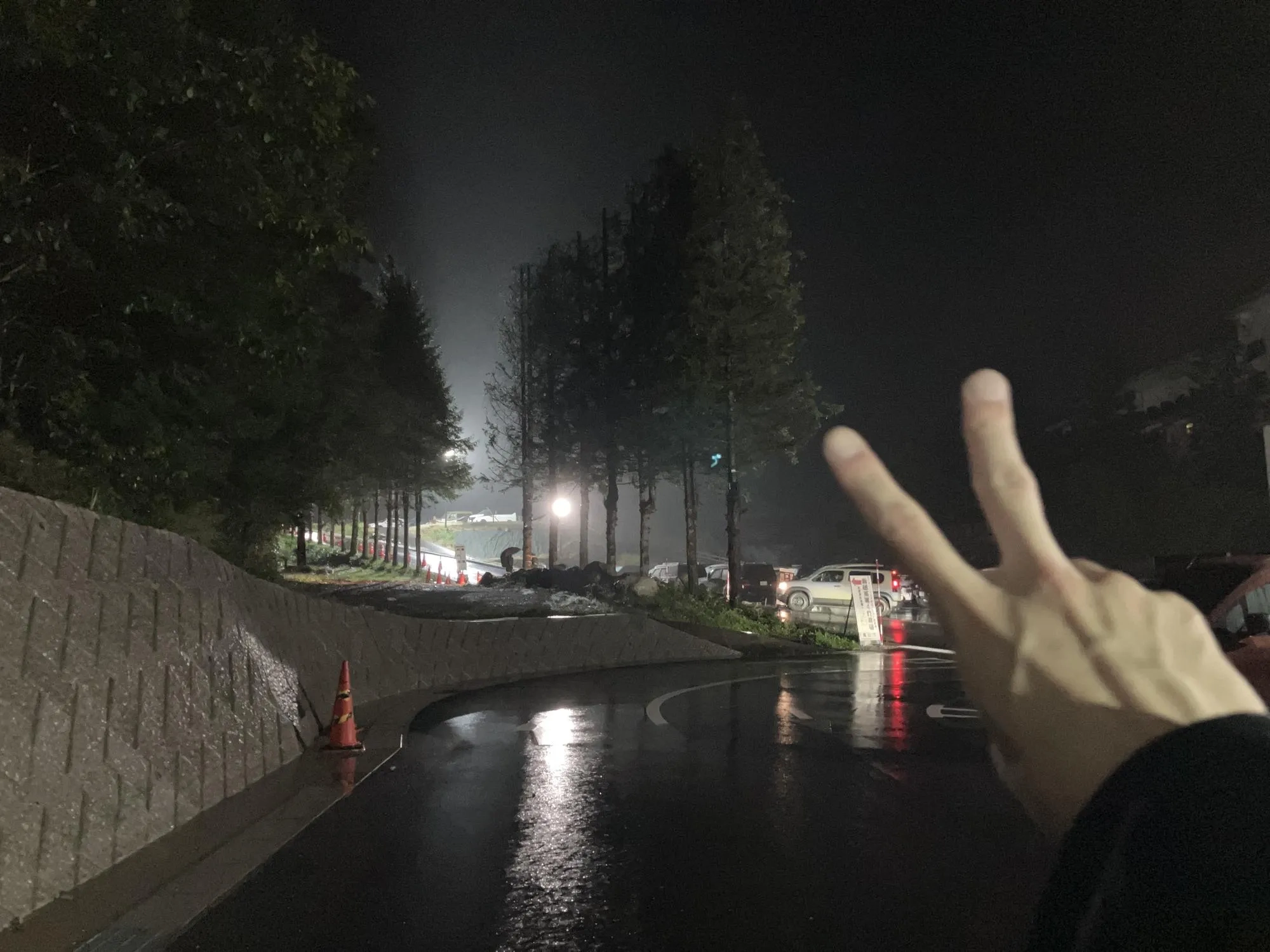
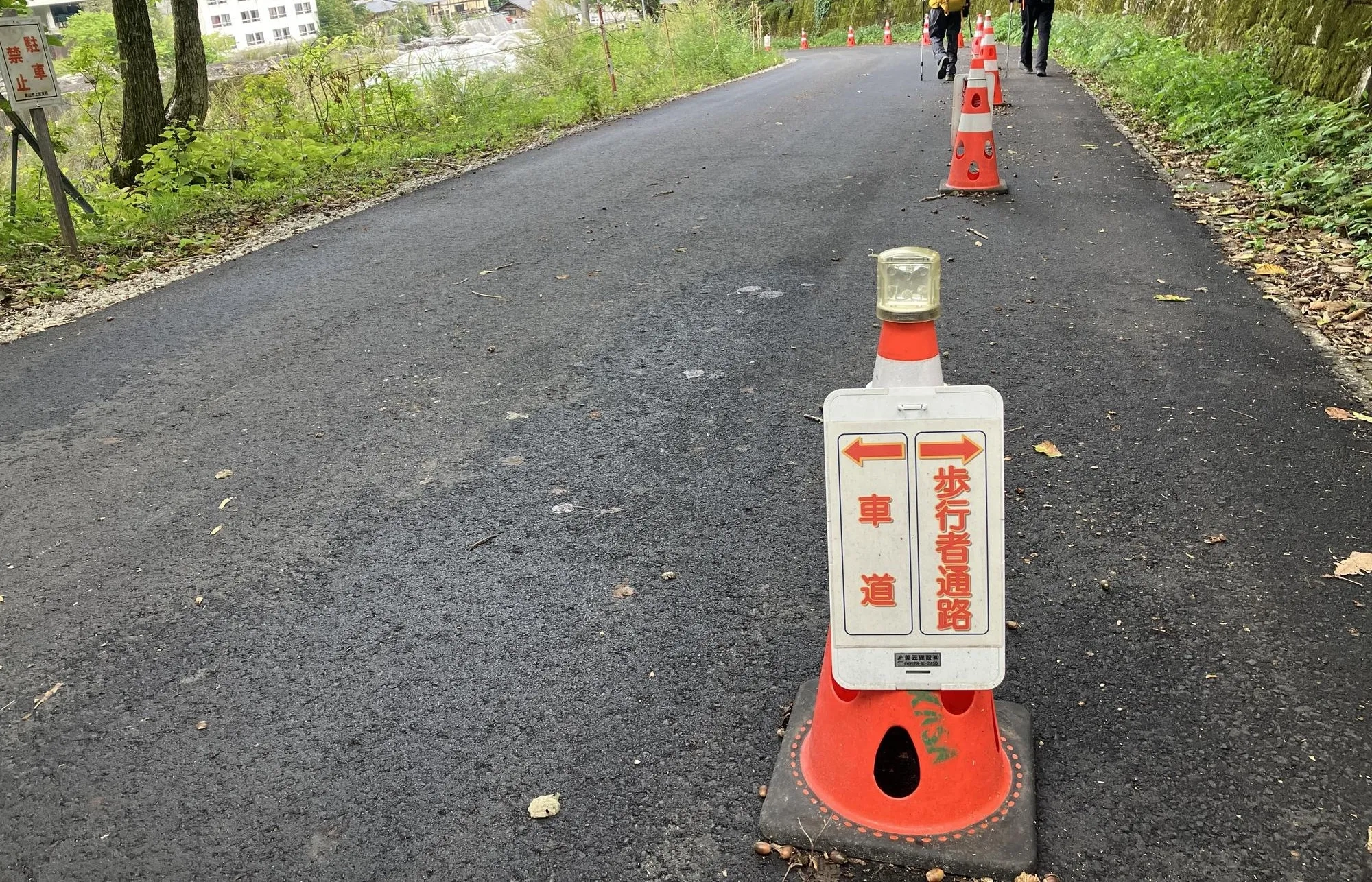
This↓ is the road near the parking lot. On the way up, it had been raining, it was dark, and I was hot (because my clothing wasn't appropriate), and I kept wondering, "Am I really going to be okay?"
Compared with that moment, I'm now full of a sense of achievement and relief.
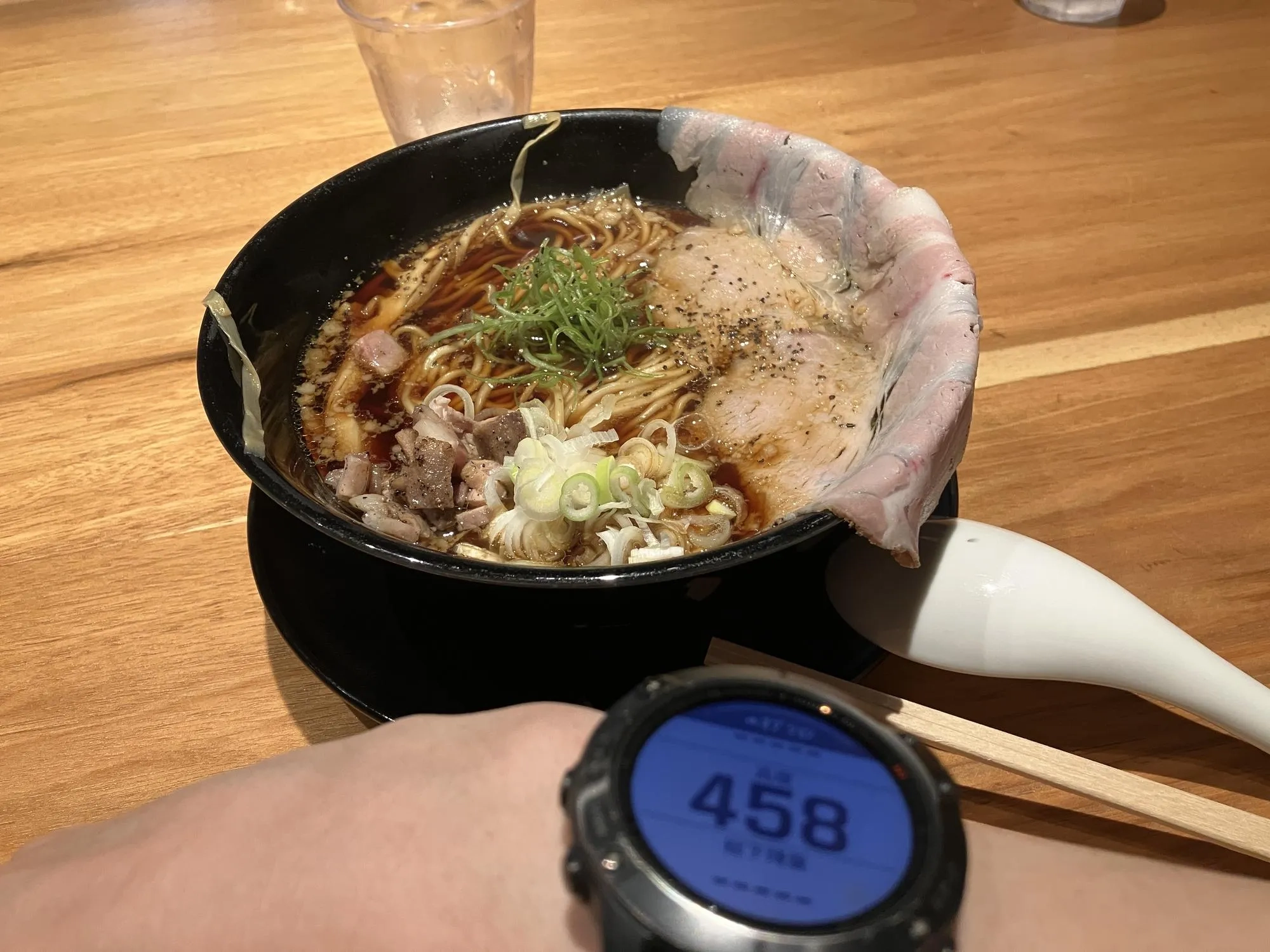
And this↓ is the ramen I ate that night. Elevation: 458m.
The end. Good work, everyone.
My Thoughts
- The feeling when I reached the summit was something special.
- My legs got hurt, but I feel like I could improve things by using trekking poles and ankle supports as well as knee supports.
- But bears are scary when you're hiking.
- I've been doing wild camping trips on my Super Cub for years... but hiking with an overnight stay actually felt more difficult.
- This↓ is my hiking pin badge collection from this trip.
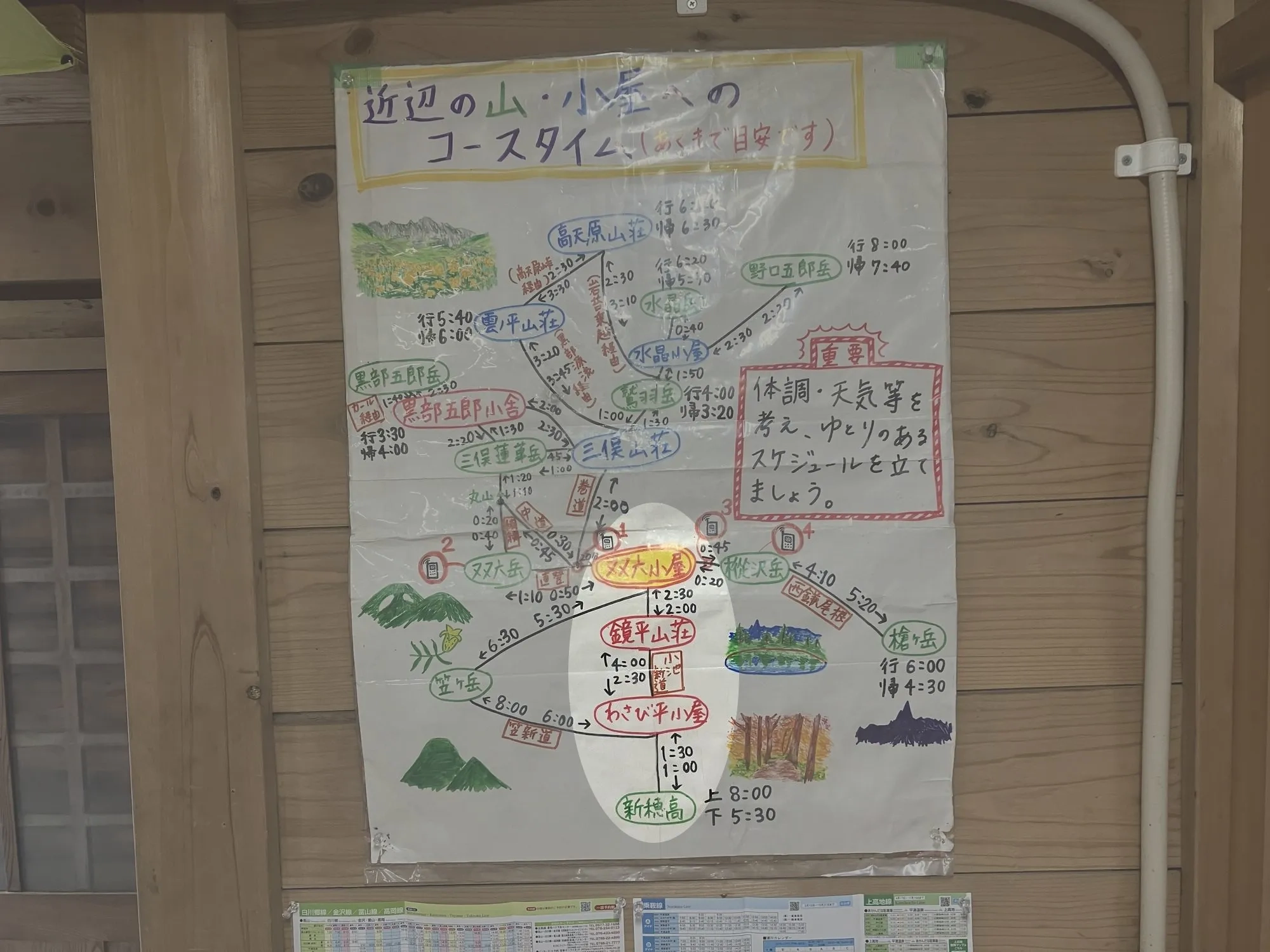
- This↓ is a map at Sugoroku Hut showing the mountains and huts in the surrounding area... and the part I struggled through, finally completed, and felt so happy about this time... was only the area I circled. And beyond that, there are this many more mountains spread out everywhere... It felt like beating the final boss, only to discover that the secret post-game dungeon is absolutely huge. I think I understand why people get into hiking now.