Overview
The other day, I had a chance to read some presentation slides made by an orthodontist.
I wanted to get to know this person better, so I thought I'd study the slides carefully and learn enough to follow the conversation. Then, well, when you think about it, this was obvious, but there was a ton of background knowledge I needed first. So I looked up as much of it as I could, then went back to the slides and made my own summary.
The original slides aren't publicly available online, so I can't share my summary of them. But I thought it might be okay to leave the background knowledge I studied here on Mirori-HP, so here we are.
What I Learned
A Quick Look at the Relationship Between Angle, Tweed, and Merrifield
First, let's learn about three famous people.
- Angle means Edward Hartley Angle (1855–1930). He developed the edgewise technique, an orthodontic method using wires. His treatments mainly focused on non-extraction therapy.
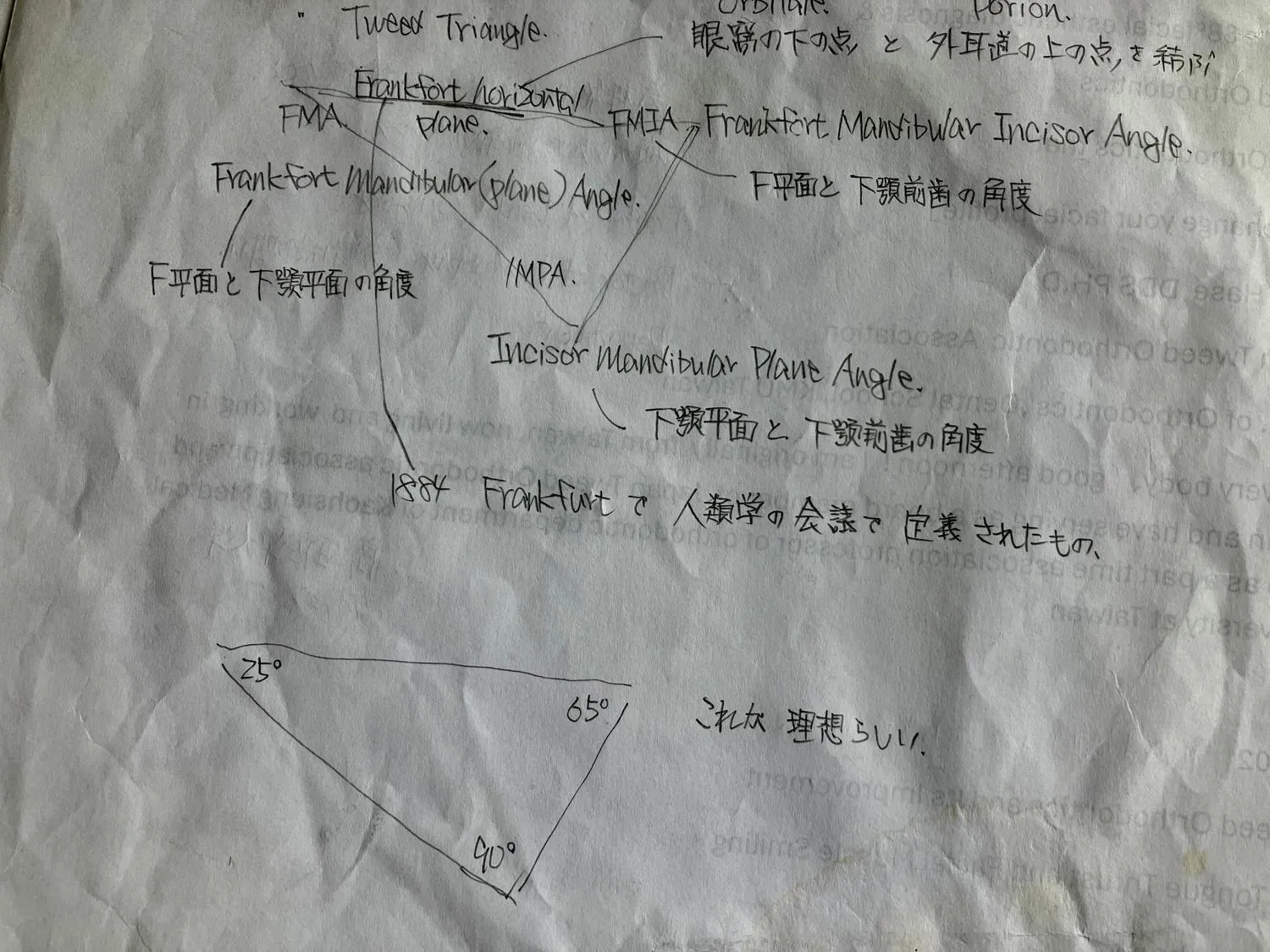
- Tweed means Charles Henry Tweed (1895–1970). He basically said, "Maybe extracting teeth is okay?" He also proposed the concept of the "Tweed Triangle."
- Merrifield means Levern Merrifield (1921–2000). He inherited Tweed's techniques and developed the Tweed-Merrifield method.
Now we've got two mysterious terms, Tweed Triangle and Tweed-Merrifield method, so let's look at those next.
What's the Tweed Triangle?
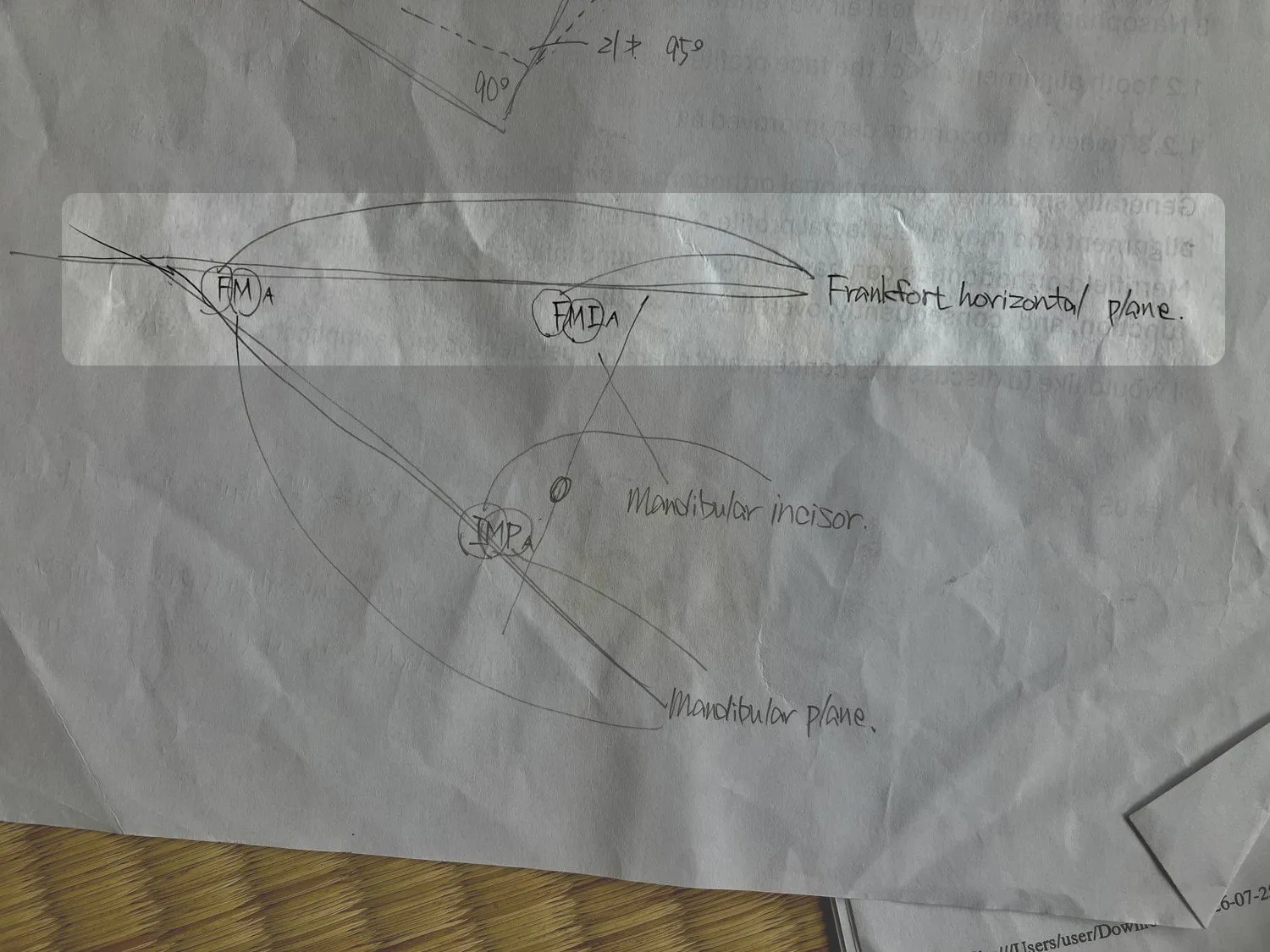
- FMA : FMIA : IMPA = 25° : 65° : 90° is considered the ideal balance for the facial profile.
- FMA: the angle between the Frankfort plane and the mandibular plane
- FMIA: the angle between the Frankfort plane and the mandibular incisors
- IMPA: the angle between the mandibular incisors and the mandibular plane
- Well, if you imagine the jawline of a modern idol, you're probably not too far off, right?
What's the Tweed-Merrifield Method?
- As mentioned above in the section about Angle, non-extraction orthodontic treatment used to be the standard. But that could result in a protruding mouth, creating a "chimpanzee-like facial profile."
- So Tweed argued for extractions when necessary, mainly of premolars.
- Merrifield inherited that approach, developed it further, and created the Tweed-Merrifield method.
- Basically, the treatment aims for the Tweed Triangle described above.
What's Frankfort?
This is about another mysterious term that appeared in the explanation of the Tweed Triangle: Frankfort.
- Frankfort horizontal plane
- A plane connecting a point at the bottom of the eye socket with a point at the top of the external auditory canal
- This has nothing to do with Tweed. It was defined at an anthropology conference in Frankfurt in 1884.
What Do Terms Like Class II and Division 2 Mean in Orthodontics?
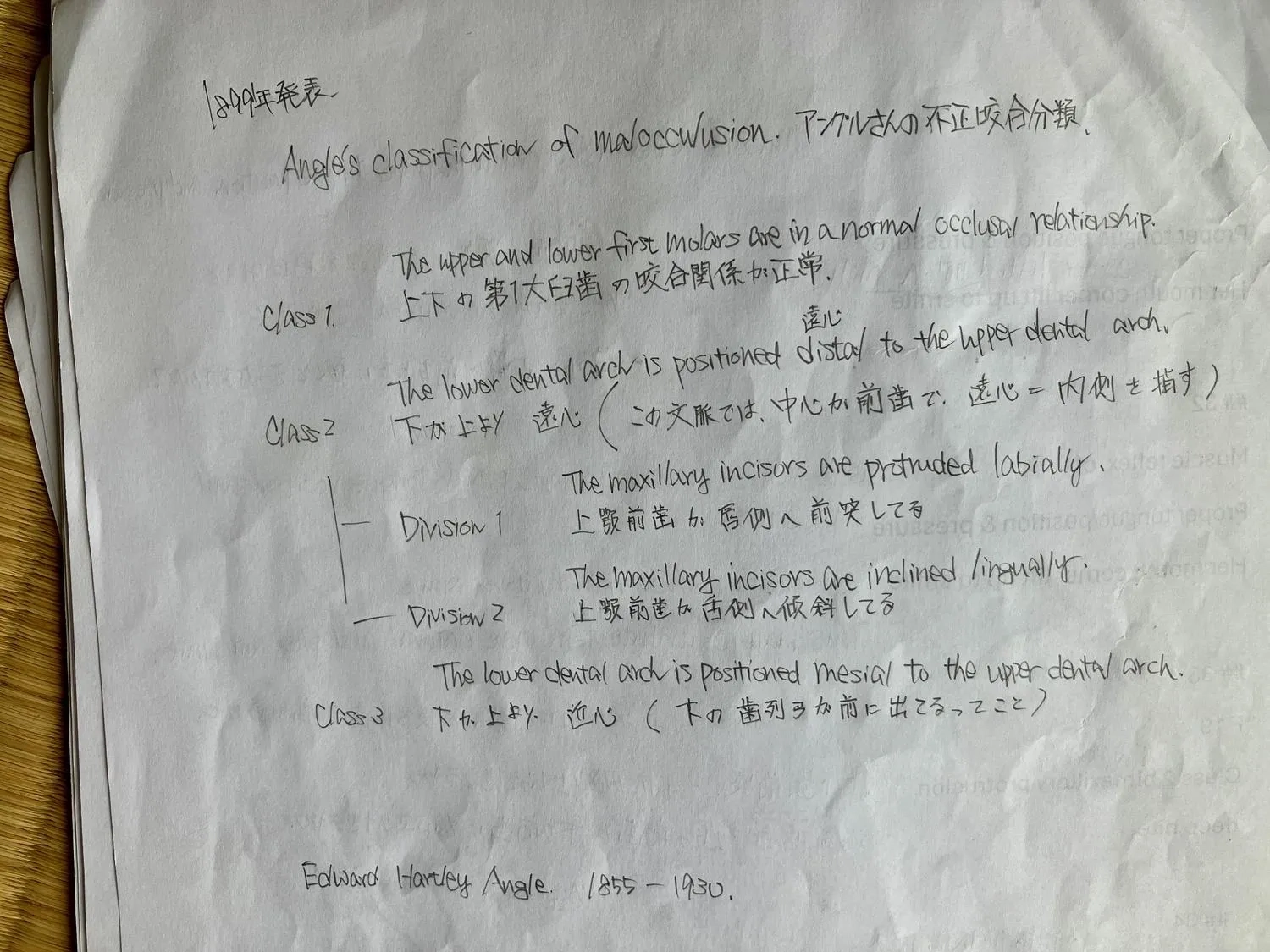
They come from Angle's classification of malocclusion, which Angle published in 1899. It classifies cases according to the relationship between the upper and lower first molars. Orthodontists classify a case this way and then consider what kind of orthodontic treatment would suit that person.
- Class I: normal
- Class II: the lower teeth are distal to the upper teeth (Here's something interesting: in dentistry, the "center" isn't the spine but the front teeth. So when the lower teeth are described as distal to the upper teeth, it means the upper front teeth are positioned farther forward.)
- Class II Division 1: the upper front teeth protrude toward the lips
- Class II Division 2: the upper front teeth are tilted toward the tongue
- Class III: the lower teeth are mesial to the upper teeth (think of a protruding lower jaw)
What Are the Suprahyoid Muscles That Come Up in Orthodontics?
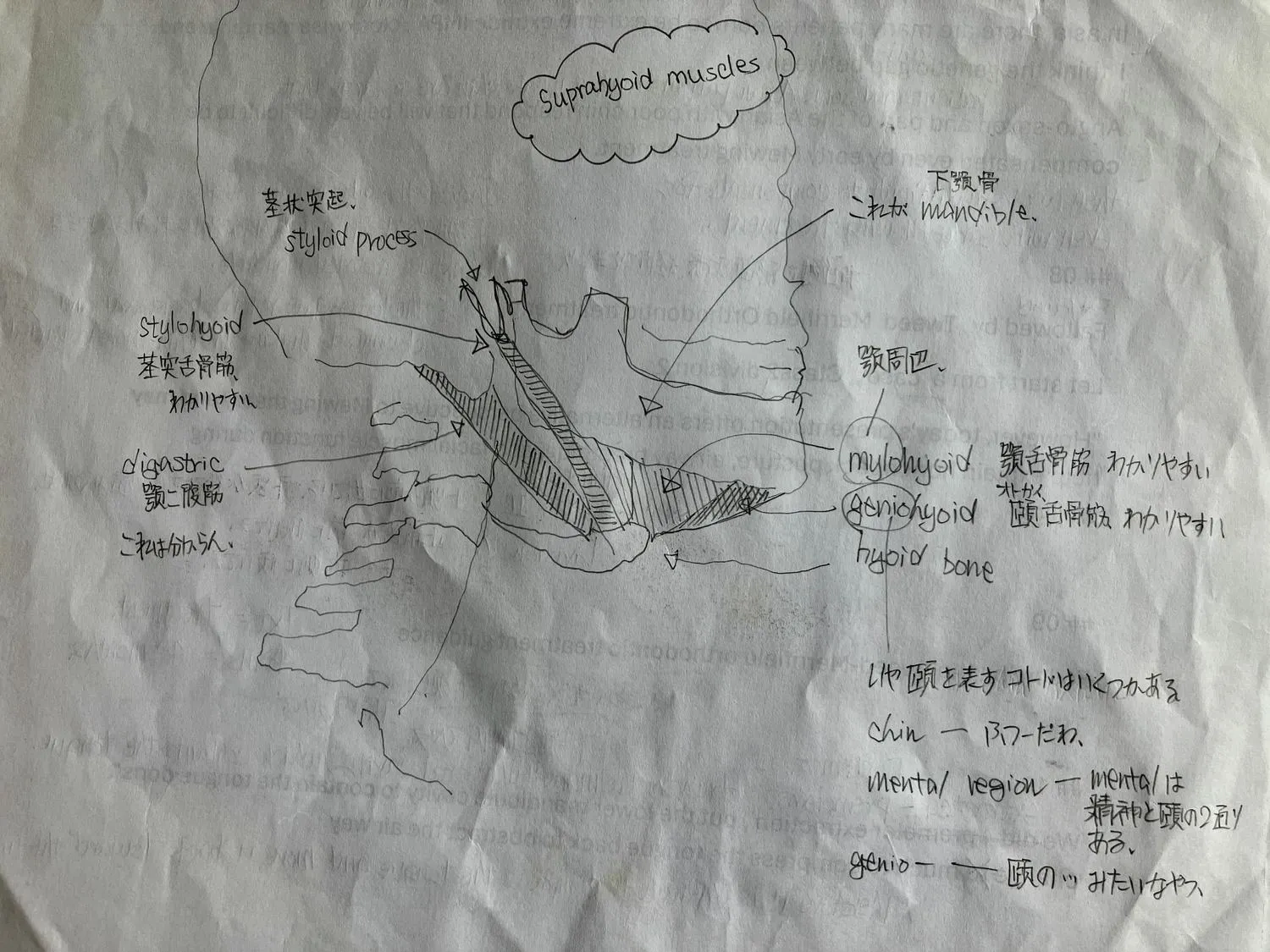
The Tweed-Merrifield method also improves the position of the hyoid bone, which is located under the jaw. So the muscles around it, the suprahyoid muscles, also come up quite often. This isn't a single muscle, but a group of muscles.
- Digastric muscle: connects the hyoid bone and temporal bone
- Stylohyoid muscle: connects the hyoid bone and styloid process
- Mylohyoid muscle: connects the hyoid bone and mandible
- Geniohyoid muscle: connects the hyoid bone and chin
- Looking at these in a diagram makes the relationship between the mandible and hyoid bone really easy to understand.
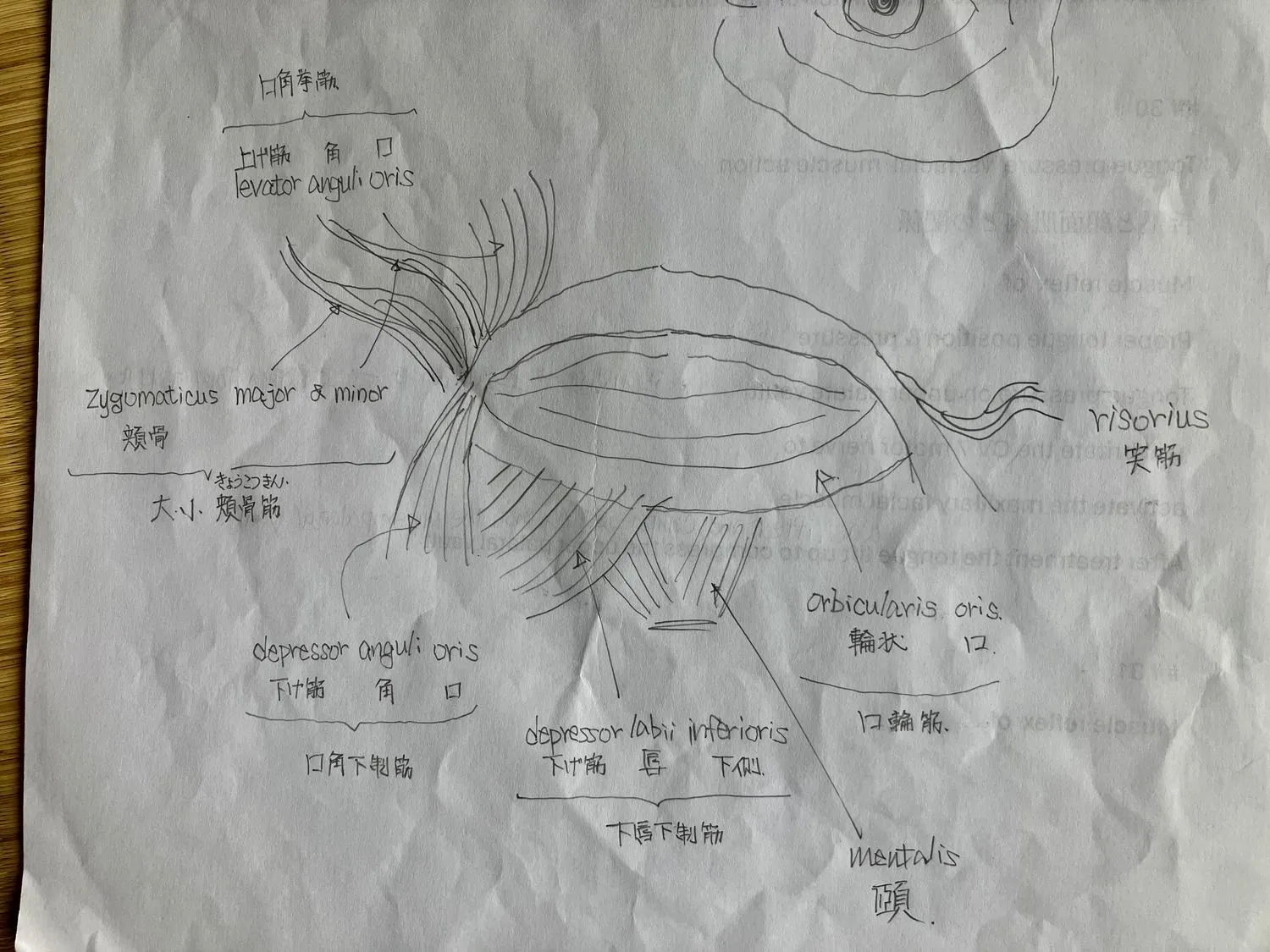
Muscles Around the Mouth That Create Facial Expressions Also Come Up
- Orbicularis oris
- Mentalis
- Depressor labii inferioris
- Depressor anguli oris
- Zygomaticus major & minor
- Risorius
- Levator anguli oris
- Looking at these in a diagram makes it fun to see the whole facial system involved in smiling.
And Then Cranial Nerves Come Up Too. What Are Those?
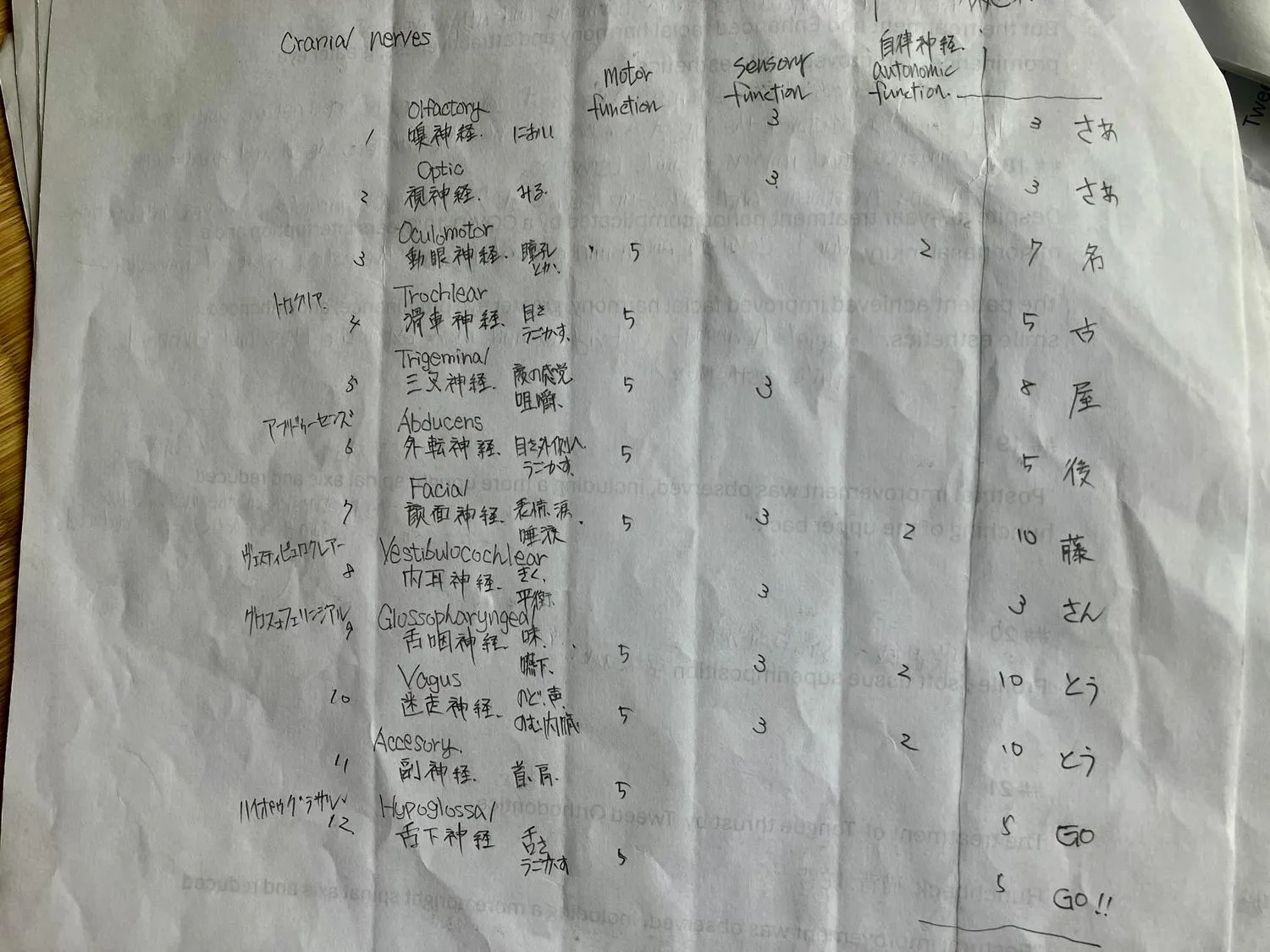
For people like us with only a general interest in the subject, getting as far as the muscles might be enough. But orthodontists go all the way to the nerves. The following twelve are the cranial nerves.
- CN I: Olfactory nerve — smell
- CN II: Optic nerve — vision
- CN III: Oculomotor nerve — things like pupil movement
- CN IV: Trochlear nerve — moves the eyes
- CN V: Trigeminal nerve — facial sensation → In the context of this presentation, it was discussed as being stimulated by tongue pressure
- CN VI: Abducens nerve — moves the eyes outward
- CN VII: Facial nerve — facial expressions and so on → In the context of this presentation, it was discussed as creating facial expressions through muscle reflexes
- CN VIII: Vestibulocochlear nerve — hearing
- CN IX: Glossopharyngeal nerve — things like taste
- CN X: Vagus nerve — things involving the throat
- CN XI: Accessory nerve — neck and shoulders
- CN XII: Hypoglossal nerve — moves the tongue
Wait, Are These Only the Nerves Around the Face and Neck? What About the Nerves That Move Your Hands?
Yeah. When I heard "cranial nerves," I assumed it meant all the nerves extending from the brain, but that's not right. The nerves that move your hands and so on aren't cranial nerves. They're part of the spinal nerves.
- Cranial nerves connect directly from the brain to areas such as the face.
- Spinal nerves work through a different system: the brain connects to the spinal cord inside the spine, and the spinal cord then connects to peripheral nerves.
My Thoughts
Using wires on teeth for orthodontic treatment feels completely normal to us today, right? So I thought it was interesting to learn that this kind of treatment has a history of only a little over 100 years.
Just like English or bookkeeping, orthodontics is a field I normally have almost no contact with. Learning something when you know absolutely nothing about it feels like building something in an empty wilderness in Minecraft, and I really enjoy that.