Overview
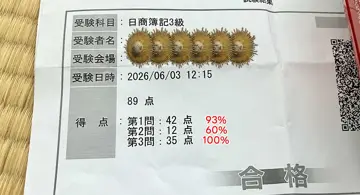
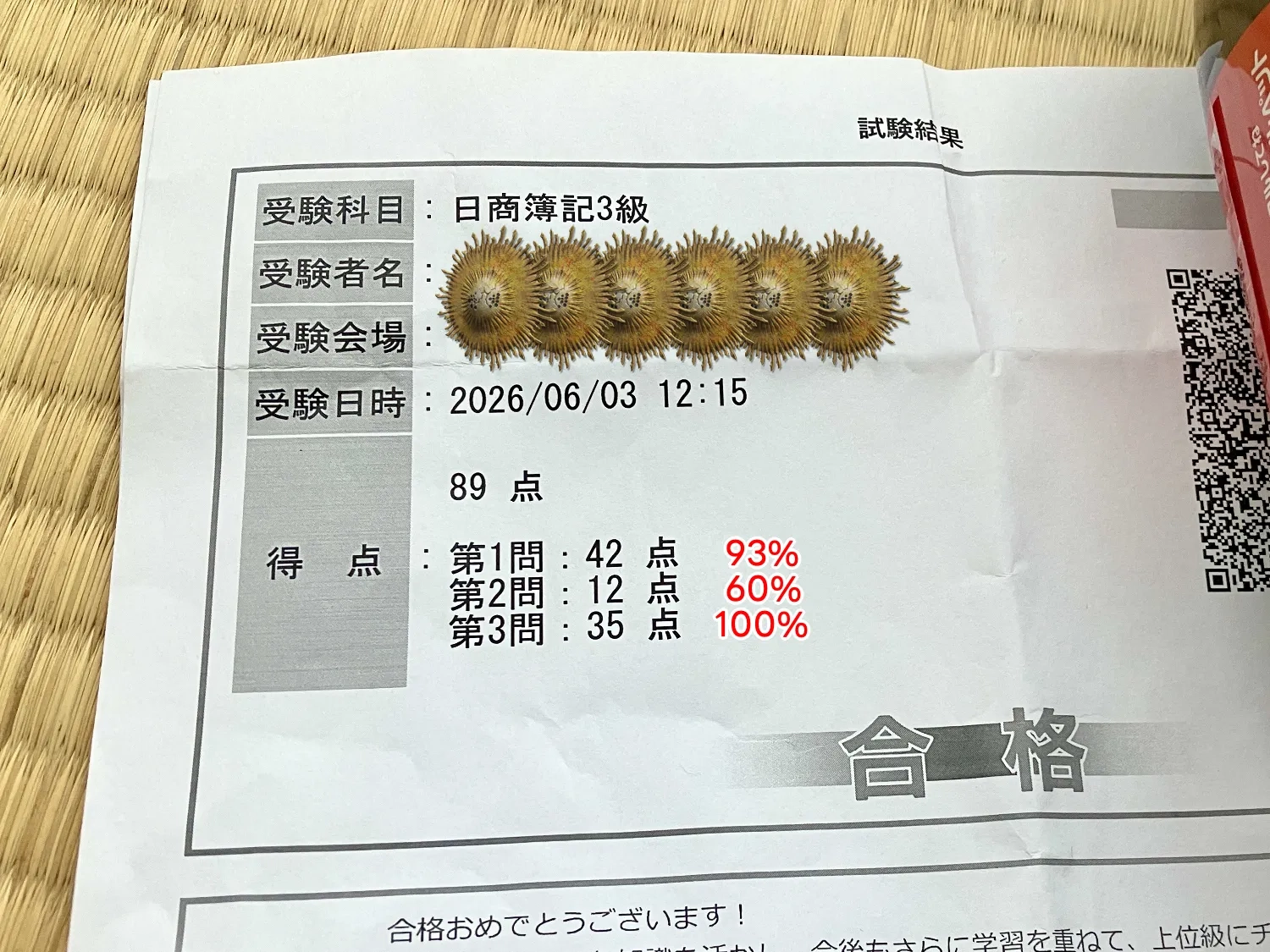
I recently passed Nissho Bookkeeping Grade 3.
I started studying bookkeeping because I was inspired by the 15th-century abacus teacher Luca Pacioli and his book, Summa de arithmetica, geometria, proportioni et proportionalita. I came across him while reading this ↓.
Out of respect for Pacioli, I borrowed the name “Summa” and decided to leave some notes from my Nissho Bookkeeping Grade 3 studies.
The books you update for each event, and what you do in each one
Personally, I think the important thing in Bookkeeping Grade 3 is to understand the major events from transactions during the period through closing, and to know which event each journal entry belongs to.
During the period
- Transactions
- Journal or books: Just make the normal journal entries
- General ledger: Just post them normally
- Subsidiary ledgers if necessary
At the closing date
- Prepare the trial balance
- Total trial balance: Roughly total up the general ledger
- Pre-adjustment trial balance (pre-T/B): Calculate the difference between the two sides of the total trial balance
- Adjusting entries
- Journal: Make entries to correct the amounts
- General ledger: Just post them normally
- Post-adjustment trial balance (post-T/B): Pre-T/B + adjusting entries
- Close the books
- Journal: Transfer the ending balances of P/L items to the income summary account -> transfer that to retained earnings
- General ledger: Post the entries. Carry B/S items forward to the next period. Now both P/L and B/S balance on both sides. Draw double lines.
- Prepare the financial statements
- P/L: Just make it normally
- B/S: Just make it normally
WHY for each question (why I get things wrong when I do)
“WHY hunting” is a strategy I often use when I take exams or fight bosses in FromSoftware games. When I get a question wrong or lose to a boss, saying “well, I messed up somehow” just means I will probably mess up again. So I figure out “why I messed up” and decide “what I’ll do next time.”
Here are my WHY notes for Bookkeeping Grade 3.
Question 1
- I don’t get the unit price wrong, but I miss how many units were bought → Don’t miss it.
- I confuse credit card receivables with credit card fees → Don’t.
- I forgot what other receivables are → Money coming in from something outside the main business.
- I forgot how a check drawn by our company works → If we receive it back, cash does not increase; the checking account does.
- I forgot about postal money orders → Basically the post office version of a check.
- I forgot about petty cash → It is an asset account, and it gets reduced by things like travel and transportation expenses, supplies expenses, communication expenses, and miscellaneous expenses.
- I forgot about registration fees → Money you pay when buying land, and it simply goes into the land account.
- When paying social insurance payable, it never occurred to me that the company pays its share at the same time → You deal with this stuff all the time.
- My understanding of the word “insurance premium” is too vague → If it is social insurance, it is statutory welfare expense. If it is fire insurance or something like that, it is insurance expense.
- My understanding of reversing entries is weak → When you make reversing entries, accrued expenses, accrued revenue, prepaid expenses, and unearned revenue disappear. What remains is a negative expense or revenue amount.
- My understanding of the tax-exclusive method is weak → Plant your feet on the ground and actually check whether the number written there includes tax or not.
- I don’t understand what “apply the deposit” means in Japanese → It means use advances received.
- When shipping is paid later, I forget to include the shipping in the journal entry → The goods are moving, so shipping is happening too.
Question 2
- My understanding of accrual and deferral accounts is weak → I think I more or less understand them now.
- I don’t understand what “recognize X” means in Japanese → It means that items belonging to X are still mixed into the accrual or deferral account, so separate them into the part already used and the part not yet used.
- The moment I see accounts receivable, I assume goods must have moved → Sometimes accounts receivable simply disappears and cash increases.
- I don’t understand what “close the accounts” means in Japanese → It means do the closing transfers and carry the balances forward.
- I forget what an “account” means → Each individual T-account inside the general ledger.
Question 3
- I fail to notice that the accrual and deferral accounts in the pre-T/B can contain amounts from the previous period, the current period, and the next period → Notice it.
- I solve it too slowly → Don’t make notes on the pre-T/B itself. Write down the journal entries, write down the totals after combining them with the pre-T/B, and fill in the post-T/B.
- Because the pre-T/B on the screen, my notes on paper, and the answer fields on the screen are all separate, I pick up the wrong numbers → Maybe I should even do the addition with the pre-T/B on paper.
- Accounts receivable changes from the pre-T/B during the adjustments, but I still calculate using the pre-T/B amount → Seriously hopeless. When accounts receivable changes during adjustments, I just have to make a warning go off in my head. (By the way, THIS ACTUALLY CAME UP ON THE REAL EXAM. The warning went off properly, so that was good.)
- I don’t remember where items go on the worksheet → B/S items near the top, P/L items in the middle, B/S accrual and deferral accounts near the bottom, and net income for the period at the very bottom.
- I don’t remember where to write net income for the period → Write it in both the P/L and B/S columns.
- When a return happens, I understand that sales and purchases move based on the sales amount, but I forget that ending inventory moves at cost.
Thoughts
While studying, I had moments where I got genuinely excited, like, “Oh! Taking inventory exists to figure out ending inventory!” Moments when the real world connects with the textbook are nice, aren’t they?
This was my first time studying bookkeeping, so I had no idea what studying it was supposed to feel like. I just felt my way through it. Since I started with PDFs and videos, I wrote all my study notes in sketchbooks, while keeping notes about the overall structure and my WHY summaries on my PC.
Looking back:
- Writing everything in sketchbooks creates the risk of my notes getting split across different versions → Next time, buy a study guide and write everything directly into it.
- It took me too long to understand which phase the task I was doing belonged to (things like closing and transfers) → Next time, pay attention to which phase I am working on.
- Studying mainly through videos took a ridiculous amount of time → But I still haven’t tested whether it is more or less efficient than reading through a study guide by myself.
- I prefer studying on paper rather than on a PC, but this time it was extremely easy to make notes about the process for each event and my WHYs on the PC, and to revise them later.
Thoughts at the Time of Posting
...So, I actually wrote all of the thoughts above right after I passed Bookkeeping Grade 3, but somehow I missed the right timing and never posted them.
Now it has been three months since I passed, and after reading this again, what I think is... bookkeeping is a terminology game.
When I wrote the notes above, the terms were still connected to clear images of the actual things in my head, so I focused my notes on how the terms were connected to each other. But reading them now, my memory of the terminology has already gone fuzzy, so I have no idea what any of this means.