Overview
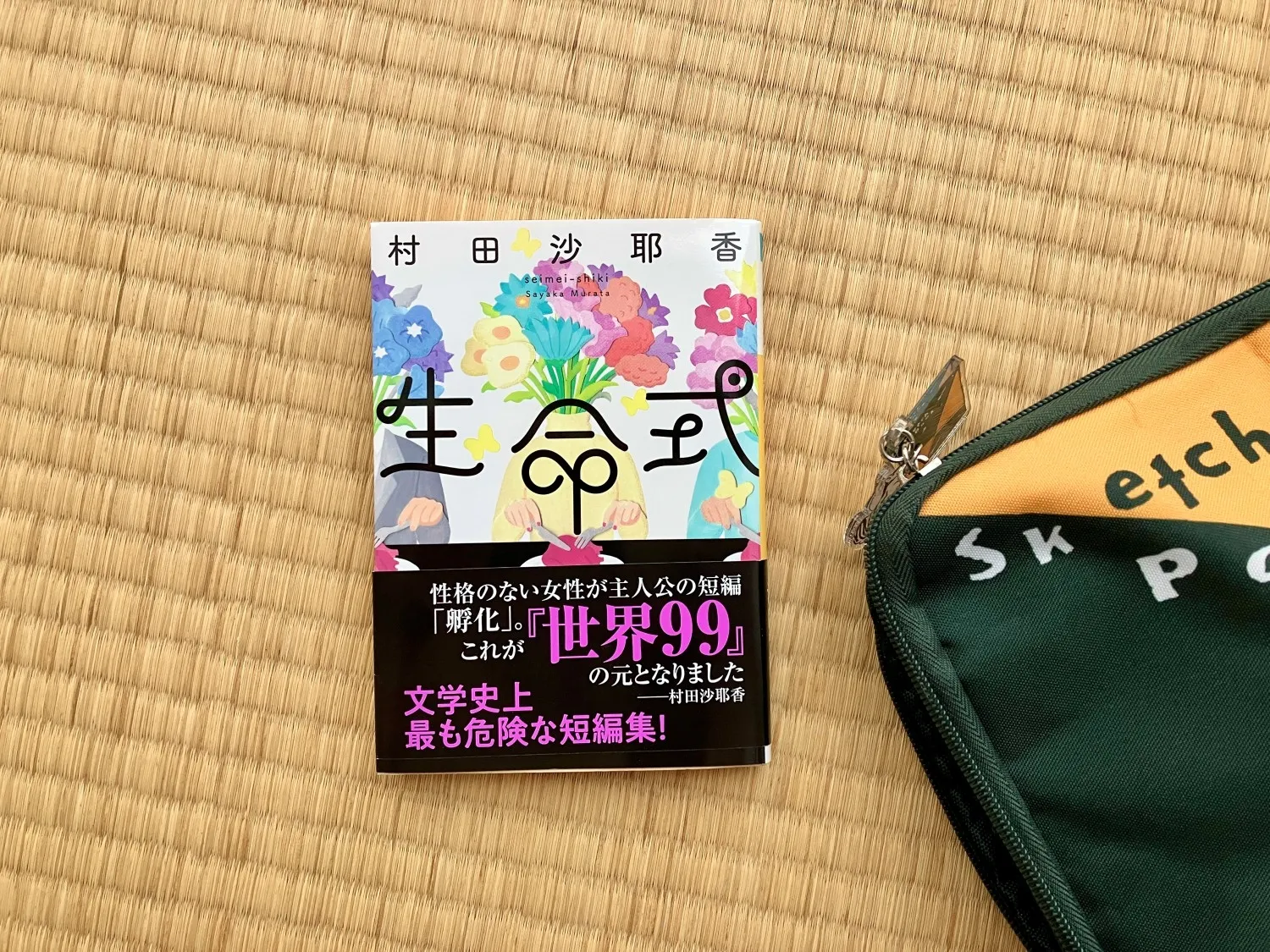
I read this because my roommate lent it to me. It had been my first Sayaka Murata book since Convenience Store Woman.
My roommate knows that Convenience Store Woman is one of my favorites, so they recommended this short story collection too, thinking I might like it. Since it is a short story collection, it is a little hard to write a proper summary, so I thought I would write short summaries and some thoughts about a few of the stories in it.
Summaries and thoughts
Life Ceremony
- This story is set about 30 years from now, in a world where people feel zero resistance toward cannibalism and sex. Ikeya-san still cannot get used to that culture at all, so she keeps living with a strong sense of discomfort. But one day, during a cannibal gathering called a life ceremony, something happens that makes her feel how deeply the dead person was loved, and her resistance starts to fade.
- I felt that it was basically a metaphor for weddings and funerals. Weddings, wedding receptions, and funerals can look like terrible customs, depending on how you see them. Many people think they are bad customs: events that take people's time and money in the name of tradition, while businesses make use of that tradition. Still, I think the average view in modern society is that this opinion is rather extreme. People who feel these customs are bad have to somehow make peace between that value system and their own feelings, and keep living alongside those customs. And sometimes, when they happen to feel good inside one of those customs, they may think, "Huh? Maybe this is not so bad after all." Once that happens, it probably becomes easy to move quickly to the side that supports it. Because feeling the same way as the majority is the easiest thing of all. ...That is what I think Life Ceremony is showing.
Lovely Materials
- Ikeya-san was the type who quietly thought life ceremonies were gross, but Naoki-kun is more of a hardliner. This story is set in a parallel world that is slightly different from Life Ceremony, where it is normal to turn human body parts into furniture and clothing after death. Naoki-kun has kept saying NO to that culture, but when he sees an item made from his father, he notices a scar there that reminds him of a childhood memory, and starts to think that maybe this culture is not so bad either. But because he had been such an intense opponent, he seems confused by his own change of heart.
- It is the same as Life Ceremony. Every culture has people who support it and people who reject it, but when someone changes from a minority position to a majority one, it can look like they have "softened."
Wonderful Dining Table
- A group of picky eaters gather together, get deeply put off by each other's food cultures, and end up like, "Well, I guess we do not really have to understand each other..." But then, right at the end, a man appears who accepts every food culture, like some monster of cross-cultural exchange, and everyone gets even more put off. It ends in a storm of chaos.
On the table were the dishes from Dundiras, the demon city, made by my younger sister, some expensive retort-packaged food from Happy Future Food, and containers filled with insects. ( Wonderful Dining Table )
- This development made me laugh so hard. And when the man starts stuffing all of it into his mouth, going "Delicious! Delicious!" I burst out laughing. Maybe it is a metaphor for this: even if cultures that were grossed out by each other come to understand one another and everything seems settled for the moment, the diversity of culture is infinite, and no matter how far you go, complete harmony will never exist.
Eating the City
- This is a story about Rina-chan, who starts gathering and eating weeds from urban areas, reaches the idea that concrete buildings are also part of nature, and then goes around preaching that idea to the people around her.
- Rina-chan's grandmother says, "(The countryside and the city) are no different at all." When I was in high school, I also wrote an essay based on the idea that "the jungle and the city are the same." So I can normally agree with Rina-chan's claim. But where her idea differs from mine is in the part where she thinks "wild weeds are better than vegetables from the supermarket." I see social activity and construction activity as part of nature too, so I think supermarket vegetables are also nature. The extreme part of Rina-chan is that she looks down on supermarket vegetables and tries to spread her own ideas. That is like a new religion. It would be enough to be satisfied with freedom of thought, but it is annoying when someone puts others down in order to lift up their own claim, or tries to spread that claim to other people.
Overall thoughts
- I wrote about only four stories here, the ones I found especially easy to write about.
- A long time ago, when I tried writing fiction, I once thought, "If I turn all my ideas into metaphors, maybe that becomes a novel?" In the end, I gave up because I could not do a good job of portraying people other than myself... But when I read Life Ceremony, I thought, "This is obviously saying, 'For some people, modern society feels this disgusting!' It is completely a metaphor for weddings and funerals! Ah, so maybe this was the kind of thing I was trying to do!" I do not know whether the author really creates works by "turning all her ideas into metaphors," but reading this made me feel that maybe the kind of work I wanted to create back then was something like this, and that was fun for me.
-
The roommate who lent this to me said something like, "Overall, I thought it was disgusting and hard to accept. But at the same time, it made me feel like if something like this existed, maybe I would have to accept it. So I thought maybe this author is amazing."
-
Well... just between us... I thought, What are you talking about? My roommate seems more like one of the "sensory minority" people described in this book. But maybe this is because the collection shows the struggles of people like that, and maybe they felt a strong sense of recognition there, and being confronted with the fact that they are part of that sensory minority is what felt "hard to accept." That is just my guess, though.
- Leaving the metaphor talk aside, about the worlds of Life Ceremony and Lovely Materials themselves: cannibalism is abnormal, sure, but in the end it is only about what happens to the body after death, and I thought it was a gentle and attractive world. Also, I might actually like the human furniture and human accessories in Lovely Materials. Bone-ash rings sound pretty nice, do they not? The chandelier made from human nails arranged like scales was so wild that I laughed.
- I think this collection has something in common with Haruki Murakami's works, which I love. I really like the balance between the ordinary and the extraordinary. Something like 80:20, where daily life has just a little bit of the unreal mixed into it.
- So, all in all, I felt good after finishing it.